
 The Henchperson's Guide to Unionizing by Marshall J. Moore
Format: eARC
Source: supplied by publisher via Edelweiss
Formats available: paperback, ebook, audiobook
Genres: cozy fantasy, cozy horror, Dark Fantasy, fantasy
Pages: 379
Published by Bantam on September 22, 2026
Purchasing Info: Author's Website, Publisher's Website, Amazon, Barnes & Noble, Kobo, Bookshop.org, Better World Books
Goodreads
A mad scientist's apprentice, a witch's cat, and a vampire's wife walk into a haunted mansion...
Humor meets horror in this heartwarming tale of friendship, solidarity, and stolen body parts.
As the laboratory assistant to the brilliant but demanding Doctor, Igor spends his nights robbing graves, stitching together body parts, and ensuring that his master doesn’t electrocute himself (too badly). It’s thankless work, but Igor knows it’ll all be worth it once they finally succeed in the Doctor’s all-encompassing quest to create new life from dead flesh.
When a mob of peasants wielding torches and pitchforks drives them out of town (again), Igor and the Doctor relocate to the isolated Ravenwald Manor to resume their experiments. But Igor and the Doctor are not the only ones seeking refuge within the walls of Ravenwald. The manor is already home to a vampiric Count and his highly dissatisfied bride, Cornelia—and an enigmatic witch and her feline familiar, Grimalkin, intend to use it as the site of a magical ritual.
At Igor’s suggestion, the three pairs come to an uneasy agreement to cohabitate in Ravenwald, lest they attract the suspicion of the nearby village. In the wake of this truce, Igor, Cornelia, and Grimalkin soon begin to realize that they might have more common with one another than their respective masters. When the trio discovers that they've been unwitting participants in a horrible plan to destroy the world as they know it, they must work together to stop their masters from bringing on armageddon... and stop the increasingly suspicious villagers from reaching for their pitchforks and torches.
Igor, Grim, and Cornelia must unite to cast off the chains of their masters and embrace life on their own terms in the hilarious, heartwarming, and just-spooky-enough The Henchperson's Guide to Unionizing.
My Review:
A mad scientist, a witch, and a vampire walk into a castle. Well, yes, but not exactly. First of all, it’s not exactly a peaceful stroll, not even before they start trying to take pieces out of each other. Because this household of misalliance REALLY begins with those three archetypes of horror running away from the torches and pitchforks of the local villagers at their previous castles of residence.
But that’s not the beginning either, which is kind of the point of the whole story. In order for each of them to stroll into their shared castle, each of them required the assistance of their various henchpersons – because all of them are ‘above’ the daily grind of whatever it is that got them chased out of their previous residences in the first place.

Igor is the one telling the story. You recognize the name, of course. Every mad scientist has an Igor. An underpaid, unappreciated, pretty much un-everything assistant who does ALL the work for their master’s ‘Great Work’ while getting none of the credit for the things that go right and ALL of the blame for the things that go wrong – even though the errors are nearly always committed by the Doctor and not the assistant.
So the mad scientist – who is never named but we all KNOW who he is – has his Igor to browbeat and blame. The Count – who may be called Count Karl Ravenwald but we certainly know him by another name as well – has his bride, Cornelia, to do the mundane work of vampirism. Karl hasn’t hunted for himself in centuries because Cornelia is forced to obey his every order due to the bond they share as maker and made.
The witch, Margaret Deveraux, may not recognizably be any witch in particular, she certainly represents all of them in general. Which means she has a familiar. Grimalkin – Grim if she likes you – is a cat. Well, she’s a cat on this plane. She likes being a cat. She wants to continue to be a cat. Which is not what will happen if she allows ‘Auntie Mag’ to complete her own ‘Great Work’, the summoning of her own eldritch lord, the Unsmiling King. Who will turn this world into a hellscape of his own making.
The ‘masters’ can’t stand each other for living – or for dying in the Count’s case. But their assistants – after an admittedly scratchy start – bond over their shared predicaments and get along like a house on fire.
Which is what will literally happen – again – if they can’t get their masters to stop riling up the local peasantry. Or, if they can manage to put their heads together and find a MUCH better way forward for them all.
Escape Rating A+: This was just plain fun. It’s a terrific combination of cozy fantasy and cozy horror. It tickles the funny bone just a bit, has plenty of ooey, gooey ‘Easter Eggs’, and just the right amount of wry gallows humor as well a whole lot of heart, even if that heart was surgically installed. By Igor. (Also in Igor, but that’s part of the story.)
Part of the fun is that it’s so obvious who these characters are meant to be – and yet the story Igor tells is VERY different from the usual ways in which these archetypes are used. Dr. Frankenstein, Count Dracula, and the Wicked Witch (any wicked witch) are such stock characters that we know exactly who they are even though we’re never told exactly who they are.
Which is kind of the point, as it’s not any of their stories no matter how much each of them wants to be the star of the show.
Instead, it’s the story behind the story, the story about the people doing the work of someone else’s ‘Great Work’ – which really means someone else’s ego project.
Igor, Cornelia and Grim are far, far from instant friends. They have plenty of fears and suspicions about each other. But, very much like stories about Cold War spies from opposite sides having more in common with each other than anyone back home, they are all in the same metaphorical boat.
They do ALL the work. They get none of the respect. In fact, they get the opposite of respect all day every day. Yet they are the ones who are truly essential, the ones keeping their respective masters fed and clothed and housed and on track and out of the way of the torches and pitchforks for as long as possible – and then helping them to escape from the burning consequences of their own hubris.
And they’re all tired of it. They’ve just each believed they were all alone with those feelings – until they’re not. So, reluctantly, cautiously and carefully, one favor and one shared eye roll and one cover-up at a time, they become friends. They make a family out of their shared situation. And they decide that their friends are worth saving – even as their masters separately plot the destruction of the world they’re all living in.
But these henches aren’t like the henches in, well, Hench. This isn’t science fiction – unless you’re counting Frankenstein as one of the genre’s progenitors – which it is but this is not the right place for THAT discussion – and there are no superheroes. There are just three lowly assistants – and one little assistant’s assistant – who have had enough and will do whatever is necessary to free their friends even if they have to sacrifice themselves to make it happen. But they hope it won’t. And it doesn’t.
Obviously, I loved this one. It hits a kind of sweet spot between cozy fantasy and cozy horror, as if it were located somewhere between the Addams Family mansion at 0001 Cemetery Lane and the Munsters home at 1313 Mockingbird Lane. Considering the monsters involved, this should be dark fantasy – if not outright horror – but because it’s not about the monsters, not really – it ends up being really cozy.
 The ‘Easter Eggs’ bring a smile if you catch them, but the story works fine without them. Just to name one example that made me smile, Grim’s duty for the witch is to catch magical ephemera, little spirits that look like bugs. She’s supposed to catch a “miser’s regrets” and an “orphan’s hopes” – and that’s just a sly reference to Charles Dickens’ books, A Christmas Carol and Oliver Twist. The hellcrows that betray the witch at the last minute are Ed, Allan and Gareth, but Ed screams “Nevermore” as he’s sucked back into Hell.
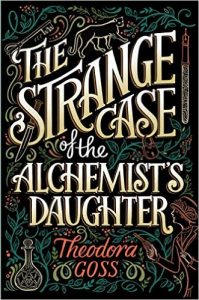
In the end, the story takes the monstrousness of the original monsters and tells a story about friendship, found family and community by making the story not about the monsters but about the helpers. Very much in the same way that Theodora Goss’ Extraordinary Adventures of the Athena Club turns its story of, not the monsters but the monsters’ daughters, into a story of found sisterhood.
If you enjoyed Violet Thistlewaite Is Not a Villain Anymore, The Henchperson’s Guide to Unionizing has a very similar – and equally cozy – vibe, from the villainous henches’ reformation to the touch of romance and family that delightfully fluffs out the bow of coziness.


