A- #BookReview: On a Rogue Planet by Anna Hackett

A- #BookReview: On a Rogue Planet by Anna HackettOn a Rogue Planet (Phoenix Adventures) by Anna Hackett
Format: eARC
Source: author
Formats available: paperback, ebook
Genres: science fiction romance
Series: Phoenix Adventures #3
Pages: 334
Published by Anna Hackett on April 21, 2026
Purchasing Info: Author's WebsiteAmazonBarnes & Noble
Goodreads

Unlucky-in-love salvage mechanic, Malin Phoenix, didn’t intend to get caught up in a coup and kidnapped by a sexy cyborg. But she finds herself swept into an adventure to help the deadly, emotionless CenSec, Xander Saros, retrieve an ancient Terran artifact and save his planet.
Soon she’s racing across uncharted space and is magnetically drawn to the cyborg whose strong arms and muscled body ignite a desire that burns brighter than a supernova. But Mal can never let herself forget that she can’t fall in love with a cyborg who can never love her back.
The crowning glory of the Centax Security program, Xander is heavily enhanced, his emotions dampened to nothing to allow him to be the most efficient, lethal killer in the galaxy. As he and Malin hunt for the remnant of the galaxy’s first computer, the Antikythera Mechanism, their quest leads them into the lair of a dangerous technomancer. But Xander can’t identify his greatest threat—the enemy or the fascinating woman who’s making him feel.

My Review:

Eleven years ago I fell hard into this book, and the same thing happened again in this reread. I mean that completely. When the Phoenix Adventures series originally began in 2015, I loved them all and remembered them very fondly, but eleven years is a LONG time and a lot of books ago.

However, I must confess, this was probably a case of the right book at the right time, as I needed a guaranteed escape from reality, and this author and especially this series has always delivered.

And did it again.

The first time around, I said this book combined bits of Firefly, Deep Space 9, Babylon 5 and Linnea Sinclair’s truly excellent science fiction romance Games of Command, all of which weren’t all that distant in the rearview mirror at that time.

Those antecedents still hold, although the world has changed. Ace scrapper/engineer Malin Phoenix is still Kaylee’s sister-from-another-galactic-mister, the jumpgates that help the Phoenix cousins/brothers are a well-used and VERY convenient bit of tech also featured in DS9, B5 and Mass Effect, while unfortunately Linnea Sinclair seems to have stopped writing some years ago. (If you love SFR and can find her books, they are ALL excellent).

I’d also throw the Marvel Cinematic Universe into the pile, as the Technomancer in On a Rogue Planet and the Grandmaster in Thor: Ragnarok are brothers-from-another-galactic-mother – who they probably murdered along their evil way.

There’s a big part of me that’s gobsmacked at just how long ago 2015 feels from a real-world perspective, how many of those references that were current then are dated now, and just generally how much the world has changed in the intervening years.

What hasn’t changed, not one little itty-bitty bit, is just how good of a story this was then – and is now.

Escape Rating A-: That’s the same grade I gave On a Rogue Planet back in my original review, and it earns that grade again today. On the one hand, it’s even a bit better than it was before, in that as a long term fan of the author I can see the seeds of some of her (then) future SFR and Action/Adventure Romance series, especially Eon Warriors, Oronis Knights and (literally in this particular case) Treasure Hunter Security.

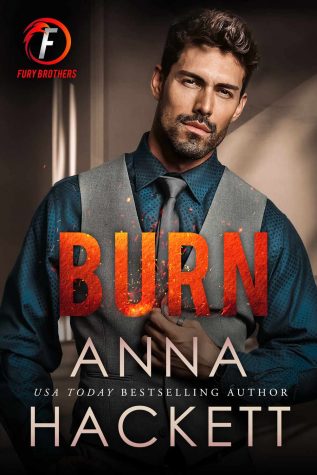
On my two other hands, I have to admit that I liked the original cover better. More importantly, and this is a “me” thing, the background plot twist about saving the women of Centax from being sold into slavery for breeding purposes is starting to ring a bit hollow. It works in the story, and it provides one hell of a motivation for throwing the evil usurper OFF Centax, but the whole “women in the fridge in jeopardy” is just getting old for me. He was plenty evil without that added incentive to remove him from his stolen power. But, as I said, that’s a “me” thing.

What I loved about this story, then and now, is the way that Malin Phoenix knows just who she is and what she’s capable of, and isn’t willing to compromise those things or make herself smaller or lesser because she doesn’t fit the box that so many men want to place her in.

And, that instead of Xander being the stereotypical uncommunicative and unemotional alpha male, he is who and what he is for a reason that makes SFnal sense. He’s been trained and programmed to be unemotional because emotions are inefficient and get in the way of his duty. Whether the way that was done began as tradition or child abuse depends a LOT on perspective in a way that is thought-provoking rather than judgmental. (Although I’d have loved more about Centax because THAT would be a fascinating discussion in its own right.)

All of that being said, I had another fantastic reading time with the Phoenix brothers and cousins. So much so that I’m looking forward eagerly to the next re-release in this series, In a Dangerous Orbit, as well as the author’s next contemporary romance, Never and Always, in her Langston Hotels series.

But the Phoenix Adventures have always held a special place in this reader’s heart, and I’m beyond thrilled at this opportunity to experience all of their adventures again!

Grade A #BookReview: A Long and Speaking Silence by Nghi Vo

Grade A #BookReview: A Long and Speaking Silence by Nghi VoA Long and Speaking Silence (The Singing Hills Cycle, #7) by Nghi Vo
Format: eARC
Source: supplied by publisher via Edelweiss
Formats available: hardcover, ebook, audiobook
Genres: Asian inspired fantasy, fantasy
Series: Singing Hills Cycle #7
Pages: 144
Published by Tordotcom on May 5, 2026
Purchasing Info: Author's WebsitePublisher's WebsiteAmazonBarnes & NobleKoboBookshop.orgBetter World Books
Goodreads

From USA Today bestselling author Nghi Vo comes a beautiful new tale in the Hugo Award-winning Singing Hills Cycle, drawn from the earliest days of Chih's career as a wandering cleric.
"Nghi Vo is so good."—NPR on The Brides of High Hill
Every story begins somewhere.

On the banks of the Ya-lé River, the town of Luntien gathers to celebrate the start of the rainy season, but the celebration is marred by the arrival of refugees from the sea. Everyone has a story about the foreigners newly in their midst—lazy, violent, unwanted—while the refugees themselves grieve the loss of the home they loved.
Cleric Chih, very recently still Novice Chih, is also a stranger in Luntien. A moment of carelessness and bad luck leaves them waiting tables as they struggle to establish themself as a real cleric. A cleric’s job is to listen and record, but the stories emerging in Luntien are ugly and violent, as hard to predict as the river itself. With their hoopoe companion Almost Brilliant by their side, Chih must help the refugees while also unraveling a mystery that may have roots in their own faraway home in the abbey of Singing Hills.
In the seventh entry of the award-winning Singing Hills series, we meet Chih and Almost Brilliant just beginning their journey together as Chih assumes their place on the road and in the world.
The novellas of the Singing Hills series are standalone stories linked by the Cleric Chih, and may be read in any order.

My Review:

This review is a bit early, as it won’t be out for another couple of weeks. But that’s fitting as this story takes place early in Cleric Chih’s career. Not just before the events of The Empress of Salt and Fortune, but before Chih became the more-or-less, usually, mostly, polished and above all experienced Cleric readers of the series have come to know and love.

A Long and Speaking Silence is a portrait of Chih as a young, naive and inexperienced Cleric, so wet behind the ears that they still look for an elder standing beside them when someone calls them “Cleric Chih” when they still mostly think of themselves as “Novice Chih”.

Chih’s circumstances in this story make that point extremely clear to everyone – especially Chih. Not that their companion, the neixin Almost Brilliant, will ever let them forget what an idiot they’ve been. Or are being.

Chih is stuck in the town of Luntien waiting tables at a busy restaurant during the town’s busiest season. Chih was robbed of the packet carrying their expense money, so they’ve been forced to earn their own keep until their pay packet catches up to them.

It’s a learning experience for Chih in more ways than one. Certainly, they learn how to wait tables and serve customers while being run off their feet – and without breaking half the crockery along the way. They learn to live by their own wits. They learn how to make friends and be part of a group that is made up of all sorts of people from all kinds of backgrounds with all sorts of interesting stories.

And they learn that the collection of those stories that is the mission of the Singing Hills Abbey will go a whole lot more smoothly if they let the stories come to them instead of pestering people to tell those stories at a time and circumstance of Chih’s choosing instead of their own. It’s a difficult lesson for Chih, one that they’ve learned by the time we met them in that first book. In this story we get to see how that lesson began to take root.

Mostly, however, they learn the beginnings of patience, as well as the hard lesson that a closed mouth gathers no feet. Or fists.

Escape Rating A: This story, and the whole Singing Hills Cycle of which it is but the latest – and earliest – chapter, is a story that grows upon the reader and in its telling at the same time. But even though this is a very early story in Chih’s career, it continues the trend of the series as a whole – that Chih has moved from being outside of each story, a mere chronicler, to being the central character.

The story that Chih is the center of may be their work waiting tables, but it’s not the important bit except in its effect on Chih. Although it certainly is part of the lesson they need to learn in Luntien.

The greater story in the town is a refugee crisis. And if those parts of the story sound familiar, they should because they are universal in the broader canvas even if they are different in the details. Luntien is flooded with refugees from the Verdant Islands, displaced by weather and war.

The refugees are more than willing to work, but there are more of them than the town can absorb. There’s nowhere for them to go, they’re forced to live on charity while being resented on all sides. It’s a familiar pattern, and it’s happening all over the world.

It’s turning Luntien into a powder keg. Chih only wants to help, but most of what they do is make things worse by jumping in too fast and putting their foot – both their feet – into their mouth. They mean well but they’re mostly not doing well at it.

(It’s a bit like a training montage in many stories, in that Chih thinks they see what’s wrong, tries and fails to fix something, makes a mess of it, retreats to try again, and slowly learns their own lesson. That they need to listen before they talk. That it’s not about them, it’s about the people who need their help – even if that help is just to get their stories told.)

Chih is also trying to fulfill their own mission, to collect stories. And it’s only once they stop talking and start listening – after carving out a bit of space to do their own work – that they discover the bittersweet ending to a story they never imagined would be waiting for them.

In the end, this seventh entry in the long-running Singing Hills Cycle novella series was an absorbing story of youthful impatience, painful lessons and hidden heartbreak. The series as a whole has been a thoughtful and thought-provoking delight. I’m just sad that I’ll have to wait another whole year (if not more) for Cleric Chih’s next story.

A- #BookReview: Trouble’s Turn to Lose by Susan M. Boyer

A- #BookReview: Trouble’s Turn to Lose by Susan M. BoyerTrouble's Turn to Lose (Carolina Tales, #3) by Susan M. Boyer
Format: eARC
Source: supplied by publisher via NetGalley
Formats available: hardcover, large print, paperback, ebook, audiobook
Genres: cozy mystery, mystery, relationship fiction, Southern fiction, women's fiction
Series: Carolina Tales #3
Pages: 334
on April 7, 2026
Purchasing Info: Author's WebsitePublisher's WebsiteAmazonBarnes & NobleKoboBookshop.orgBetter World Books
Goodreads

"A cozy mystery with a Southern accent—heartwarming characters, a coastal setting, and a surprise ending you won't see coming makes this a book for everyone's reading list!"
— Karen White, New York Times Bestselling Author
✦ ✦ ✦
Private Investigator Hadley Cooper has a knack for finding trouble—and this time, it's wearing pearls.
Life on Sullivan's Island is about as close to bliss as it gets—bike rides at sunrise, cases that don't make headlines, and a romance with SLED agent Cash Reynolds that's finally on solid ground. They have one ironclad rule: never work the same case.
When a wealthy Charleston socialite turns up dead, Cash charges her housekeeper, Bridget Donovan, with murder. But the young single mother has a formidable ally in Carolyn Talbot, a local matriarch who implores Hadley to help. Hadley's heart overrides her head, and her agreement with Cash is gone like confetti in a hurricane.
Soon she's wading through a tangle of suspects—blue bloods with deadly secrets, her client's scheming ex-monster-in-law, and the greatest unknown country singer in Nashville. But Hadley's also grappling with a mystery closer to home—one that will shake everything she thought she knew about her family.
To find justice for Bridget, Hadley will have to risk her heart, her life—and maybe her grip on reality.

My Review:

P.I. Hadley Cooper and her significant other, SLED (South Carolina Law Enforcement Division) Agent Cash Reynolds, promised each other NOT to get involved in each other’s cases. (Even though that’s EXACTLY how they met in the first place in Big Trouble on Sullivan’s Island) Which REALLY meant that Hadley promised not to take clients involved in Cash’s cases, as he has much less choice in what he gets assigned than she has in what cases she chooses to take.

But sometimes, the cases choose her, and that’s merely the first problem Hadley faces in this story.

Not exactly the first, just the first that she’s willing to admit to. Because the first real problem that Hadley faces might not be real at all. It’s the conversation she has with her mother’s ghost. (Not that there aren’t others on Sullivan’s Island and nearby Stella Maris who see – and don’t merely imagine – ghosts. But Hadley doesn’t know that -YET.)

What Hadley knows, or believes, or is afraid she just hallucinated, is that her mother came back to tell her three important things. “I’m so sorry”, Help her” and “I love you.” A message that seems so cryptic as to be hallucinatory right up until one of the island’s grandes dames, Caroline Talbot, convinces Hadley to talk with a young woman who is being railroaded to prison – by Hadley’s beau, Cash.

Cash is just following the evidence – evidence that ALL points to Bridget Donovan having murdered her employer Patricia Gaillard. But Hadley’s bullshit detector says that Bridget isn’t shoveling any manure, and that the frame around her is WAY too neat and tidy. And that, perhaps, the very obviousness of the whole thing is leading the police to an easy conclusion instead of beginning a thorough investigation.

An investigation that Hadley decides that she MUST take – in spite of her promise. No matter how much trouble and heartbreak it might – will – cause for her personally. Because her momma told her to “Help her”, and her momma was always right – sooner or later or, as in this case, both.

Escape Rating A-: I looked for comfort reads this week, and so far I’ve definitely found them! Admittedly, my search combined the list of “guaranteed good reads” in the back of my mind with the list of what’s just come out or is coming soon that I KNEW would be just what I was looking for.

Which led me back to Sullivan’s Island, P.I. Hadley Cooper and even back to the heroine of the author’s earlier cozy mystery series, Liz Talbot. I came into this new book in the Carolina Tales series, after Big Trouble on Sullivan’s Island and The Sullivan Island Supper Club, expecting a gorgeous setting, an interesting protagonist in Hadley, a dead body and a clever investigation.

And that’s precisely what I got. The opportunity to catch up with old friends like Liz was a delightful bonus to a terrific mystery.

One of the things I love about a good mystery, cozy or otherwise, is the way that even though the reader KNOWS that the cops have arrested the wrong person, that doesn’t mean that there aren’t plenty of other plausible suspects and oodles of tasty red herrings to get led down the primrose path by.

(Just because the cops are already down a false trail doesn’t mean that the reader can’t find plenty of others on their own.)

Which is exactly what happened to this reader.

Unlike so many mysteries with this kind of start, the police aren’t doing anything wrong and aren’t deliberately taking the easy way out. The evidence they have requires Bridget’s arrest. It’s not personal, it’s not prejudiced, it’s not laziness. They’re doing their jobs the way they are supposed to be done.

But Hadley doesn’t have to do THAT job. She can dig and keep digging until something in this case makes sense. Because the evidence that points to Bridget only makes sense if you don’t look too hard at where it doesn’t make sense at all.

Which is where Hadley’s search begins. And serves up all those red herrings for the reader. Not a one of which fries up into the real deal when it comes to this particular tangled case, making for a delightfully twisted mystery.

Speaking of twisted, the twist that this case puts into Hadley’s love life feels real and not a misunderstandammit OR added just for romantic tension. Hadley and Cash are on opposite ends of the same profession. Or opposite perspectives. He’s looking for guilt, she’s searching for innocence, and their professional lives are guaranteed to intersect – and badly. The thing that brought them together looks like it might tear them apart.

Which is where that blast from the author’s past series, in the form of P.I. Liz Talbot and her husband and partner Nate come in. Liz and Nate were once in a similar quandary (in Liz’s terrific series which starts with Lowcountry Boil), and solved the issue by working together. Liz gets more involved than she should in Hadley’s case because she misses her old job, but in the process shows Hadley a) that she needs someone to watch her back when cases get dangerous – and they do – and b) that there’s an obvious solution to the conflict of interest with Cash if they’re willing to take that leap.

That Liz ALSO has the answer to the first of Hadley’s momma’s cryptic instructions was a delightful way of pulling that opening scene into a lovely circle.

I loved the first book in the Carolina Tales series, Big Trouble on Sullivan’s Island, thought that the second book was a bit of a mixed bag, but I fell head over heels into Trouble’s Turn to Lose – and not just because the cats that Hadley adopts are adorable – and sound a lot like my own Luna and Tuna. I’m hopeful that Hadley will have more mysteries to solve – and that Goose and Nala will find more laps to sit in, in future books in the series, whenever they appear!

#AudioBookReview: Lightning Runes by Harry Turtledove

#AudioBookReview: Lightning Runes by Harry TurtledoveLightning Runes (City of Shadows, 2) by Harry Turtledove
Narrator: Paul Boehmer
Format: audiobook, eARC
Source: supplied by publisher via Edelweiss, supplied by publisher via Libro.fm
Formats available: hardcover, ebook, audiobook
Genres: alternate history, fantasy, paranormal, urban fantasy
Series: City of Shadows #2
Pages: 354
Length: 13 hours and 8 minutes
Published by Caezik SF & Fantasy, Tantor Media on April 16, 2026
Purchasing Info: Author's WebsitePublisher's WebsiteAmazonBarnes & NobleKoboBookshop.orgBetter World Books
Goodreads

Hardboiled Noir meets Urban Fantasy in a post-WWII Los Angeles where vampires, zombies, and demons are part of the social fabric.

Magic is just another way to get killed in the City of Angels.

Los Angeles, 1940s. The war is over, but the shadows are growing teeth. In this gritty Historical Urban Fantasy, detective work requires more than a badge and a .38. It requires an understanding of the runes that thrum beneath the pavement.

It started with a knock on the door. It usually does. Now there’s a body, a missing musician, and a trail of magic that smells like ozone and bad luck. The LAPD is out of its depth. The "square" world is waking up to a reality they aren't prepared to handle.

My Review:

I picked this up because I fell hard for the first book in the series, Twice as Dead and was hoping for more of the same. That first book managed to combine the hard-boiled, noir-ish sensibilities of down-on-their-luck detectives like Sam Spade, Philip Marlowe and Easy Rawlins with the paranormal world of Dan Shambles into an urban fantasy that mixed the best of the ‘old skool’ of that genre with a bit of paranormal romance and the kind of thoroughgoing alternate world building that the author is famous for.

The City of Shadows that the series is set in is an alternate version of Los Angeles in a slightly skewed version of our own world. A world where all the creatures that go bump in the night – wizards, vampires, werewolves, ghosts and zombies, among others, are a known and sorta/kinda accepted part of society. About as well accepted as any other minority population, but also known to be just as real even if just as looked down upon as any other such group.

We never do find out whether the vampires, etc., came out of the coffin one relatively recent dark night or whether their existence has been accepted all along. We are, however, in a 1940s post-World War II era where the powers lined up more or less the same way but under different names – and with the supernatural fighting on both sides.

Just as in the first book, P.I. Jack Mitchell has several cases on his desk that he’s all too afraid are going to turn out to be one big, nasty mess. And he’s right. The vampire whose Nazi views and aggressive behavior drawing the wrong kind of attention to Vampire Village, the werewolf stalking the streets on full moon nights, the mob involvement in the record business AND the blackmail of the queer, black owners of the best jazz club in town shouldn’t have anything to do with each other. But Jack’s luck doesn’t work that way.

He knows they’ll be connected, if only to make his life that much more difficult and in that much more peril. All he has to do is keep his own skin in one piece long enough to unwind all the tangled threads of the case before they can tie him down or burn him out – again – and this time for good.

Escape Rating B: The cover of Lightning Runes sums up my mixed feelings a whole lot better than I ever expected. First, vampire Dora Urban wouldn’t be caught alive, unalive or dead in that dress or with that ridiculous expression on her face. Even after centuries – or more – as a vampire she’s still too much of an aristocrat for either. Meanwhile, there’s something wrong, like uncanny valley wrong or human bodies don’t quite work that way wrong, with the man standing in for Jack Mitchell. The story was like that too for me, a sense of ‘almost but not quite’ right – or at least not quite as good as the first book.

I really wanted to love this one because Twice as Dead was just so good. Parts of this WERE good. The cases were fascinating, the way that they came together took dogged investigation and a bit of luck and the way that Jack teased around all the edges of everything until the pieces started coming together was compelling. The way that Jack gathered more friends around him than he ever thought he’d have to get the job done was terrific.

But, and it’s a fairly big but, the pace slowed down every single time that Jack either got lost in his memories or got pulled down inside his own head in his totally righteous resentment of the way that the US of his 1940s – and ours – did not live up to the image it had of itself as the land of the free, the home of the brave, where all men are created equal.

Because he knows first-hand it’s not true. Jack is mixed-race, able to ‘pass’ in either direction. He sees the way the corrupt LAPD pull over men just a shade darker than himself for beatdowns in plain sight that people just pretend isn’t happening right before their eyes. He knows it could be him.

In the wake of their version of World War II, Jack still gets nightmares about his service during the war, even as he’s thinking about where he would have ended up if he hadn’t passed and wondering whether it would have been safer AND less scarring to be with the black troops or whether he’d just have a different set of scars.

While the many Jews in his neighborhood, and among his friends, remind him that there are people who have it WAY worse than he ever did – and that it’s all wrong and doesn’t look like it’s going to get righted anytime soon – if at all.

All of the above is, well, real. Very real. And it’s equally realistic that Jack thinks about all of it, gets reminded of the war all too often because he’s still fighting it in his head, hates the new ‘restricted’ neighborhoods – restricted to white people only, no nonwhites, no Jews allowed in spite of the laws against such restrictions – and seethes about all of it. That the villain this time around is his world’s equivalent of an SS officer who seems to be hell-bent on resurrecting his ‘Leader’s’ plans and policies in the US – if not the actual bastard himself – continuously pokes Mitchell’s wounds and resentments throughout the entire story.

The issue, as far as the book is concerned, is that it pulls the reader out of the story every time Jack goes down into these dark trenches, and he does it a LOT. I both sympathized and empathized with him every single time, but it either happened too often or went too deep and too far and too much.

Humphrey Bogart as Sam Spade in ‘The Maltese Falcon’

After all of Jack’s internal angst, the ending was a bit anticlimactic – and a bit of a deus ex machina. It was also a lot of fun, a popping of a huge balloon of tense anticipation with the lolloping of a ginormous shaggy dog. But as fun and funny as it was while it was happening, it was almost forgettable after the dark depths of the case itself. Your reading mileage may vary.

Or listening mileage, as the story lends itself well to audio with its first-person protagonist, very much in the Sam Spade/Philip Marlowe talking to himself and breaking the fourth wall kind of way. That being said, I kept waffling between thinking that Jack Mitchell didn’t sound as much like Spade or Marlowe as he thought he did or that the narrator didn’t sound quite as much like portrayals of Spade or Marlowe as I thought he ought to have. Your listening mileage may seriously vary on that one, especially as it may just be that Humphrey Bogart cast such a long, gravelly shadow as Sam Spade in The Maltese Falcon that it’s STILL impossible to shake.

In the end, I have to say that I liked this rather than loved it the way I did Twice as Dead. But I liked it more than enough to want to see it continue. I also need to find out how Jack’s office cats, Old Man Mose and Mehitabel are doing – and what they’re doing to destroy Jack’s office even more!

A+ #BookReview: Stay for a Spell by Amy Coombe

A+ #BookReview: Stay for a Spell by Amy CoombeStay for a Spell by Amy Coombe
Format: eARC
Source: supplied by publisher via Edelweiss
Formats available: hardcover, ebook, audiobook
Genres: cozy fantasy, fantasy, fantasy romance, romantasy
Pages: 384
Published by Ace on April 14, 2026
Purchasing Info: Author's WebsitePublisher's WebsiteAmazonBarnes & NobleKoboBookshop.orgBetter World Books
Goodreads

A cursed princess must discover what her heart truly longs for in this charmingly cozy romantic fantasy for everyone who’s ever lost – or found – themselves in a bookshop.
Princess Tanadelle of the Widdenmar is disillusioned with life as a princess. She longs for real conversation, the chance to build a life of her own making, and uninterrupted reading time.
During a routine royal visit to the town of Little Pepperidge, Tandy’s dream comes true when she finds herself cursed to remain in a run-down bookshop until she unlocks her heart’s desire. Certain that someone will figure out how to break the curse eventually, and delighted by the prospect of an entire bookstore of her own, Tandy settles into life among the stacks. She finds it easy to exchange balls and endless state dinners for teetering piles of books and an irritatingly handsome pirate who seems bent on stealing her stock.
She even starts to believe she's stumbled into her very own happily ever after.
There's just one, minor problem: as Tandy's royal duties go unfulfilled, her frantic parents start sending princes to woo her, each one of them certain their kiss will break the curse. After all, what more could a princess want but a prince?

My Review:

There’s a saying that every cloud has a silver lining. As this story begins, Princess Tanadelle has just been cursed – which really should have been the cloud. But not for Tandy. Being cursed to be confined to a bookshop in the tiny town of Little Pepperidge wouldn’t exactly be a curse for any lifelong reader – and Tandy certainly is that.

From Tandy’s perspective, this so-called curse is the biggest silver lining she’s ever found. It’s not just that she can read to her heart’s content – something that her royal duties have NEVER permitted her to do – it’s that she can stay put and away from the endless duties that being part of the royal family of the Widdenmar obligates her to carry out.

Or rather, the endless duties that her parents, the King and Queen of the Widdenmar, and her older sister, the Crown Prince (not a typo, Prince is a gender neutral term for the heir to any throne in this world) have thrust upon her. None of her duties are onerous, and Tandy recognizes that she leads a VERY privileged life.

But Tandy is the ‘working’ royal who travels up and down the kingdom, representing the royal family in an endless round of anniversaries, dedications, etc., etc., to the point where they only times Tandy gets to come home are when the court is about to move to a different region for the upcoming season.

Her never-ending travel schedule is enough to make the READER tired just reading about it.

Tandy’s curse, as much as it inconveniences her royal parents, is an absolute delight for her. She can stay put. She can sleep in the same bed every night. She has a bit of privacy and something to actually DO every day instead of just waiting for her next appearance and pretending not to have a single opinion about anything at all because she might offend someone if she even asks a pointed question. No one would ever say she has a hard life, but it is wearing. (Or it is from Tandy’s perspective and the reader certainly catches that feeling.)

This is very much a cozy fantasy, so no one is being evil in this situation. Tandy’s parents are a bit single-minded and a bit clueless, while Tandy is an overt people-pleaser who simply doesn’t know how to say “no” and police her own boundaries.

Everybody gets a whole bunch of life lessons in this one, starting with Tandy.

The bookshop isn’t a curse, it’s really a gift in curse disguise. The curse is in the pursuit of the solution. Because to break the curse, Tandy has to discover what her heart’s desire IS and grab it. It doesn’t have to be love – and it mostly isn’t.

Which doesn’t stop her parents from sending a literal rain of princes to her shop to cure her curse with a kiss. Because that’s the way fairy tales are supposed to work. But this isn’t and it doesn’t while the town benefits GREATLY from the princes, their entourages, and all the tourists who come to see the cursed princess and all the princes.

The problem with the curse, from Tandy’s perspective, is that her whole life has been about what other people need, want, and desire. She’s never been allowed to want anything for herself. The curse and the shop that comes with it, are the first opportunity she’s ever had to live just for herself and figure out what SHE wants out of her life.

Which might just turn out to be a life on her own terms. If she can just manage to tell her well-meaning, overbearing, royal parents, “NO” for the first time in her whole, entire, duty-bound life.

Escape Rating A+: Readers will definitely want to “stay for a spell” in Tandy’s magical bookshop. This is a cozy fantasy that will go down every bit as easily as the lattes in Legends and Lattes and the tea in Tomes and Tea – even if just the idea of “turnip leaf tea” makes the reader’s mouth pucker every bit as much as it does Tandy’s.

Which does lead to the one thing I kept wondering. Tandy can’t leave the shop’s property. She can’t exit the front door, she can’t vault the fence in the back garden. But people can enter the shop – and do from her very first day. Why doesn’t she get food delivery arranged? Turnips all the time have to be getting boring even with magical cooking techniques to make them less “turnip-y”. I did wonder. Often. A lot, actually. But that wondering never stopped me from falling in love with the story and its characters. That this is the author’s DEBUT novel is amazing, turnip leaf tea and all!

Because Tandy has a steady visitor from the very beginning in the person of Sasha, a teenaged dracone who would be a goth if goths existed in this world. (In my head Sasha looks like Madame Vastra from Doctor Who, but your imaginary casting mileage may vary).

In Sasha, Tandy finds a kindred soul, someone who can spend hours lost in a good book and who needs a purpose to take herself out of herself. Tandy needs a helper and a guide, Sasha needs a safe haven in which to feel her own feelings, and their friendship is glorious for them both.

Tandy’s other visitor opens her world, as she’s not the only cursed person in town. The ‘barn pirate’, a man afraid of the sea he loves, can’t be kept out of the shop no matter how much he infuriates Tandy at every turn. But just like Sasha, the pirate treats Tandy as herself and not as Princess Tanadelle, helping to figure out who Tandy might want to be if she could choose for herself.

This story, just like Legends and Lattes (particularly Bookshops & Bonedust), Tomes & Tea (beginning with Can’t Spell Treason Without Tea) and Adenashire from its start in A Fellowship of Bakers & Magic, are all cozy fantasies that combine the building of a business with the fulfilment of a lifelong dream and just the right touch of romance into something very special.

Tandy’s curse, as expected for a cozy fantasy story, turns out to be a blessing in disguise. The charm of the story is in the way that she goes about it, not just that she doesn’t EVER sit on her hands and wait to be rescued, but that she works hard at making a new life for herself, even if it might be temporary and even if she doesn’t have a clue what she’s doing most of the time.

We simply like her, we enjoy watching her muddle through – even with the endless supply of turnips – and wish that every library and bookshop was supplied with a helpful nest of bluecaps to light the way AND help readers find the books they’re looking for.

I especially enjoyed the way that the ‘parade of princes’ was handled for how it subverted so many tropes. Tandy dreads the princes. Not because they’re evil, not because anything bad is going to happen, but for the string of disappointments. Especially the issues surrounding the last prince, which is built up to be terrible – and is, but not in any of the ways that the reader expects and it’s charmingly done.

I had a terrific time with Tandy and her bookshop in Little Pepperidge. The story gives off big cozy fantasy feels, so if you loved Legends and Lattes, Tomes & Tea, Adenashire, The Teller of Small Fortunes and its follow-up, The Keeper of Magical Things, you’re in for a real treat. (And in spite of having, admittedly, MANY of the same readalikes as yesterday’s book, Stay for a Spell and Death Meets Cute are delightfully different from each other. They may use a lot of the same settings and tropes, but they use them VERY differently. Which does not mean that they are not also readalikes for each other, because they certainly are).

I’m especially happy to be able to wrap this up with Tanadelle Courcy is NOT a Princess Anymore – and just like Violet Thistlewaite no longer being a villain, it’s the making of Violet, Tandy and this charming and cozy fantasy romance.

A- #BookReview: Death Meets Cute by J. Penner

A- #BookReview: Death Meets Cute by J. PennerDeath Meets Cute by J. Penner
Format: eARC
Source: supplied by publisher via Edelweiss
Formats available: paperback, ebook, audiobook
Genres: cozy fantasy, fantasy, fantasy romance, grumpy/sunshine romance, romantasy
Pages: 304
Published by Poisoned Pen Press on April 28, 2026
Purchasing Info: Author's WebsitePublisher's WebsiteAmazonBarnes & NobleKoboBookshop.orgBetter World Books
Goodreads

"Filled with so much love, heart, and delicious baked goods." —Rebecca Thorne, USA Today bestselling author of Can't Spell Treason Without Tea
I am more than capable of being evil today. I think…
Iris Weyward wants to be bad. Truly bad. Terrifyingly, gloriously villainous. But after helping her sisters unleash a spell to throw the realm into chaos, Iris is left feeling strangely empty—and still not the villain of her dreams. So, she sets off for the quiet town of Fraywell to build her wicked legacy alone. 
Things start a crooked little cottage, a reputation for curses and potions, and a healthy dose of fear from the locals. But when her ogre bodyguard disappears, Iris needs new muscle. Good thing a fearsome orc just toppled over in her yard. Naturally, she decides to reanimate him. It's a perfect solution. 
Only, Talon isn't the brooding warrior she was hoping for. He's gentle. He bakes. Worst of all, he's nice. But Iris can't possibly have a thing for her new employee. She's supposed to be the most wicked witch in town! 
While Iris struggles to turn Talon into the enforcer she deserves, her sisters arrive seeking help—their magic is fading, and the cause may be closer than any of them realize. The timing couldn't be worse, and falling for an orc wasn't supposed to be part of her villain era, but it might turn out to be the best spell she's ever cast…

My Review:

What’s a witch to do when a blessing has curdled into a curse? Not that the Weyward Sisters generally have much to do with blessings because they have a well-earned reputation for evil to maintain. After all, they’re the ones responsible for the recent mess with that Scottish King who came to such a terrible end.

Then again, he did kind of ask for it. Which is precisely the kind of wickedness that Dahlia, Iris and Poppy Weyward are (in)famous for. But it’s hard to do anything really evil when one’s magic is fading, and that’s been true for the Weyward Sisters for the past year. Since they went their separate ways.

Because they couldn’t stand the sight or sound of each other a minute longer.

Which is exactly why Iris Weyward keeps putting off reading the letter her sisters sent her. No matter how much its presence taunts her amid the chaos piling on the table in her slightly out of the way cottage. A cottage that is JUST far enough outside the village of Fraywell to seem appropriately mysterious for her villainous intentions.

Intentions that aren’t going well. A deadly potion here, a poisonous apple there, earning just enough to keep herself afloat – barely – with her dreams of glorious villainy waging a seemingly unending battle with her lack of magic and occasional impulses that are much too good-adjacent to be comfortable for an evil witch.

The only person Iris intends to be ‘good’ to is her familiar, Quince. Because their relationship is symbiotic, and being good to Quince is also being good to herself. And because Quince is a hedgehog with attitude who will poke her with all his quills if she doesn’t feed (and cuddle) him on a regular basis.

Iris is just certain she needs to impress her villainy on the local population more than she has been. They’ve gotten used to her after a year in residence. She needs a menacing new bodyguard to project her evil image with a bit more villainous ‘oomph’ than the one that left her to take a vacation with his family. (A concept that makes Iris shudder with, well, horror.)

When ‘providence’ provides her with a half-orc conveniently just expired in her garden, she’s sure it’s a sign. Even with her fraying magic, she’s sure she can raise him from the dead and bind him to her service. But she’s not a monster. She summons his spirit and asks for his consent before she starts on necromancy.

Iris gets absolutely nothing she expected from this transaction. She was looking for a mean, menacing mercenary. Talon Gefroy may look the part – and look better than Iris wants to think about – but he’s NICE. Even (cringe, shudder) sweet. He cooks, he cleans, he bakes cookies. He even gives names to her chickens!

She’s thinking that he’s just not right for the job until her sisters arrive. Just as they said they would in that letter Iris never read. They’ve all lost their magic. They’ve figured out that they are cursed AND that they need to work together to find the counter.

They’re planning to stay in Iris’ little cottage, WITH IRIS, until they find the answer. However long THAT might take. Even though they get on each other’s last nerve even more than they did a year ago when they separated.

Suddenly, Iris needs Talon. Not for the role she intended for him, but for the role that he’s actually filling. Iris is not about to cook, clean, wait on and cater to her sisters. But she doesn’t have to. She has Talon for that. And just possibly for a whole lot more.

But first, she’ll have to tell him the evil truth about herself. Curses, sisters, and all.

Escape Rating A-: I had a good time with the author’s Adenashire series (start with A Fellowship of Bakers & Magic and prepare for a delightfully cozy and delicious read) and was hoping for more of the same with this book as it’s a bit of a wait until the author’s next Adenashire book, A Fellowship of Curses & Cats comes pussyfooting out.

I almost referred to Death Meets Cute as the start of a new series, and that might turn out to be right after all. It absolutely could be. This story stands alone, and Iris certainly gets her happy ever after, BUT she has two sisters to think about. So hopefully…

But first there’s this story, and it’s one of those ‘book in a blender’ things, even if all the books that get thrown into that blender are all cozy fantasies in one way or another.

Of course there’s Adenashire, and Fraywell sounds like the kind of place that would fit right into that world. If it turns out to be after all, I would be pleased but not surprised. Either way, it’s a very similar vibe, in that it’s a place where magical and non-magical people and beings live side-by-side and tolerate each other – or sometimes don’t – in the ways that people in small towns in other cozy genres generally do and don’t.

So if you like cozy fantasy, particularly in series like Adenashire, Legends & Lattes and Tomes & Tea (Can’t Spell Treason Without Tea), you’ll probably enjoy visiting Fraywell as well.

But there are two other books that need to go into that blender, books that add a little bit of danger and spice to what would otherwise be a sweet grumpy-sunshine fantasy romance. Because there are two stories at the heart of Death Meets Cute. The obvious one is that grumpy/sunshine romance between grumpy Iris and sunshine Talon.

The second, however, is the story of the fraying sisterhood between Dahlia, Iris and Poppy Weyward, and the way they’ve brought this curse upon themselves. That’s a story about the very fine line between curses and blessings, and how easy it is for the one to turn into the other – in either direction. If that’s the part of Death Meets Cute that appeals, take a look at The Crescent Moon Tearoom by Stacy Sivinski because it also tells a heartwarming story about the bonds of sisterhood and how easily those bonds can be frayed, or even broken. And that there can be terrible consequences when there’s magic involved.

The part of this that’s most purely interesting, at least to this reader, revolves around the question of what it means to be ‘evil’ along with the question of whether evil and villainy are in the eyes of the beholder. At first, that part of the story made me think of both Wooing the Witch Queen, the first book in the Queens of Villainy series, and Violet Thistlewaite Is Not a Villain Anymore. The so-called Queens of Villainy are only really considered villainous by members of the patriarchy who are pissed that they’ve chosen to rule their kingdoms themselves, while Violet has rejected real villainy and is doing her damndest to make amends for her previous actions.

Because it seems like the Weyward Sisters don’t REALLY want to be EVIL. And, that the image they want to project is in conflict with their core selves, causing them to lash out, mostly at each other. None of them want to be ‘goody-two shoes’, but that doesn’t mean they can’t be helpful and supportive and even friendly to people who act the same way towards them.

And they are all more than willing to do terrible things to people who deserve it. Or who ask for it in the same way that you can’t cheat an honest person. So they’re not really evil after all, although they might be a bit like Gretsella, the Somewhat Wicked Witch of Brigandale. Like Gretsella, the Weyward Sisters are all more than willing to deliver retribution to the deserving. And is that so bad?

Hopefully, we’ll get to find out!

Grade A #BookReview: Double Shadow by Andrew Ludington

Grade A #BookReview: Double Shadow by Andrew LudingtonDouble Shadow (Splinter Effect, #2) by Andrew Ludington
Format: eARC
Source: supplied by publisher via Edelweiss
Formats available: hardcover, ebook
Genres: action adventure, mystery, science fiction, thriller, time travel
Series: Splinter Effect #2
Pages: 288
Published by Minotaur Books on April 21, 2026
Purchasing Info: Author's WebsitePublisher's WebsiteAmazonBarnes & NobleKoboBookshop.orgBetter World Books
Goodreads

In this thrilling installment of the Splinter Effect series, time-traveling archaeologist Rabbit Ward returns to the past to help save his former adversary and track down a murderous thief in first century Jerusalem.

ROME, 2019. Time-traveling, Smithsonian archaeologist Rabbit Ward is back in the present, but not for long. Helen, his former adversary and growing ally, is in trouble with the law after being framed for a murder she didn’t commit. Stuck in hiding and running out of other options, she turns to Rabbit for help. "Help" in this case involves a trip to first century Jerusalem to track down a mysterious man named Einar Eshek.

But Rabbit won't have to do this mission alone; as soon as he arrives in 68 CE, he meets a younger version of Helen, one who has never met him before. Together, they work to track down Eshek, who turns out to be not only a time-traveling thief, but a murderous psychopath.

As they pursue Eshek through time, Rabbit and Helen feel something even bigger pulling them together. Torn between the two versions of the woman he knows, and with the clock ticking down on Helen’s fate in 2019, Rabbit might have no choice but to betray her past self to secure Helen’s safety in the future. Tensions rise as Jerusalem prepares to go to war with Rome, and Rabbit races to capture Eshek, clear Helen’s name, and make it back to 2019 in one piece—a feat that’s proving to be easier said than done—before everything falls apart.

My Review:

Archaeologists dig up formerly hidden caches of important artifacts all the time. As often as Egypt’s Valley of the Kings has been explored and looted over the millennia, the last undiscovered royal tomb of the 18th Egyptian dynasty (the dynasty that included Tutankhamun), wasn’t discovered until February, 2025. It’s not that historians and archaeologists didn’t know that Thutmose II existed, or that he must have a tomb someplace, they just couldn’t locate it.

Until they did.

But if time travel were an actual thing, as it is in this Splinter Effect series, such discoveries might not be so uncommon. After all, that’s what Dr. Robert “Rabbit” Ward is famous for – and what his expeditions get funded for. He doesn’t just dig up the past in the present – he goes back to the past and steals or saves (opinions vary) important artifacts and places them EXACTLY where he knows he can find them again in the present.

For Rabbit, it’s about being able to experience history by being there. The artifacts he “finds” are just an excuse to get funding. He’s in it for the adventure – and the thrill of it all.

But just as billionaires pay their way into space travel, in a world in which time travel is a viable technological thing there would be some who would pay their way into the past. Even if the practice was illegal. Which it needs to be because, well, imagine the mess if anyone with enough money could go back in time and manipulate the present?

(It’s been imagined, that’s the story in Nicholas Binge’s Extremity. It’s not a pretty picture. AT ALL)

In this version of time travel, similar to John Scalzi’s 3 Days, 9 Months, 27 Years, the time traveler can’t change their own timeline, but they can ‘splinter’ the timeline to create a different future for a different version of themselves and their world.

They can also go back in time to, let’s say, act out their worst impulses with the certainty that it won’t have any effect on their own present. (A variation of Jack the Ripper’s time travel in the movie Time After Time.)

In this second book in this series, however, Rabbit’s motives for this particular jaunt back to the waning days of the Second Temple period of Jewish history (68 CE), isn’t about an artifact or even a treasure – not that he isn’t using one as an excuse.

He’s going back in time to chase a serial killer and help a frenemy – not expecting the two things to turn out to be the same thing after all.

Escape Rating A: I did read the first book in this series, Splinter Effect, for a Library Journal review but didn’t write it up because OMG Rabbit’s story in that first one is a fascinating but confusing mess. (I definitely enjoyed it, I just couldn’t wrap my mind around a review of the length I use here. I either had too many words or not nearly enough.)

This second book is even more fascinating, because there’s a bit more of a through line to tie the past, present, present past (that makes sense in the story, I swear), and the unknown future together into a rollicking historical adventure.

It helps a lot that Rabbit finally figures out his weird relationship with frenemy/rival time traveler (Dr.) Helen Fletcher. I didn’t catch the hints the first time around, because it’s sorta/kinda the relationship in The Time Traveler’s Wife – and I haven’t read that. Also, that impression isn’t strictly correct although it is adjacent.

In other words, the relationship between Rabbit and Helen isn’t as much like The Time Traveler’s Wife as it IS like a different SFnal relationship that was based on that book. By that, I’m referring to the relationship between the Doctor and River Song in Doctor Who (“The Silence in the Library” – and I can’t believe I’m referring to that twice in the same week) in that they’ve met out of order. Rabbit’s first meeting with Helen was in Splinter Effect. Her first meeting with him is here in Double Shadow, back in 68 CE in Qumran. Judaea is about to fall to the Romans, and Rabbit and Helen are caught up in the turmoil that leads to the destruction of the Second Temple and the fall of Jerusalem.

Which leads straight into the other fascinating thing about time travel stories. The “you are there” effect. The reason Rabbit does what he does, the reason Helen got caught up by the same compulsion, the thing that makes this series compulsively readable, is that they are us. They’re people from our time who are able to go back and experience history as it happened who can see things through our eyes.

Including the desire to make things better with the acknowledgement that they can’t. That for them, this is settled history. They can’t save anyone because they are already dead. And they have to do their damndest to experience the world as it was and stand by and bear witness to history even when it’s awful and not lose their humanity in the process.

So we feel for them and with them even as we watch with fascination as history unfolds – very much warts and blood and guts and all. That they’ve brought the excesses of our present into the excesses of the past – which goes back to Time After Time AGAIN – added a touch of mystery to a story that was already riveting – AND opens the series up to further (mis)adventures in its future. And I’m looking forward to reading them!

A- #AudioBookReview: Seasons of Glass and Iron by Amal El-Mohtar

A- #AudioBookReview: Seasons of Glass and Iron by Amal El-MohtarSeasons of Glass and Iron: Stories by Amal El-Mohtar
Narrator: Rachel Elizabeth Smith
Format: audiobook, eARC
Source: supplied by publisher via Edelweiss, supplied by publisher via Libro.fm
Formats available: hardcover, ebook, audiobook
Genres: fantasy, mythology, science fiction
Pages: 208
Length: 6 hours and 58 minutes
Published by Macmillan Audio, Tordotcom on March 24, 2026
Purchasing Info: Author's WebsitePublisher's WebsiteAmazonBarnes & NobleKoboBookshop.orgBetter World Books
Goodreads

Full of glimpses into gleaming worlds and fairy tales with teeth, Seasons of Glass and Iron: Stories is a collection of acclaimed and awarded work from Amal El-Mohtar.

With confidence and style, El-Mohtar guides us through exquisitely told and sharply observed tales about life as it is, was, and could be. Like miscellany from other worlds, these stories are told in letters, diary entries, reference materials, folktales, and lyrical prose.

Full of Nebula, Locus, World Fantasy, and Hugo Award-winning and nominated stories, Seasons of Glass and Stories includes "Seasons of Glass and Iron," "The Green Book," "Madeleine," "The Lonely Sea in the Sky," "And Their Lips Rang with the Sun," "The Truth About Owls," "A Hollow Play," "Anabasis," "To Follow the Waves," "John Hollowback and the Witch," "Florilegia, or, Some Lies About Flowers," "Pockets," and more.

My Review:

I picked this up because I’ve had mixed reactions to the author’s previous works, This Is How You Lose the Time War, co-authored with Max Gladstone, and her solo novella, The River Has Roots. Most readers LOVED Time War, but I have to confess that I did not. Howsomever, I fell hard for River, to the point that I was talking back to the marvelous audio version because I felt for the characters, wanted better for them SO MUCH, and saw the tragedy coming miles away.

This collection looked intriguing, and it certainly was that. What I didn’t expect was that it’s a retrospective of the author’s work from 2009’s “And Their Lips Rang with the Sun” to 2023’s “John Hollowback and the Witch”.

According to the author’s introduction, there is no new material in this book EXCEPT for the Introduction itself. An introduction which points out that, while these stories and poems were not collected to fit a particular theme or show a particular progression, they nevertheless display the overall themes that suffuse all of the author’s work.

In this review, I’m going to talk about the individual short stories, because that’s how I approached the collection. I listened to this in audio, and the poetry sounded beautiful, even the Arabic translations that I did not understand but sounded like spoken music. But I’m aware that I don’t really understand poetry – even in English – unless the themes hit me over the head AND I have time to really study them. Audio doesn’t lend itself to that approach.

Which leaves me to review the short stories individually, as I generally do with collections. But if you’re looking for a review of this book that approaches the collection as a whole, there’s an excellent review taking that tack in Ancillary Review of Books under the title “Scriptures in the Kindest Sense.

Turning now to the individual stories…

“Seasons of Glass and Iron” c2016
This is a lovely mythic telling or retelling or a bit of both about two women who are both the victims of, well, the patriarchy and all of the stories that women are told that claim that everything is their fault. The princess’s voice and movement is entirely suppressed to keep the men circling her father’s kingdom from ‘stealing’ her and it’s all her fault. The woman who meets her while traveling is on a quest to wear out magical iron shoes that literally break the bones of her feet because her mother helped her see that her shapeshifting bear husband is an abusive bear regardless of what shape he might be wearing at the time. Neither of them is at fault, but society makes them think they are. It’s only when they see the monstrousness of the other’s fate that they accept that their own is unjust and that they can escape together. Escape Rating A

“The Green Book” c2010
This was a story told in its ellipses. A woman who knows too much is trapped in a book. She can only ‘speak’ if someone writes in the book. The scholar who owns the book thinks he loves her, but they’ve only met through the book and he loves ‘book-her’ more than he’d ever love ‘real-her’ and she knows it. I felt like this one needed more than it had, because it’s a lot of sad but doesn’t quite gel into a complete story. It tantalizes rather than reveals but that may have been the point. Escape Rating B

“Madeleine” c2015
This one took a while to work for me, while at the same time it felt like I’d read something similar before, (which I now think might be Volatile Memory by Seth Haddon, but this has a much happier ending). From one perspective, it’s all about the way that women are told that any behavior that deviates from the so-called ‘norm’ means they are crazy (and so does the next story, “The Lonely Sea in the Sky”, but differently). On another hand, this is a story about the processing of grief, with a side-note about the loose qualifying requirements for participating in drug trials. On a third, and likely metaphorical hand, it’s a bit of Doctor Who’s “The Silence in the Library” as the protagonists haven’t really met before they meet in dreamlike memory fragments – and yet their relationship is already intimate in a way that neither has ever experienced before because they share the same heartbreaks and griefs and just need to find their way back to each other to be whole. Escape Rating B+ I loved the ending but the middle went on just a bit long.

“The Lonely Sea in the Sky” c2014
Very SF in ways that are also very dreamlike, and again, about the medical tendency to shove non-conforming women into a box labelled “crazy”. It’s also about the way that “progress” is spun so that anyone who objects is labelled a crackpot – or mentally ill – or both. At the same time, it’s a bit of ‘first contact’ in that the alien species isn’t as little like us as ‘ugly bags of mostly water’ as it could be, and only some people are sensitive to it. And thus the story recurves back to its origin. Escape Rating B+ because a) the ending is a bit of a wow and b) the narrator’s perspective could, in fact, be crazy but it doesn’t feel that way because SF.

“And Their Lips Rang with the Sun” c2009
This story is just a bit sly. And it has layers like an onion, complete with tears. It begins with an old woman telling a tale that borders on myth and might be legend, about the way that sun-priestesses sing the sun up at dawn and down at dusk. A story being told to a young man who seems like he never intended to sit down for the tale in the first place. But as the old woman plies him with endless cups of tea and tells the story, it switches from myth and metaphor to a story of love and temptation. Then it’s a discovery that the sun needs the singing and that the moon has singers of its own. By the time we reach the end, we know the story is true and that it’s hers – and also that it’s his and that her long-lost child has finally come home. Escape Rating A and don’t be surprised if you sniffle a little bit at the end

“A Tale of Ash in Seven Birds” c2017
This story IS intentionally a metaphor. It takes seven different species of birds, from the most mundane to the most fantastical, to tell a story about the rapaciousness of empires and the tenacity of people to resist the destruction of their culture. Listening to it, it almost sounds like a poem. In the end, I found the concept more interesting than I found the prose captivating. Escape Rating B

“The Truth About Owls” c2014
First, this isn’t really about owls. It’s about one girl’s identification with one specific owl, an owl that she comes to see as an avatar for herself. The owl is named Blodeuwedd, after the woman from Welsh mythology, specifically from the Mabinogion. (And we’ll come back to that in a later story). Anisa, herself the child of a Lebanese father and a Scottish mother, living in Glasgow but self-identifying as Lebanese, is a child of two worlds, feeling out of place in both and comfortable in neither. She sees herself both in the owl, in the bird’s predatory gaze and hostility towards anyone trying to push her in a direction she does not want to go – and with the legendary figure the owl was named for, the woman made of flowers. Because Anisa sees herself as hostile and even dangerous to a world that is hostile to her, and as a person made of disparate parts that won’t combine into a whole. What she is looking for is a connection that is not freighted with expectations. Whether she achieves that by channeling a magical power she once believed she had – or by relaxing her guard against the world or by accepting things as they are is left up in the air. An interesting story that works both on the level of fantasy and as a metaphor without forcing the reader to decide which. Escape Rating A-

“Wing” c2012
Short and lovely. Most of what this story has to say seems to be in what’s not written. I think it’s about finding the person who respects your secrets and understands them the same way you do even if they don’t know the secret itself. Or something like that. And I could be totally wrong. Escape Rating B

“A Hollow Play” c2013
This was lovely, bittersweet and sad. It’s a fae-in-exile story, but it’s also about giving up dreams in order to make them come true, how much a sacrifice has to hurt in order to power magic – and what sacrifice, hurt, power and magic all mean. It’s both a story about being an immigrant or refugee and a story about being the person you’re meant to be. All wrapped up in a story about what it really means when we say that we want the person we love to be happy, and how much we’re willing to pay and to lose for that happiness when it might not include us. Escape Rating A

“Anabasis” c2017
A story on the theme of “Nevertheless, she persisted” At first, the language of transformation resonated with me, but as the story got more lyrical it also obscured its own message. It sounds beautiful as it’s read, but I just needed more time for it to invoke the images I think it meant to. In the end, it didn’t quite stick. Escape Rating C

“To Follow the Waves” c2011
If you’ve ever read The Dallergut Dream-Department Store, this is the extremely non-cozy version of that concept. The central character is a woman who crafts jewelry that makes dreams, but she works to custom order. She’s been taught to create those dreams from a combination of memory and fantasy, and they’re supposed to be dream-like all around. The magic is in giving the dreamer the desired dream. But what if it’s more than that? When she becomes obsessed with a woman she sees at a cafe and begins to imbue ALL the dream-devices she creates with some facet of that woman, she’s surprised to be confronted by the woman herself, who has spent her own nights trapped in other people’s dreams and wants to learn to do it to the dream crafter as recompense. It’s a story about obsession more than love, a story that could fall into horror after the end but doesn’t quite if only because it ends before the tables get turned. Escape Rating B

“John Hollowback and the Witch” c2023
This was a fairy tale that could have come straight out of the Brothers Grimm. Well, it’s grim enough, anyway. It’s also feminist in the same way that “Florilegia” is, in that a story that’s traditionally told from the male perspective is instead told from the point of view of the women in the story who are caught in his trap. And it is a trap, very much in the same way that the arsehole in the author’s The River Has Roots is a trap. The trap of a man playing the social game to his own advantage while weaving a web around a woman who does not want him but is too polite, or too passive, or too rulebound, to resist – especially when everyone around her only sees the surface of him and not the evil underneath. But in this case someone did, took a literal pound of flesh out of his back AND the memories in his head, and set him back out in the world with the hole in his soul exposed for all the world to see. The only way for him to get his missing parts back is to acknowledge that they’re missing because of all the lies he told himself about, basically, what a nice guy he is. Escape Rating A with more than a bit of well-deserved bite.

“Florilegia, Or, Some Lies about Flowers” c2019
Back again to the tale of Blodeuwedd, although this time it hews considerably closer to the original tale in the Mabinogion. Albeit with a feminist twist. Because this time around, instead of believing all the men telling her that they made her to be what they want her to be, she chooses to make herself. I liked the concept of the story but found the language to be a bit, well, flowery, as if in imitation of the language of the original and that didn’t quite work for me. Escape Rating B

“Pockets” c2015
This was a terrific little closing story for the collection. It starts with an idea, that sometimes pockets are tiny wormholes in reality, that the stuff that’s put into one person’s pocket somewhere in the world comes out of an entirely different pocket somewhere else. There’s all sorts of directions this story could have gone, but instead of truly going down the rabbit hole of scientific exploration on the true nature of pocket wormholes, it turns into something uplifting about filling in holes in each other’s psyches so that the world as a whole, or at least the people in it, are a bit more whole. Especially if they share the contents of each other’s hearts and souls instead of just a bit of pocket lint. Escape Rating A-

Escape Rating Overall A-: Unsurprisingly, not all of the stories worked for this reader, and that’s generally true of such collections. Not every anything works for every reader every time. Howsomever, the standout stories in this collection, “Seasons of Glass and Iron”, “And Their Lips Rang with the Sun”, “A Hollow Play”, “John Hollowback and the Witch” and even “Pockets” each did something special in their own marvelous ways.

Something that did work in every story, however, was the narration of the audiobook version by Rachel Elizabeth Smith. She made all the stories sing and and turned the poetry – even the poems whose language I did not understand – into beautiful music. I will look for this narrator again, AND I will certainly pick up the author’s next book when it appears – hopefully in the not too distant future.

#BookReview: No One Would Do What the Lamberts Have Done by Sophie Hannah

#BookReview: No One Would Do What the Lamberts Have Done by Sophie HannahNo One Would Do What the Lamberts Have Done by Sophie Hannah
Format: eARC
Source: supplied by publisher via Edelweiss
Formats available: hardcover, large print, paperback, ebook, audiobook
Genres: mystery
Pages: 406
Published by Sourcebooks Landmark on January 20, 2026
Purchasing Info: Author's WebsitePublisher's WebsiteAmazonBarnes & NobleKoboBookshop.orgBetter World Books
Goodreads

The twistiest murder mystery you are ever likely to read?

A story about a family that does the unthinkable in order to save the life of one of its beloved members?

Both? Or something else altogether?

You'll have to read until the very last word in order to find out…

You think it will never happen to the ring of the bell, the policeman on the doorstep. What he says traps you in a nightmare that starts with the words, 'I'm afraid…'

Sally Lambert is also afraid, and desperate enough to consider the unthinkable. Is it really, definitely, impossible to escape from this horror? Maybe not. There's always something you can do, right?

Of course, no one would ever do this particular something – except the Lamberts, who might have to.

No one has ever gone this far. Until Sally decides that the Lamberts will…

My Review:

I don’t normally start by talking about what other reviewers have said, but it’s brilliant and possibly the best short summary I’m going to find OR come up with myself. Because the reviewer who said that this “definitely seems to be a Marmite book” was spot on.

For those readers on my side of the pond who didn’t spend a childhood watching Masterpiece Theater or Doctor Who or reading a lot of British set AND published books, Marmite is a “savoury spread” that is popular in Britain. Vegemite is Marmite’s Aussie cousin. In Britain – and elsewhere – Marmite is shorthand for something that is definitely an acquired taste. Something that people either love or hate but that no one is neutral about unless they just haven’t tried it yet.

I haven’t tried Marmite, but I have read this book. And it’s definitely an acquired taste. It may be loosely based, sorta/kinda and more in theme and presentation than actual story, on The Rose and the Yew Tree, written by Agatha Christie under her Mary Westmacott pen name, but it isn’t really Christie-esq at all.

On the one hand – and do I ever need a lot of hands for this one – the idea at the heart of the story is, well, heartwarming and potentially heartbreaking. Sally Lambert’s beloved dog, the adorable Westie named Champ, has been falsely accused of mauling teenager Tess Gavey. The Gaveys and the Lamberts are bitter enemies, so it is not outside the realms of possibility – or even probability, that Tess is lying. Because she’s a lying liar who lies just like the rest of the Gaveys.

Because of the false accusation, poor Champ is in very real danger of being put down as a ‘dangerous’ animal. Which is where the plot both thickens AND goes off the rails and I start needing all the hands.

On one of my other hands, the Lamberts go on the run, of course taking Champ with them, to protect him from a fate that is literally death which he doesn’t deserve. And on another hand, there’s the entire bonkers plot that results in the death of the entire Gavey family.

In the middle, Champ becomes the darling of social media and a cause célèbre celebrity, the Gaveys are exposed as the scum they are, and seemingly the entire world ends up on Champ’s side.

While surrounding all of that, there’s a framing subplot about a dirt-stained kicked-around manuscript in a box that claims to be the story of how the Gaveys got done in by a bit of mindbending hypnosis conducted by the ghost of the Lamberts’ previous dog.

It’s a lot to take in, a lot to swallow, and a LOT of readers are going to think it’s Marmite. No one seems to be neutral about it, including this reader. This is a case where your reading mileage is guaranteed to vary.

Escape Rating C-: This one is way too bonkers for me. It’s not just that the plot is bonkers, although it is. Still there’s a part of me that thinks I would also go entirely too far to save one of my furbabies from an unjust accusation. That part I actually get, even if Sally Lambert does go WAY over the top.

But the whole story is carried just that bit too far and then some. All of the story’s narrators are unreliable, they’re all leaving out the key facts all the time and some of them are outright impossible. I may have disliked the Gaveys more than I did the Lamberts but I’m not all that fond of the Lamberts either. Except for Champ. Champ is a delight from beginning to end and I AM happy that he’s better than alright at the end.

His people, on yet another hand, may have gotten better than they deserve out of the whole thing. By the time I got to that big twist at the end, I wasn’t sure I cared all that much. Except, again, for Champ.

The framing story about the manuscript in the box has been done oodles of times, and it’s always a bit out there on the believability scale, but this one literally takes the cake. Quite possibly with marmite on it.

All the characters are caricatures in one way or another – if not multiply so – and it was all a bit too much. I picked this up because I’ve been following the author’s Poirot series. I enjoyed the first one, but that series has gotten less and less interesting as it’s gone on and nostalgia will only carry a reader so far. Because the author is so popular, I was hoping that something of her own would help me understand why she’s so popular, but if so, this was the wrong book to start with.

This reads like it’s an experiment in one or multiple ways. It also reminds me a bit of Janice Hallett’s Appeal series in the archness of its tone but not in its execution. I think those are also Marmite books, but it’s a version of Marmite that seems to go down more smoothly for more readers than What the Lamberts Have Done. Including this reader.

#BookReview: The Museum of Unusual Occurrence by Erica Wright

#BookReview: The Museum of Unusual Occurrence by Erica WrightThe Museum of Unusual Occurrence (A Psychic City Mystery) by Erica Wright
Format: eARC
Source: supplied by publisher via NetGalley
Formats available: hardcover, paperback, ebook
Genres: cozy mystery, Gothic
Series: Psychic City Mystery #1
Pages: 240
Published by Severn House on April 7, 2026
Purchasing Info: Author's WebsitePublisher's WebsiteAmazonBarnes & NobleKoboBookshop.orgBetter World Books
Goodreads

Welcome to the Museum of Unusual Occurrence—a place full of strange exhibits and even stranger murders. The first in the new Psychic City mystery series by talented author Erica Wright.

“Every small town thinks it’s special—That might be true, but this one actually is.”

Rational and cynical Aly Orlean’s life in her psychic hometown of Wyndale, Florida couldn’t be more hectic. It’s all about running her business, raising a teenage sister, sending out holiday greetings—and her new finding a killer.

For her Museum of Unusual Occurrence not only houses odd curiosities but now has a brand-new The body of Rose Dempsey, a local twenty-year-old, set up in one of the exhibits as if she has been ritually sacrificed.

With the police clueless, Aly is worried that this is a vicious warning for her and her solitary way of life. Fearing for her sister Merope’s wellbeing, she’s determined to find out why the killer murdered Rose and how her body was placed in Aly’s museum . . . But might the killer be someone hiding in plain sight?

My Review:

This looks like it should be a Gothic romance. Or a paranormal mystery. Or something in the middle, even if I’m not entirely sure what that middle would look like. Let’s just say that the cover has a certain vibe.

It begins as a mystery that might, or might not, be a Gothic mystery – even if the setting is utterly right – or ripe – for that.

The Museum of Unusual Occurrence reads like something out of Ripley’s Believe or Not tourist trap – or perhaps an out-of-the-way knockoff of one. Wyndale, Florida certainly seems like the place for it. Once upon a time, in the post-Civil War era, Wyndale became the center of spiritualist practices. There were a lot of people hoping to contact loved ones in the afterlife in the late 1800s, and Wyndale (along with its real-world counterpart, Cassadaga) acquired a reputation as a place where you could find a medium on every street corner, but if you were a medium – or anything else in that line – you could find a home amongst fellow practitioners and believers who wouldn’t automatically think you were crazy for your beliefs.

In the here and now, Wyndale uses its history as a spiritualist haven to attract tourists – and their money. Nothing fraudulent or illegal, just celebrating who they were – and still are – to keep the place going.

The museum that Alcyone Orlean inherited from her dad, the Museum of Unusual Occurrence, showcases the historical aspects of the town – and includes exhibits about the history of spiritual and other ‘unusual’ practices around the world. It’s a combination of labor of love and noose around Aly’s neck that supports both Aly and her younger sister Merope. The exhibits in the museum range from the authentically historic to the chillingly creepy to the hushed reverence of the museum’s library.

At least until the morning that Aly discovers a young and very recently dead woman INSIDE one of the display cases – posed like Snow White in her glass coffin just waiting for her prince. But no prince can wake this ‘sleeping beauty’ – and Aly isn’t looking for one to save her, either.

However, Aly can’t resist getting involved in the case. Not just because it happened inside her own home, but because one of her old high school friends is the lead detective on this big case in this tiny town, and he’s just sure that Aly can help him solve the crime if she does his ‘homework’ on ritual killings for him.

As a way for her old friends to get Aly out of her self-imposed exile, out of her still simmering grief over her dad, and out of her neverending funk over the mother that abandoned her and her sister and left 20something Aly to raise her high school age sister alone, it turns out to be the best worst idea anyone ever had.

Because Aly gets invested in the fate of #wyndalesnowwhite before she’s aware that she’s all in. And before she knows that the truth about the murder – and the girl left in her museum’s glass coffin – lies much closer to home than Aly ever imagined.

Escape Rating B: In a weird way – and there’s a lot of weird to go around with this one – my mixed feelings had mixed feelings. There’s a part of me that thinks the readalikes for this one are Alix Harrow’s Starling House and Tanya Huff’s Direct Descendant. The feeling all three stories evoke is similar, even though the “magic” in both Starling House and Direct Descendant is absolutely real, while the paranormal vibes in Aly’s museum are not – for the most part.

Certainly the mystery and the villainy in Museum are both due to entirely human motives and human agencies, even though Aly begins the story as the only skeptic in a town chock-full of believers. It ends with Aly’s acknowledgement that there are “more things in heaven and Earth” than are dreamt of in her philosophy.

There are at least two mysteries in this mystery. Well, there are two obvious mysteries. It’s not just who was the dead girl or even who killed the dead girl. It’s also who put her body in the museum case and how did they get in? Along with how do they KEEP getting in, leaving threatening messages and scaring Aly half to death?

Everyone in town seems to know a little bit of something – but Aly, skeptic that she is, can’t be certain whether their knowledge comes from the ‘other side’ or just being nosy neighbors on this one. Aly bets on the nosy neighbors – and she’s not wrong to do so. Everyone certainly knows more of her business than she’d like and she learns more of theirs than she wants.

The focus is on Aly’s deepening involvement with the case, with the fate of the dead girl, and with the way that her amateur investigation draws her out of herself and her self-imposed isolation. That she’s fumbling and stumbling along the way, that there are entirely too many things she doesn’t want to see, and that she gets led down the primrose path towards the wrong perpetrator isn’t a surprise.

That the case turns in the direction it does, however, makes for a dark and surprising ending. I was completely lost in Aly’s search for ‘whodunnit’ to the point where I wanted to flip to the end and just ‘get on with it’. Whether that was a result of too many red herrings or a shade too many convolutions in the mystery, well, I’m on the fence about that part. Aly’s flailing turned into a bit of a drag before the final curtain not merely fell but finally fell on the correct parties.

This story is labeled as the first book in the Psychic City Mystery series. The town of Wyndale was every bit as much of a character in this story as Aly, her sister, and their wayward mother, and the town certainly has plenty of characters in it whose stories would be fun to dig into. My curiosity is more than engaged enough to return for another visit if the series continues!