
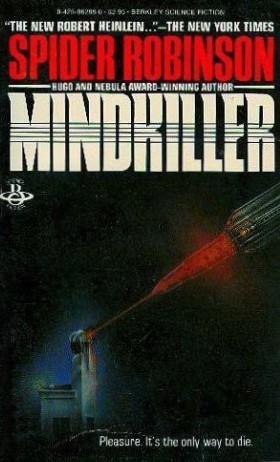
 Mindkiller by Spider Robinson
 Formats available: hardcover, paperback
Pages: 246
Published by Berkley on November 1st 1983
Purchasing Info: Author's Website, Publisher's Website, Amazon, Barnes & Noble, Bookshop.org
Goodreads
From the Hugo and Nebula Award-winning author of Time Pressure comes a pulse-pounding tale of action and suspense as two men and a woman search for--and find--the ultimate frontier of experience. "The new Robert Heinlein . . ".--New York Times.
Guest Review by Amy:
Norman Kent has had enough of life; his experiences in the war, his failed marriage, his dead-end career…and in the opening words of this tale, he’s ready to end it all. But an unfriendly stranger gets in the way of his plan, and he returns to his apartment, only to find his sister there, whom he’d not seen in years and years. Shortly, she disappears abruptly, without a trace.
Hop forward a few years, and a clever, tech-savvy burglar who doesn’t know his own name finds a woman with a wire in her skull, trying to kill herself with pleasure. He pulls her back from the brink, only to go on a crusade with her against the forces that created the pleasure addiction of “wireheads.”
Spider Robinson’s brain just doesn’t work like the rest of ours, I don’t think; if you’ve ever read any of his Callahan’s stories, you’ll understand; in those books he deals in puns and wild stories, while giving the reader a peek into a community of people where “shared joy is increased, shared pain is lessened,” a notion that has created substantial communities of fans here and there around the digital world (full disclosure: I am a member of one such community). The New York Times’ review of this book pinned the label “the new Robert Heinlein” on Robinson, but as a Heinlein fan, I’m not quite going to agree to that; Heinlein fans will enjoy this tale, and feel right at home with Spider Robinson’s style, but it’s…different, in ways I can’t quite put my finger on.
Something I missed early on in this book was that time was jumping back and forth; we begin Norman’s story in 1994-1995, and are jumping to 1999 for the story of the burglar and the wirehead. Once I caught onto that, things started to make a little more sense for me, and I raptly followed both plots, wondering when and how they would converge, and when an antagonist would appear. Once a name was mentioned in both plots, things kind of clicked into place–no other explanation fits the facts at hand, so if you’re watching for it, you’ll figure it out before our protagonists do. Naturally, if you miss it, Robinson helpfully provides an intrusion between the story lines, in the form of Norman’s ex-wife Lois, to help you pull it all together. The apparent climax is not-unexpected, but even here, when you think you’ve got it figured out, the author gives us a lovely new twist, right at the end. Jarring, yes, but utterly necessary, and provided a way to tidy up several loose ends still dangling.
Escape Rating: A. Unlike Heinlein, who aggressively pursued a world that got better over time, and where characters pushed for that, Spider Robinson gives us a world that has clearly spiralled downward; our heroes show no particular desire to turn it around; they’re just trying to deal with it. There is no ultra-rich Howard Family pulling the strings to make things better, just avarice and dog-eat-dog individualism, easily recognizable in our own world at times. Our heroes are hard-boiled pragmatists, jaded by the world around them; so much so that when the burglar Joe heard young Karen talking about her crusade to go after the inventors of the wirehead technology, he thought she was crazy. But Karen had lived rough herself, and was willing to play hardball to do what must be done, and for reasons he doesn’t quite grasp, Joe joins her, because–for the first time he can remember–he actually cares about someone!
Our cast of characters is well-developed, every one of them with clear motivations, and rich description. Once I got past the time-hopping confusion of the first couple of chapters, I was able to track what was happening, and the story moved along crisply, without a lot of needless embellishment. A little bit of a thriller and a little bit of dystopian sci-fi, mixed in just the right proportions with engaging characters, made this a real page-turner for me. If you’re looking for a classic dystopian novel with a great thriller thrown in the mix, I heartily recommend Mindkiller.
 Red Lily (In the Garden, #3) by
  Escape Rating: A+. I’m giving this one all-aces. By now, all of our cast of characters are well-developed, and no new major players are introduced. Everyone’s purposes and motivations are clear and straightforward, and the plot is driven hard by the increasingly-unhinged actions of the Bride. The development of the relationship between Hayley and Harper is, given the circumstances, quite easy to buy into. Typically for these supernatural-romance trilogies that Roberts does, the third volume ramps up the suspense/terror aspects pretty sharply, and that makes it a real page-turner, for me. Overall, I’d give the In the Garden series an A-, with two outstanding stories starting with Blue Dahlia (reviewed
 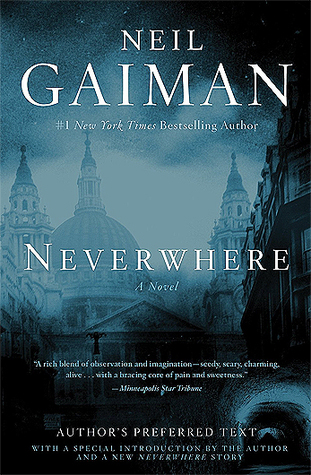 Neverwhere by
  I’m not sure whether I first went to Neverwhere by reading the book or watching the TV miniseries. Needless to say,
  This time, I listened to parts of Neverwhere from an unabridged audiobook recorded by the author. And unlike many authors who read their own works, Gaiman does an excellent job voicing all the characters, to the point where I was still hearing his voice in my head a couple of weeks ago when I was reading
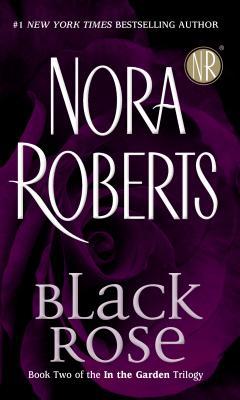 Black Rose (In the Garden trilogy #2) by
  Black Rose picks up right where
 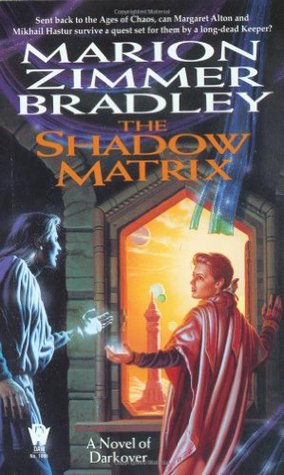 The Shadow Matrix by
  Escape Rating: B+. I’ll say it right up front: If you’ve not read a lot of other Darkover novels before this one, The Shadow Matrix will be almost incomprehensible to you. There’s backstory a-plenty: the politics of the Comyn, the madness of the Elhalyn family, laran and everything that goes with that, the Darkovans’ experiences with the Terrans, Lew Alton himself, the Shadow Matrix, and so, so much more. Names and terminology are thrown around willy-nilly, and you’re supposed to just know all that stuff.
 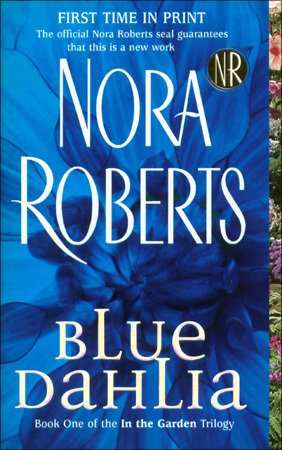 Blue Dahlia by
 I Think I Love You by
 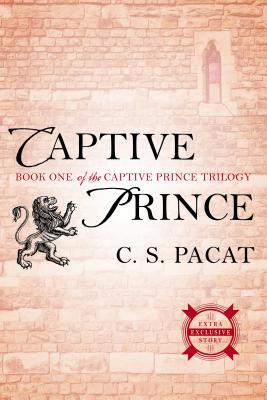 Captive Prince (Captive Prince, #1) by
 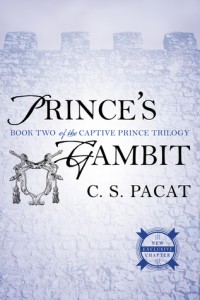 The horns of this dilemma sweep them, and us, into the next book in the trilogy,
  Between a Vamp and a Hard Place by
  The Midnight Liaisons series is purely snarktastic fun with a paranormal romance twist. For a good time start with
  The Martian by