A- #BookReview: The Demon of Beausoleil by Mari Costa

A- #BookReview: The Demon of Beausoleil by Mari CostaThe Demon of Beausoleil by Mari Costa, Mariana Costa
Format: ebook
Source: supplied by publisher via Edelweiss
Formats available: paperback, ebook
Genres: fantasy, graphic novel, historical fantasy
Pages: 312
Published by Oni Press on January 27, 2026
Purchasing Info: Author's WebsitePublisher's WebsiteAmazonBarnes & NobleKoboBookshop.orgBetter World Books
Goodreads

"A humorous yet poignant queer romance in a fantasy-period setting. Just the thing for grown-up fans of Alice Oseman’s Heartstopper, Kevin Panetta’s Bloom, or Jarrett Melendez’s Chef’s Kiss who are intrigued by the occult." —Library Journal, starred review

A half-demon socialite-turned-exorcist and his disgruntled bodyguard have no trouble facing down the hordes of darkness—but facing their feelings for each other? Well now, that’s a whole different story . . .

Helianthes is a Cambion—a child born touched by demons. Horned, clawed, and tailed, Helianthes—Hell for short—is a devil-may-care exorcist whose devil-may-care attitude has succeeded in alienating those closest to him—all save for his long-suffering bodyguard, Elias, who sees him as less a strange, mythical being and more just a . . . nuisance.

Together, the two venture into the streets of this psuedo-remix of Victorian London to exorcise demons (and maybe cause a little mischief on the way). But as Hell becomes increasingly drawn to his enigmatic bodyguard—and as Elias becomes increasingly aware of his feelings for his trouble of a charge—the two find themselves faced with a growing, chaotic dark that might threaten everything they’ve been working toward . . .

A world of half-demons and the boys who love them await in this epic queer romance by writer/artist Mari Costa!

My Review:

I originally picked this up because I fell in love with the author’s cozy fantasy novel, Shoestring Theory, about a cat and his wizard. I fully admit that I was there for Shoestring a whole lot more than I was for Cyril, Shoestring’s poor, incompetent human. I doubt anyone is surprised by this one little bit.

I don’t read a lot of graphic novels, but I loved Shoestring a lot, and this was recommended to me as part of a panel I was asked to moderate for Library Journal (LibraryCon Live) and it looked like fun. I had a ball with all of the books for the panel, but read them really fast and wasn’t planning on reviewing them all.

This one stuck with me. Or Shoestring was prodding me to come back to it. Perhaps a bit of both. Because it’s a bit of a devil’s food cake kind of book, literally and figuratively, and I’m always a sucker for sinfully dark chocolate.

Something like that, anyway.

The story you start out with it not the story you end with, while the ending makes you realize that the story you started with wasn’t the real story in the first place.

Cryptic enough?

Because we start with half-demon Helianthes Beausoleil being absolutely railed by his future brother-in-law. Well, his erstwhile future brother-in-law, as their romp is interrupted by the arrival of Hell’s sister and needless to say the engagement is OFF.

At first it seems like Hell is just a chaos agent, causing destruction wherever he goes, living down to the opinion that everyone has of him. After all, he’s a cambion, a half-demon, supposedly filled with all of a demon’s sins and all of a human’s weaknesses. Breaking his sister’s engagement with a sex scandal is EXACTLY the sort of thing that everyone expects of him.

This is where the story goes in a direction that the opening does not lead the reader to expect. Because Hell’s parents throw him out of the house, but send a bodyguard with him. Forcing him to make his way in the world while still trying to keep him safe.

And it’s the making of him. That’s the story. The story of half demon Hell going into business as a demon hunter, taking on the jobs that only he can, getting those very dangerous jobs done and making himself an entirely different kind of reputation along the way.

Not that it does anything to erase his reputation as a self-indulgent wild child, because that scandal is just too damn delicious for anyone to let go of.

But underneath that story is the real Hell. (Pun possibly intended, but sorta/kinda not). Because Hell is alone and lonely and a bit desperate for love and companionship and the only one he can trust for either of those things is his dog Cerberus. (The panel of Hell hugging Cerberus because no one else could ever love him is utterly heartbreaking.)

Meanwhile, standing right beside him – and occasionally in front defending him – is his bodyguard Elias. A man who tells Hell he’s being an absolute ‘bellend’ when he’s being an absolute brat, doesn’t take any shit, has no clue about fighting demons but sticks by Hell through thick and thin.

And it’s their story, the story of a lonely young man getting by on his wits and bravado, and a man just barely older using his size to cover up his soft heart, trying to be brave for each other while not revealing – or seeing – that they are so far gone for each other that nothing and no one can get between them.

Not even Hell’s obsessive, possessive ex who thinks that turning Elias into an actual monster will win back a Hell that he only thought he once  had – but never really knew. At all.

Escape Rating A-: I was charmed by the grumpy/sunshine relationship between Helianthus and Elias. That Hell is the literal sunshine in their relationship while Elias is the grump is deliciously ironic. And I was captivated by the slow build of the reluctant romance between the two.

The story exists on two levels almost all the time, but not in the same way. The story on the top is the action/chaos/hellraising/hellbeating story, where Hell seems to be the optimistic fool rushing in where angels fear to tread. But then he would because he’s half demon.

At the same time, as Elias observes, whatever Hell looks like or dresses like or sounds like or acts like, he’s out there working, for real, as a vigilante, exorcising demons and saving ordinary humans. He may play at being a thorough reprobate, but he’s clearly one of the ‘good guys’ if you look beneath the provocation and flamboyance.

Hidden in the artwork, however, is the true story of their growing relationship. No matter what either of them says – and Hell says a lot while Elias doesn’t say very much at all – every scene shows them looking towards each other for reassurance, for acceptance, and for a love that neither is brave enough to admit.

One of the terrific things about this format is that their eyes are telling a quiet romantic story while the lion’s share of each panel is showing a whole lot of action and danger even as the dialog delivers some truly epic banter to devastating effect.

In the end, this is a charming, steamy, romance AND a beautiful story about being loved and accepted for who you really are and not settling for anything less. I’m very happy I picked it up to reread – more thoroughly this time, and I’m looking forward to the author’s next, especially if I get to catch up with Elias and Hell and especially Cerberus – so that he can steal the show again!

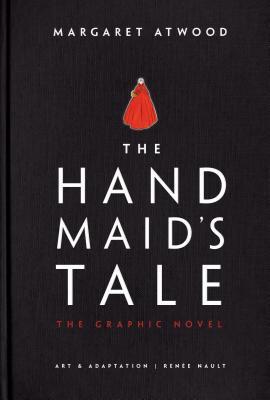
Review: The Handmaid’s Tale: The Graphic Novel by Margaret Atwood

Review: The Handmaid’s Tale: The Graphic Novel by Margaret AtwoodThe Handmaid's Tale: The Graphic Novel by Margaret Atwood, Renée Nault
Format: hardcover
Source: purchased from bookstore
Formats available: hardcover, ebook
Genres: dystopian, graphic novel, science fiction
Pages: 240
Published by Nan A. Talese/Doubleday on March 26, 2019
Purchasing Info: Author's WebsitePublisher's WebsiteAmazonBarnes & NobleKoboBookshop.org
Goodreads

Everything Handmaids wear is red: the colour of blood, which defines us.

Offred is a Handmaid in the Republic of Gilead, where women are prohibited from holding jobs, reading, and forming friendships. She serves in the household of the Commander and his wife, and under the new social order she has only one purpose: once a month, she must lie on her back and pray that the Commander makes her pregnant, because in an age of declining births, Offred and the other Handmaids are valued only if they are fertile. But Offred remembers the years before Gilead, when she was an independent woman who had a job, a family, and a name of her own. Now, her memories and her will to survive are acts of rebellion.

Provocative, startling, prophetic, The Handmaid's Tale has long been a global phenomenon. With this stunning graphic novel adaptation of Margaret Atwood's modern classic, beautifully realized by artist Renee Nault, the terrifying reality of Gilead has been brought to vivid life like never before.

My Review:

I have to confess that I had never read The Handmaid’s Tale, until now. I say that even though I have used it as an example in one way or another in more than one review. The basic story, after all, is well known and has become one of the classic works of late 20th century/early 21st century dystopian science fiction – in spite of its author claiming that it is not any such thing. Science fiction, that is.

And it’s been an extremely popular TV series. Everyone knows the basic story, even if not the details. Which means that while I’m not going to deliberately set out to include spoilers, I’m also not going to worry much about it. The story has been around and endlessly discussed for 35 years at this point, after all.

Fair warning that this is also going to be one of those reviews that mostly gets into what I thought and am still thinking about this one, rather than a critique of the book as such. My approach/avoidance reaction to the story and the conclusions I’ve come to now that I have finally read it are still rolling around in my head.

I’m pretty sure that everyone has their own opinions of the book at this point, whether they’ve read it or not.

Now that I’ve read it, I understand completely why I haven’t until now and probably wouldn’t have yet if I hadn’t seen the graphic novel version in Half Price Books. The graphic novel felt like a way of getting through the story without having to wallow in the expected pain of it.

While I admit that part of my initial rejection had to do with the author’s rejection of even the idea that the story might be part of the dreaded and dreadful GENRE, in this case SF, instead of being part of the more socially acceptable and highbrow body of literary works.

Well, this certainly has all the angst that I associate with literary fiction, but it is also very definitely part of the SF genre. It’s SF of the extremely dystopian variety, set in a world that has not happened – at least not yet – and might not. And hopefully will not. And is a dystopia kicked off by climate change and ruin of the environment. (In that, it reminds me a bit of The Children of Men by P.D. James, which I liked a lot more but did not generate all the interest and awards that The Handmaid’s Tale did.)

I didn’t read this for the longest time because I just didn’t want to wallow in that angst. This situation is awful. It is supremely awful for women, but it isn’t that great for men, either. But the men are the ones who make this omelet and the women are the eggs getting broken in the process – pun definitely intended.

And it does resonate with the historical oppression of women as well as the current era of attempting to return to that level of oppression. But with a difference. Because the methods of Gilead also have parallels with the holocaust and other genocides. It’s not just that in Gilead all women have been reduced to their biological function and nothing more, but also that the government has done an all too efficient job of cutting off any and all means of escape. Not just that the borders are closed, heavily guarded and well-armed, but that even methods of suicide are almost completely cut off.

So, as a story I found The Handmaid’s Tale to be unrelentingly depressing. In the extreme. Fascinating, but a complete downer. As it’s intended to be. The situation is awful and horrible and even Offred’s possible escape doesn’t change that. Because even if she did make it out, we don’t actually see it. And she leaves all of the other women in Gilead behind, whether she does manage to escape either to Canada or to death.

This was a book where I desperately wanted a catharsis at the end, and did not feel anything of the sort. The ending felt like a bit of a cheat, as it fast forwards to a future where Gilead’s existence is well in the past, where the record that Offred left behind is studied as a historical artifact. But we know nothing of how the world reached that point, or actually how much better it supposedly is – if it is at all.

It’s an ending which left me totally cold. As an object lesson, as a meditation on how easily a group can be subjugated, it is horrific but all too realistic. As dystopian SF, it is chilling in the extreme. But as a story, it felt like it didn’t so much end as trail off.

I understand that the reader was supposed to see the ending as kind of a “Schrodinger’s escape” where all results are possible and Offred can either have escaped, been killed or come to some equally gruesome end. That it isn’t necessary for us to really know how it ended to be satisfied with what we had.
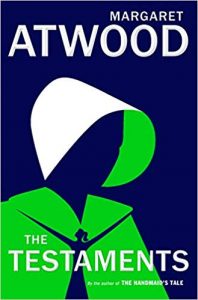
I felt more horrified than satisfied. But I still want to know what happened, a state in which I clearly was not alone, as the author released a sequel, The Testaments, last year to answer at least some of the questions rattling around in readers’ heads. I’ll get around to reading, or at least skimming that, someday, just to get some resolution on the whole thing.

Escape Rating B: The rating is kind of an average. I found the story to be absorbing but terrifying. I couldn’t stop turning the pages but I also desperately wanted to be ejected from the nightmare. And I know that I would have bounced off this one hard without the graphic novel.

The graphic novel is utterly beautiful. Equally terrifying, but absolutely exquisite.

In short, it feels like this was an important story to read for myself and not just rely on summaries – and I’d never judge a book by either its movie or its TV series. But I also know that I’ll never read it again.
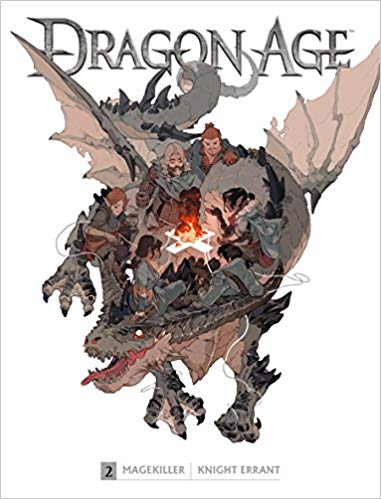
Review: Dragon Age Library Edition Volume 2 by Greg Rucka, Nunzio DeFilippis, Christina Weir, Carmen Carnero, Fernando Heinz Furukawa

Review: Dragon Age Library Edition Volume 2 by Greg Rucka, Nunzio DeFilippis, Christina Weir, Carmen Carnero, Fernando Heinz FurukawaDragon Age Library Edition Volume 2 by Greg Rucka, Nunzio DeFilippis, Christina Weir, Carmen Carnero, Fernando Heinz Furukawa
Format: eARC, hardcover
Source: purchased from Amazon, supplied by publisher via Edelweiss
Formats available: hardcover
Genres: fantasy, graphic novel
Pages: 232
Published by Dark Horse Books on December 4, 2018
Purchasing Info: Author's WebsitePublisher's WebsiteAmazonBarnes & NobleBookshop.org
Goodreads

Journey to the world of Thedas in these canonical comics from BioWare and Dark Horse!

Tessa and Marius are mercenary partners who eliminate those using magic to hurt others. When they betray a powerful patron intending to kill them, they're forced to flee and join the Inquisition. Later, they're taken captive during a mission and it's up to an unwitting agent to rescue them: elven squire Vaea, who's just arrived in Kirkwall for a lavish party thrown by Varric Tethras. A talented thief, Vaea takes on an easy side job . . . but when she chooses to change the terms of the deal mid-heist, she is entangled in this dangerous recovery mission that is surely above her pay grade.

Featuring work by Greg Rucka, Nunzio DeFilippis, Christina Weir, Carmen Carnero, and Fernando Heinz Furukawa, this oversized hardcover edition collects Dragon Age: Magekiller #1-#5 and Dragon Age: Knight Errant #1-#5 and features creator commentary and behind-the-scenes material!

My Review:

I just started a new play-through of the whole Dragon Age saga, which made this a perfect time to review this. The title is a rather unhelpful mouthful of not very informative. What this big little volume is is a hardcover compilation of two Dragon Age graphic stories, Magekiller and Knight Errant.
I knew I was going to get to this eventually – I even picked up an eARC from Edelweiss. But in the end, I bowed to the inevitable and purchased the hardcover. While graphic novels CAN be read on my iPad, that doesn’t mean they SHOULD be read on my iPad – unless I’m really desperate and away from home. The hardcover is large and awkward – but fun reading at the table.

The interesting thing about the two stories in this book is that they both take place in the interstices of the plot of Dragon Age Inquisition. This means three things:

  1. These stories only make sense if you are already a fan of the video game series
  2. They feel/read like short stories that just so happen to be illustrated. I’m not saying that the graphics aren’t terrific – because they are – but both of these stories would work equally well as short stories without the lovely, additional graphics.
  3. The stories are canonical – nothing in them conflicts with the game story canon. A fan can imagine them taking place around the edges of the game(s) actually played. These events happened while your Inquisitor was somewhere else being, as Varric Tethras might say, “all Inquisitorial”.

The first story begins a bit before the game starts, with a pair of mercenary magekillers (hence the title) who have been coerced into killing known cult members before the cult manages to murder the Divine and kick off the whole thing. They find themselves working for the Inquisition, alongside many of the other side characters in the story.

What’s fun about Magekiller is that the male/female mercenary partners are work partners without being romantic partners – nor is there a will they/won’t they vibe to the story. It was pretty neat that the romantic pairing in the story turns out to be between the female mercenary and one of the Inquisition’s better known spies. Who is also female.

That the hero of Magekiller has a very similar vibe to one of my (and many people’s) favorite characters in Dragon Age II is icing on a surprisingly tasty cake.
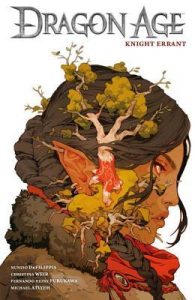
Knight Errant also feels like it has some callbacks to Dragon Age II, as well as to the game that started it all, Dragon Age Origins – which I’m playing again now.

But the story is all about the power of stories. There’s a quote from Varric Tethras, the author of Hard in Hightown and the premiere storyteller in the series: “There’s power in stories, though. That’s all history is: the best tales. The ones that last. Might as well be mine.”

Varric writes fiction, but he also fictionalizes the heroic deeds of his friends – including himself as a secondary character. It’s a practice that causes him no end of trouble, and makes him an interesting but extremely unreliable narrator.

In Knight Errant, Varric is a secondary character in someone else’s unreliable narration – and he’s more than willing to play along. But under this seemingly simple tale about a has-been knight who travels the world on the strength of the stories he tells about himself, there’s a lot to unpack about why we tell the stories we tell, and how much of ourselves we invest in those stories.
And if you don’t finish this story hearing the original cast of Hamilton singing “Who lives, who dies, who tells your story” you weren’t paying attention.

Escape Rating B: If you’re a fan, this collection is a lot of fun. Possibly even more fun than Hard in Hightown. There are a ton of in jokes scattered throughout both stories, and we get a chance to see a different bit of this world and different facets of characters we have come to know and love.

There are also some informative annotations from the creators on the process of both the story and the graphics.

While I can’t think that anyone else would be interested, for those of us who are working through our hundredth play-through of the series and trying to keep from chewing our nails waiting for Dragon Age 4 (which probably won’t be out until 2021 at the earliest!) it’s a fun way to pass some time in Thedas.

Review: Hard in Hightown by Varric Tethras with Mary Kirby

Review: Hard in Hightown by Varric Tethras with Mary KirbyHard in Hightown by Varric Tethras, Mary Kirby, Stefano Martino, Álvaro Sarraseca, Andrés Ponce, Ricardo German Ponce Torres, E.M. Gist
Format: hardcover
Source: purchased from Amazon
Formats available: hardcover, ebook
Genres: fantasy, graphic novel, mystery
Pages: 96
Published by Dark Horse Books on July 31, 2018
Purchasing Info: Author's WebsitePublisher's WebsiteAmazonBarnes & NobleKoboBookshop.org
Goodreads

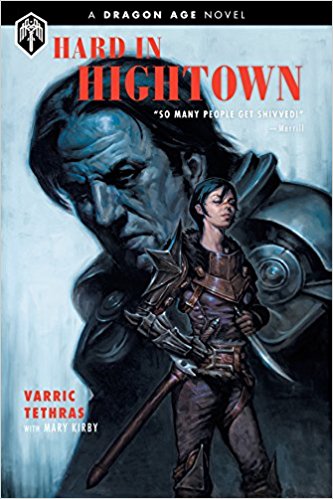
Prolific dwarven author and heroic companion of the Dragon Age games, Varric Tethras brings us the collected edition of his breakthrough crime-noir drama, Hard in Hightown (with help from his trusted human confidante, Mary Kirby)! This volume is beautifully illustrated by Stefano Martino, Alvaro Sarraseca, Andres Ponce, and Ricardo German Ponce Torres, with a painted cover by E.M. Gist!

Twenty years of patrols have chiseled each and every stone of the Kirkwall streets into city guardsmen Donnen Brennokovic. Weary and weathered, Donnen is paired with a recruit so green he might as well have leaves growing out of his armor. When the mismatched pair discover a dead magistrate bleeding out on the flagstones, they're caught up in a clash between a shadowy organization known only as the Executors and a secretive group of Chantry agents--all over some ancient artifact.

This is a prose novel featuring 24 black and white full page images.

My Review:

This book seems like it’s kind of a joke. Admittedly an in-joke for people who love the Dragon Age games, of which I am certainly one.
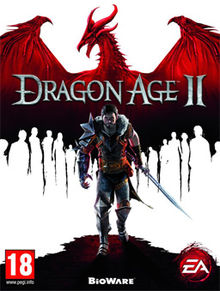
But it also sorta/kinda isn’t a joke. Like many stories that are part of long-running series, it’s also a visit with old friends. Both of the slightly disguised and not-so-slightly disguised variety. After having a book epically fail this week, I needed something that was sort of a joke and definitely a visit with some old and dear friends.

That this was the first thing I ordered sent to the new house that has arrived so far was kind of icing on the cake. It was meant to be.

On the one hand, this story is pretty much steeped in the Dragon Age universe. Varric Tethras, the “author” of the book, has quite the reputation as an author within the series. When asked about his writing, his response rings true for the real world as well as his fictional world, “There’s power in stories, though. That’s all history is: the best tales. The ones that last. Might as well be mine.”

Hard in Hightown is one of his most popular. It’s also a lot of fun, mixing fairly standard genre tropes into what feels like a fully realized fantasy setting. It’s the story of a guardsman nearing retirement who falls headfirst into one last big case. A man with a reputation for breaking the rules in order to get things done, Donnen doggedly follows the sparse clues from person to person, place to place and ambush to ambush.

The path takes him through punishment, betrayal and ultimately a reward that is better than money. Or at least he hopes it will be.

And it’s the kind of tale that would easily fit into one of the old shared world series like Thieves’ World or Liavek. It also sounds like the kind of case, and in the kind of place, that Sam Vimes used to tackle in Ankh-Morpork before he married into the nobility.

In other words, Hard in Hightown is a mystery set in a fantasy universe. Reading it brought back a lot of fond memories, both of the game and of the fantasy mysteries it strongly resembles.
And it was a load of fun from beginning to end, at least for this fan. I’m not sure it would work for anyone who did not have at least a passing familiarity with Dragon Age, particularly Dragon Age II. Admittedly, I’m not sure why anyone who wasn’t already a fan would pick this up in the first place, except as a joke.

But Varric was every bit as much fun a storyteller as he is as a character. Reading this made me nostalgic. I think another playthrough of the series is on my horizon – at least as soon as we dig out from the worst of the moving debris.

Escape Rating B: I was looking for a palate-cleanser of a book, something to wash the taste of a complete failure out of my mouth. So I switched from a book that managed to make what should have been an exciting story into a dull recitation, and turned to a writer I knew could make falling down the stairs into an epic tale. And I’m glad I did. If you’re a fan, you’ll love it.

Review: The Thrilling Adventures of Lovelace and Babbage by Sydney Padua

Review: The Thrilling Adventures of Lovelace and Babbage by Sydney PaduaThe Thrilling Adventures of Lovelace and Babbage: The (Mostly) True Story of the First Computer by Sydney Padua
Formats available: hardcover, ebook
Pages: 320
Published by Pantheon on April 21st 2015
Purchasing Info: Author's WebsitePublisher's WebsiteAmazonBarnes & NobleKoboBookshop.org
Goodreads


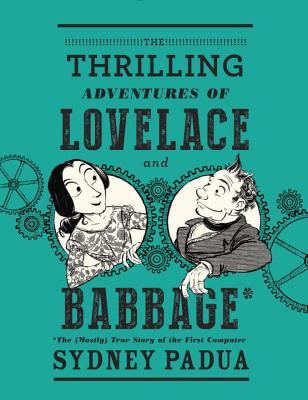
THE THRILLING ADVENTURES OF LOVELACE AND BABBAGE
. . . in which Sydney Padua transforms one of the most compelling scientific collaborations into a hilarious series of adventures.
Meet Victorian London’s most dynamic duo: Charles Babbage, the unrealized inventor of the computer, and his accomplice, Ada, Countess of Lovelace, the peculiar protoprogrammer and daughter of Lord Byron. When Lovelace translated a description of Babbage’s plans for an enormous mechanical calculating machine in 1842, she added annotations three times longer than the original work. Her footnotes contained the first appearance of the general computing theory, a hundred years before an actual computer was built. Sadly, Lovelace died of cancer a decade after publishing the paper, and Babbage never built any of his machines.
But do not despair! The Thrilling Adventures of Lovelace and Babbage presents a rollicking alternate reality in which Lovelace and Babbage do build the Difference Engine and then use it to build runaway economic models, battle the scourge of spelling errors, explore the wilder realms of mathematics, and, of course, fight crime—for the sake of both London and science. Complete with extensive footnotes that rival those penned by Lovelace herself, historical curiosities, and never-before-seen diagrams of Babbage’s mechanical, steam-powered computer, The Thrilling Adventures of Lovelace and Babbage is wonderfully whimsical, utterly unusual, and, above all, entirely irresistible.
(With black-and-white illustrations throughout.) 

My Review:

I finished this last night and it is great fun! I’m not totally sure what it is, but I had a terrific time reading it.

When I say that I don’t know what it is, I’m referring to the ratio between fact and fiction. It certainly is a graphic novel, but with surprising points as both graphic and novel. Although it certainly feels novel, I’m not totally certain that it IS a novel, if you catch my drift.

And if you like the kind of book where authors include lots of asides that induce laughter and add information while being both tongue-in-cheek and also true, you will love this book.

It purports to be a graphic novel that started as a webcomic about the fictional adventures of an alternate Charles Babbage and Ada Lovelace, where they actually managed to build Babbage’s famous Analytical Machine and Lovelace wrote programs for it that were able to be input, instead of the real world where Babbage started lots of inventions but never finished them, and Lovelace died of cancer in her mid-30s, after having written a seminal article on computer programming that she never got to see put into use.

This fictional world is much more fun. But in detailing the fictional adventures of our intrepid hero and heroine, the author manages to insert an incredible amount of real information, often in the form of footnotes and asides, that is taken verbatim from contemporary accounts of Lovelace and Babbage.

And there are LOTS of surviving documents. The Victorians were very prolific (or profligate) writers, and Babbage and Lovelace were both quasi-celebrities. Lovelace was the daughter of Lord Byron, and Babbage, was, well, Babbage. He held a mathematics professorship at Cambridge that had been formerly held by Isaac Newton. Babbage was also infamous for misplacing government grant money, including a large grant for his Difference Engine. Babbage held large, well-attended parties, and famously argued with lots of people, many of them influential, about lots of things. In public and in writing.

Both Lovelace and Babbage were well-known mathematics geniuses, and they were good friends. The exact nature of that friendship is subject to debate, but they wrote to each other voluminously.

In other words, the author of this book had oodles of material to work with.

While the story that emerges in the webcomic is definitely fictional, the underpinning facts are relayed in a way that makes readers laugh out loud, and provides a surprising amount of understanding about two figures who did so much to create the computer revolution that we now live in – even though they hadn’t a clue at the time.

Escape/Reality Rating A-: I am still not sure whether to call this fiction or nonfiction, hence the combination rating for both escapism and reality.

The depiction of Babbage and Lovelace as somewhat mad inventors whose invention has definitely gotten out of hand is hilariously funny. Seeing them both as quintessential steampunk engineers, while not factually correct, rings surprisingly true. This is an alternate future that would have been so much fun!

At the same time, that these two figures have become posthumously associated with a movement as full of beautiful design and style as steampunk is its own kind of funny. In real life, neither of them was exactly known for their sartorial elegance. Or even their sartorial tidyness.

The individual stories are both funny and have that sense of feeling true without actually having been true. The chapter where George Eliot submits her manuscript to the Difference Engine for analysis has a lot of true things to say about Victorian writers in general, George Eliot in particular, and the nature of computers and computing capabilities, all in one swell foop. And I do mean swell foop – this is all fiction but it all still feels true.

Ironically, I also feel like I learned more about the real Ada Lovelace from this fictionalized, cartoonish version of her life and works than I did from a less fictionalized, and also less fun, biography, Ada’s Algorithm. That felt like gossip for the sake of gossip, where in Thrilling Adventures every seemingly silly aside is both grounded in fact and makes a point about its subject.

The Thrilling Adventures of Lovelace and Babbage is a terrific, and terrifically funny book for anyone who wants to learn a little about the birth of computing and the outsize personalities of the Victorian era, while having a good chuckle.