
 Dive Bar at the End of the Road by Kelley Armstrong
Narrator: Helen Laser, Shane Ghostkeeper, Sean Patrick Hopkins
Format: audiobook, eARC
Source: supplied by publisher via Edelweiss, supplied by publisher via Libro.fm
Formats available: hardcover, ebook, audiobook
Genres: Dark Fantasy, horror, paranormal, thriller
Pages: 288
Length: 8 hours and 23 minutes
Published by Macmillan Audio, St. Martin's Press on October 6, 2026
Purchasing Info: Author's Website, Publisher's Website, Amazon, Barnes & Noble, Kobo, Bookshop.org, Better World Books
Goodreads
Final Destination meets The Cabin at the End of the World in this supernatural horror from New York Times bestselling author Kelley Armstrong, in which a series of car accidents traps a group of strangers at a dive bar.
A forested road at night, slick from the pounding rain and eerily illuminated by flashes of lightning. Just before midnight, a car swerves to avoid something―or someone―mysteriously standing in the road, only to slam into a fallen tree instead. In the pitch black, four more cars follow in a pileup no one can seem to avoid.
Stumbling out of the wreckage, soaked from the rain and nursing various injuries, five strangers find themselves in a backwoods dive bar, waiting for daybreak and hoping for cell service. But as tensions rise and the storm rages on outside, the occupants of the dive bar start to notice that not everything is as it seems. Time is moving differently, and they quickly learn that going outside―whether to assist another accident victim or to hike for help―is a very bad idea.
There’s something in the woods, something that isn't natural. Could the figure in the road have been a warning? Or something more sinister? None of this is normal, and they'll need to work together to figure out what’s happening if they have any hope of surviving the night.
My Review:
Fate usually comes in threes. The classic Western image is that of the three sisters weaving a tapestry. Clotho spinning the threads, Lachesis measuring the threads and Atropos cutting the threads. Each person has their own thread, their own allotted life. But there’s only so much room in a tapestry. If one thread runs longer than it should, another thread is cut short. In the tapestry that metaphorically hangs over an old Midwestern dive bar just off a lonely road on a dark and stormy night, the consequences of that choice are laid bare.
Not that any of the people who crash into a downed tree on that lonely road have an idea of why they’re there. Just that they took a detour off the highway, lost their GPS signals and their way, and found sanctuary in a surprisingly well appointed bar in the middle of nowhere. And that there’s something uncanny going on in the woods all around them.
Ellie’s on her way home to her parents. Again. She’s in her mid-30s, she’s crashed and burned on yet another job and in yet another relationship, and she’s going back to regroup. So she can start the cycle all over again. Her life went off the rails a long time ago through no fault of her own – not that she’s able to admit that. What she knows is that life isn’t working for her – or she isn’t working hard enough for it – and that she’s endlessly guilty about something that she can’t fix and can’t take back and can’t make up for.
And that she saw a woman on the road, couldn’t brake fast enough to stop her car and crashed. Not into the woman, but into that downed tree. There’s no woman. There’s no woman’s body under her car or under the tree. There’s only the tree, her now-undrivable car, and Henry crashing his truck into hers. And Noemi and Caleb crashing their SUV into his truck. And Edgar crashing his old car into their SUV. And Randolph crashing his SUV into Edgar’s crumpled car.
And that Dive Bar at the End of the Road. Where the woman that Ellie did/didn’t crash into is sitting on a barstool, rainwater puddling under her seat, and a surprisingly cheerful bartender waiting to welcome them.
Into a nightmare tailor-made for each of them. There’s only one chance to escape and only one way to make it happen. If they can figure it out before fate stops playing games with them all.
Escape Rating B: The atmosphere in this one is creepy from the very first page. As we read about Ellie and her dark night on the lonely road surrounded by trees with no cell signal and no GPS, we know something is wrong. We just don’t know what that something is. The reader immediately starts asking questions about whether the woman Ellie saw was a hallucination or a harbinger. Whether Ellie’s already out of her mind or whether someone or something is determined to drive her out of that mind. Or both.
Henry’s subsequent crash in her and her car changes the dynamic of the story. Because in spite of the screaming metal of their introduction, they give each other something and someone to hold onto. They’re not alone with their fears. They’re standing together, protecting each other from whatever is coming to get them. Even if they don’t know what’s coming. The two of them create a relatively safe space and calm (well, calm-ish) center in the midst of an experience that is both chaotic AND uncanny. And they, and their trauma-bond, give the reader something and someone to latch onto.
 Which I needed. I hung in with this story because I wanted them to figure out what was happening to them and find a way out. I knew it was going to be bad, whatever it was, because I kept flashing on two stories that have a lot of similarities, “What Happened to the Crooners” by Russell Nichols in Best American Science Fiction and Fantasy 2025 and “24 Hours”, included in the first of The Sandman collections, Preludes and Nocturnes. They’re both stories about fate and lonely bars in creepy places, and this Dive Bar fits right in.
I also needed my care for Ellie and Henry to keep me in the story (excellent narrated by Helen Laser, Shane Ghostkeeper and Sean Patrick Hopkins) because they seemed like individuals, while the rest of the cast of castaways read more like stock characters. They just weren’t as well-developed, I didn’t feel for them in the same way, and the way that they kept piling into the story began to feel repetitive.
Or just dragged out the tension a bit too long. It was obvious – to the reader – at least, that the situation was being manufactured by someone who was toying with them. I started feeling less tension and more of a desire to move the story forward the longer that part went on. Once the story stopped piling characters in and began to directly tease what they were there for, the suspense – along with the chills and thrills – ramped up to eleven. Where it belonged.
The truth, when it finally did arrive, was fascinating and frightening and just about paid for the amount of time it took to get there. In the end, I thought the premise – and the way it was executed – was both creepy and compelling. I just wish there had been one less passenger on this “fright train” or one less repetition of the “walk in the dark woods with your greatest fear” to make the story go just a bit faster.
As always, your reading (and in this case listening) mileage may vary.
 Lost in the Summer of '69 by
 In the summer of 1969, Eleanor Bell Strickland may not remember the phrase – because she’s been having more than a few problems with her memories of her own life these days – but she’s hoping it’s true all the same. And that it’s not too late for her to try, not so much in spite of being 69 herself, but because she’s just learned the reason why her memory has felt like Swiss cheese for longer than she’d care to admit.
 So Eleanor, and her precocious little dog, Roxy, put themselves on a plane from New York to the Newport Pop Festival in California. For one, last, bright summer – before the lights go out.
 The story seems like Eleanor Bell’s, and it is. But Nora is the person who holds it together, the granddaughter in Eleanor’s summer of ‘69 but the grandmother in Ellie’s request to attend the Woodstock 50 concert that was eventually cancelled.
 At the same time, we follow Leanne and Nora’s cross-country road trip chasing after grandma. Leanne knows about Eleanor’s diagnosis, and she’s petrified that her mother is dead in a ditch somewhere. But Leanne is also simply petrified. She’s done entirely too well at being what women were supposed to be, the perfect domestic goddess, always starched, always proper, no identity except as Dean’s wife and Nora’s mother. But Nora is about to go off to college, her husband buries himself in work and treats her like an appliance, and she’s not sure who she’ll be when Nora starts her own life.
 Lost in the Summer of ‘69 is one of those stories where it’s not about the destination, it’s about the journey. And the journey is both “Far Out” and close to the heart.
 To Clutch a Razor (Curse Bearer, #2) by
 Escape Rating A+: This second book in the
 The Conjurer's Wife by
 The story begins simply, and seems a bit familiar even if, or especially because of its historical setting.
 And just as Olivia has a whole lot of sneaking suspicions about her life before the terrible accident that resulted in her amnesia, the mysteriously masterful nature of Oscar’s illusion, and the suspicious coincidence of timing between her accident and his rise to fame – so do we.
 Then I picked up an eARC of the author’s upcoming book,
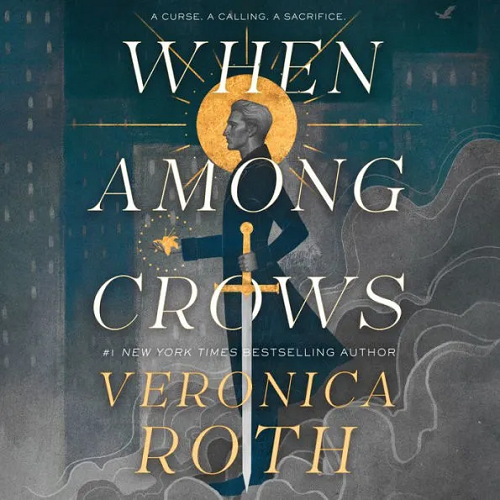 When Among Crows by
 At the same time, the way this story drew in so many Slavic myths and legends that I itched for a mythopedia (I was driving, that would have had terrible consequences) reminded me, a lot and very fondly, of Neil Gaiman’s