
A- #AudioBookReview: Battle of the Round House by Tananarive Due

A- #AudioBookReview: Battle of the Round House by Tananarive DueBattle of the Round House (Magic & Mystery, #6) by Tananarive Due
Narrator: Joniece Abbott-Pratt
Format: audiobook, ebook
Source: borrowed from Amazon Kindle Unlimited
Formats available: ebook, audiobook
Genres: Dark Fantasy, fantasy, fantasy mystery, historical fantasy, horror, Weird West
Series: Magic & Mystery #6
Pages: 65
Length: 1 hour and 56 minutes
Published by Amazon Original Stories on July 28, 2026
Purchasing Info: Author's Website, Publisher's Website, Amazon
Goodreads

This spellbinding short story from the award-winning author of The Reformatory reimagines the Wild West through the eyes of a young Black girl with a gift.
1871: Ten-year-old Lucy Freeman and her family flee threats in Kentucky for a new life in the post–Civil War frontier. Their refuge is Zipporah Ranch, a hidden settlement founded by Black women and children that thrives, if the folktales are true, on magic. But a mob of bounty hunters is bringing hell to paradise, and it’s Lucy’s own secret magical ability that may be the only defense.
Tananarive Due’s Battle of the Round House is part of the Magic & Mystery collection, puzzle-box mysteries from top fantasy authors. They can be read or listened to in one enchanting sitting.

My Review:

Battle of the Round House is a story within a story. It’s also a bit of fictionalized reality nestled inside a framing story that is ALSO fictionalized reality. And I loved the way it worked.

It begins with that first bit of reality, of 75-year old Lucy Freeman, in 1936, participating in an oral history project that really existed as part of FDR’s Depression-era Works Progress Administration, otherwise known as the WPA.

A young member of the Writers’ Project intended to interview Miss Freeman about her encounter with Marshal James “Wild Bill” Hickok, a meeting that occurred in 1871, when Lucy was around ten years old.

The Writers’ Project worker believes that Lucy is going to provide information – or illumination – about a missing persons case that Hickok documented as requiring no further investigation. Not that it was solved or resolved, but that it wasn’t worth his or anyone else’s time to establish the exact cause of the disappearance of a known gang of cutthroats, murderers and horse thieves.

“Wild Bill” Hickok

The young writer probably thinks that she’s going to get a bit of a story to add to the legends around “Wild Bill” Hickok. Which she does, but not the kind of story that she expected.

What she learns from Lucy Freeman is the story of a town that existed on no map, that protected itself from all who would attempt its destruction. A town that Lucy helped to save – with a touch of magic.

Escape Rating A-: This sixth story in the Magic & Mystery collection doesn’t quite embody the series. There is magic, of the magical realism variety, but there’s no mystery. Hickok knows perfectly well what happened to the Bandera Boys gang, and is more than happy to help bury that truth.

The story itself is a combination of Weird West fantasy and historical horror. The Weird West already borders on horror, as the weird parts of that equation tend to veer into the darker parts of the supernatural. But in the case of this story, that historical horror refers not to the kinds of fictional horror that are associated with a time period, such as Victorian Gothic, but instead to the kind of horror that was all too horribly real AND part of real history.

Lucy Freeman and her family were Black. Her father was a freedman, a successful blacksmith in Lexington during the Civil War. His brother and that side of the family had founded a Black and Native settlement close to Abilene Kansas, and invited him and his family to join them. Lucy’s story begins with her family on the harrowing journey, after they’ve been forced off the train and are in the midst of a 100 mile wagon trek, pursued by a gang of thieves armed with guns AND a fake “Wanted” poster for her father.

The dangers are, and were, real. If their horse dies, they’re dead. If the gang catches up with them, they’re dead. If the gang convinces a sheriff along the way to organize a posse, they’re dead. And no one will help them and there’s no possibility of justice – and they ALL know it and so does the reader.

They reach safety, but the gang is determined to destroy the whole settlement. Because they’re jealous of the prosperity and can’t abide the thought that anyone non-white might have something they don’t. It’s ugly, it’s dirty, it’s disgusting, and it’s all too believable.

So the horror of the story is in the situation. It’s not body horror, or monster horror (except the two-legged kind) or any of the standard horror tropes. It’s horror because that’s the way that history really was, and it’s all the more horrifying for it.

But the darkness of the night and of the battle fought within it is brightened by that touch of magic. Specifically Lucy’s magic. A magic that allows her to help people listen to their brighter angels, even if just for a second. A magic that can also tell a herd of rampaging bulls that Lucy deserves their protection – and that the men attacking their home do not.

That Lucy manages to give the young WPA writer the tiniest glimpse of that magic to discover for herself leaves the story, and the reader, with a brilliant spark of hope. A marvelous ending to a compelling and captivating tale, made just that bit more fascinating through the narrative talent of Joniece Abbott-Pratt.

#AudioBookReview: The Wednesday Witches Book Club by Sarah Beth Durst

#AudioBookReview: The Wednesday Witches Book Club by Sarah Beth DurstThe Wednesday Witches Book Club (Magic & Mystery, #2) by Sarah Beth Durst
Narrator: Meg Runyan
Format: audiobook, ebook
Source: borrowed from Amazon Kindle Unlimited
Formats available: ebook, audiobook
Genres: cozy fantasy, fantasy, fantasy mystery
Series: Magic & Mystery #2
Pages: 49
Length: 1 hour and 9 minutes
Published by Amazon Original Stories on July 28, 2026
Purchasing Info: Author's Website, Publisher's Website, Amazon
Goodreads

A book-loving witch finds magic and mystery in a whimsical short story about the transformative power of friendship and community by the New York Times bestselling author of The Spellshop.
After a challenging divorce, Ashley joins a witchy book club in search of a new social life. But when members start being transformed one by one, Ashley and the remaining book club members must uncover the culprit behind these sinister spells. With time running out until she’s the next target, she turns to her grimoire for answers. Because what better way to catch a magical culprit than through stories?
Sarah Beth Durst’s The Wednesday Witches Book Club is part of the Magic & Mystery collection, puzzle-box mysteries from top fantasy authors. They can be read or listened to in one enchanting sitting.

My Review:

Reading has always been magic. Even Stephen King admitted it when he said that “Books are a uniquely portable magic.” Or as another writer, Mason Cooley once said, “Reading gives us someplace to go when we have to stay where we are.” Then there’s George R.R. Martin’s famous quote, “I have lived a thousand lives and I’ve loved a thousand loves. I’ve walked on distant worlds and seen the end of time. Because I read.”

The Wednesday Witches Book Club is a story where books are LITERALLY magic. Pun very much intended. Albeit not quite the same way as Diane Duane’s Young Wizards series, where kids are given the opportunity to become Wizards by receiving a copy of the book So You Want to Be A Wizard, but not all that far off either. (“Wizard” is a gender-neutral term in Duane’s series just as “witch” is in this story.)

In this world, people become witches when a specific book speaks specifically to them. Not a particular book, but the one that is truly their own. The first book where the magic of books and reading literally (again with the puns) takes them inside itself.

That book, not just the title but that particular copy that awakens the magic within, becomes their grimoire.

Which is where this story begins, because Ashley, getting a fresh start on Long Island after a messy divorce, is in desperate need of a new book club. Because witches, unsurprisingly, have a deep and abiding love of reading. So deep, in fact, that every witch needs a book club. Because witches’ book clubs don’t just drink wine and gossip while pretending to discuss a book that none of them have read.

Witches’ book clubs are covens, hiding in plain sight. And Ashley, trying to put her life back together, needs a group of fellow witches and potential friends to ground her in the community she hopes to call home.

When she first meets the group, Genevieve, Vicky , Naya, Marco, Selina and Genevieve’s cat Miss Meowtini (mustn’t forget Miss Meowtini!) all look polished and professional, very much like they all have their acts together. Ashley’s sure she doesn’t fit in, because her life is a complete mess.

That’s when Ashley discovers that Marco is having problems aiming his spells, and she’s already been informed that Selina turned herself into a cat and none of them have been able to turn her back. When Vicky is transformed into another cat, right in front of them all, Ashley is certain that she’s found her people.

And that they could really use some help in remaining, well, people!

Escape Rating B: In contrast with the serious undertones of last week’s A Labyrinth of Honeybees, The Wednesday Witches Book Club is possibly the fluffiest entry in the series. And not just because of the cats. (Although they certainly do contribute plenty of fluff, along with the occasional hairball.)

The story as a whole is very lighthearted and cozy, or, as the blurb says, “whimsical”. All of the above.

Howsomever, this entire collection is made up of fantasy MYSTERIES, which means that there’s a puzzle to solve along with the charming relationship-py parts of the story. Ashley is, after all, looking for her people. Or at least a new set of her people. She’s searching for community, and so are the rest of the book club members.

But someone is rather cleanly taking them down, one by one. Transforming the club members into cats means there’s no messy corpse to deal with – only a dirty litter pan. They go missing, they can’t be found, there are no criminal charges to answer.

Assuming this is a more traditional type of mystery with a more traditional kind of motive. Which, of course, it isn’t. (I did figure out whodunnit long before the characters did, but this isn’t a fair play mystery and that’s not the point.) The point was in just how the witchy perpetrator hid in plain sight among those witches hiding in plain sight and what their motives were. AND how Ashley negotiated a solution that gave everyone something close to what they were looking for.

But if you have cats, and you’ve ever wondered what would happen if your cats had opposable thumbs, all I can say is, “Be afraid. Be VERY afraid.” Because as light-hearted as this story is, your giggles at the way the story works out are going to be just the tiniest bit nervous. Mine certainly were.

As we head into spooky season, it’s fitting that the final two stories in the Magic & Mystery collection, Battle of the Round House by Tananarive Due and J.M. Miro’s The Cairndale Orphan both look like they’re on the darker side of fantasy mystery – at least based on their covers. I’m going to try to hold out until closer to Halloween to find out, but I might not be able to resist!

Grade A #AudioBookReview: A Labyrinth of Honeybees by Heather Fawcett

Grade A #AudioBookReview: A Labyrinth of Honeybees by Heather FawcettA Labyrinth of Honeybees (Magic & Mystery, #4) by Heather Fawcett
Narrator: Esther Wane
Format: audiobook, ebook
Source: borrowed from Amazon Kindle Unlimited
Formats available: ebook, audiobook
Genres: fantasy, fantasy mystery
Series: Magic & Mystery #4
Pages: 44
Length: 1 hour and 15 minutes
Published by Amazon Original Stories on July 28, 2026
Purchasing Info: Author's Website, Publisher's Website, Amazon
Goodreads

New rulers meddle with the whims of the old gods in a lush and twisty short story of devotion, intrigue, and murder by the New York Times bestselling author of the Emily Wilde series.
At a remote mountain temple, an inquisitor arrives to question a priestess about a pair of murders. The keeper of the sacred garden, its bees, and its ever-changing hedge maze does have her secrets. But what will protecting them cost her as she uncovers layers of conspiracy on both sides?
Heather Fawcett’s A Labyrinth of Honeybees is part of the Magic & Mystery collection, puzzle-box mysteries from top fantasy authors. They can be read or listened to in one enchanting sitting.

My Review:

A Labyrinth of Honeybees reads, and listens, like one of the stories that Cleric Chih records in the Singing Hills Cycle. By that, I mean it reads like a bit of myth, a story that feels like we should be familiar with, but we aren’t because it’s a fictional myth in a fictional world and not our own. But it still reads like it should be a story out of legend.

So this isn’t our world and these definitely aren’t our gods or even gods in our ancient mythologies, but the story plucks at the same set of heartstrings. None of which is a surprise as this entry in the Magic & Mystery collection was written by the author of the Emily Wilde series, and those kinds of universal myths and legends are just the sort of thing that Emily Wilde is looking for.
At the same time, it’s a story about human behavior and godly caprice, and those parts ring true in all of their messy, chaotic glory.

From one perspective, it’s a story about conquest and erasure, wrapped inside a murder investigation.

The priestess of sacred grove is, quite rightly, concerned about the royal inquisitor’s arrival at her tiny, secluded sanctuary. And not just because he’s surrounded by the ghosts of the people he’s “inquisited” to death, and they rather constitute a throng that he can’t see, but she absolutely can.

Ostensibly, he’s there to investigate the deaths of two of his King’s tax collectors. His real mission is to search for the King’s heir, who is missing. Underneath all of that, the King is looking for an excuse to burn the sanctuary, as the conquerors’ religion is not merely monotheistic but is intolerant of all others. But the conquest is recent, the old gods are popular – and populous, there are 83 (or possibly 84) of them! – and the old religion is still deeply rooted among the people where the new regime is hated and feared.

A justification for burning the sacred grove is required, and the King expects his inquisitor to find it. Not create it, because the King’s faith requires justification for all of his murderous deeds. And his inquisitor is a devoted adherent of that faith. But as the saying goes, “man plans, God laughs” which is especially true when there are 83 – or 84 – gods and two of them have conspired in a very specific plan – for the inquisitor.

Escape Rating A: I both read and listened to this one. I listened to it first, and enjoyed the narration by Esther Wane. She did a terrific job of voicing the characters and was an excellent fit for the voice of the priestess who is telling us this story from inside her own head. Which is also a terrific place to be, as she’s mature, a bit world-weary, has run out of fucks to give over the pecadillos of human – and even godly – behavior, but still cares deeply for her people and her goddess even though she’s more than a bit fed up with the trappings of religion.

AND she’s good at keeping her secrets and most of her thoughts behind her teeth, and not showing the fear she absolutely does feel but knows better than to express.

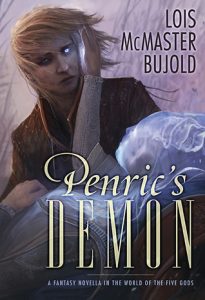
But, as I said earlier, the way this story works feels like the tales that Cleric Chih records, and sometimes tells in Nghi Vo’s Singing Hills Cycle. But that’s a feeling, so if you like the way those stories work you’ll probably enjoy A Labyrinth of Honeybees. But if you’re looking for something that reads like this story, then definitely check out Lois McMaster Bujold’s Penric and Desdemona series, because the way that Penric’s god interferes in his life and inserts chaos into it at every turn are very similar to the mess that the the priestess’ goddess drops into her lap in this story.

I listened to this one, then read the text, because as much as I enjoyed the listening experience – and I did – I started after midnight. The ways this story works are a bit subtle, and a lot of things are implied or hinted at that the reader doesn’t catch until the end. I wanted to make sure I got it all, and had a chance to think about what I got, as this is one of those stories that reads a bit differently once you have all the pieces.

Also, on the first go around I concentrated on the “top” story, about the inquisitor investigating the murders and the interactions between the inquisitor and the priestess. On the second time through the undertones and half-said bits about the new king and the new religion and the problems of conquest and the tensions of repression and cultural erasure peek through the screen of the mystery investigation. Which is exactly right, as both the inquisitor AND the priestess KNOW the investigation is a smokescreen for the real threat from the king, as well as his somewhat exaggerated and at least partly imaginary fears about the power of the old gods.

It was every bit as good a reading experience as it was a listening experience, but I did pick up more nuance on that second time around. So I’m glad I did it, because there’s a LOT packed into this seemingly small story.

#BookReview: The Wizard Who Kept Himself Suspicious by Scott Lynch

#BookReview: The Wizard Who Kept Himself Suspicious by Scott LynchThe Wizard Who Kept Himself Suspicious (Magic & Mystery, #5) by Scott Lynch
Narrator: Joel Froomkin
Format: audiobook, ebook
Source: borrowed from Amazon Kindle Unlimited
Formats available: ebook, audiobook
Genres: fantasy, fantasy mystery
Series: Magic & Mystery #5
Pages: 52
Length: 1 hour and 31 minutes
Published by Amazon Original Stories on July 28, 2026
Purchasing Info: Author's Website, Publisher's Website, Amazon
Goodreads

When egos clash during an assemblage of wizards, grandstanding displays of magic become a matter of murder in a witty and suspenseful short story by a New York Times bestselling author.
Curmudgeonly conjurer Shiverick joins a conclave of fellow wizards on the strangest beach in the world expecting the usual flashy outfits, hammy miracles, and predictable suspicions that his own powers are nil. After all, he’s never so much as cast a spell in public. When accusations of fraud end in a flamboyant murder, Shiverick must piece together the truth amid the chaos. An observant and logical thinker, it’s his time to shine.
Scott Lynch’s The Wizard Who Kept Himself Suspicious is part of the Magic & Mystery collection, puzzle-box mysteries from top fantasy authors. They can be read or listened to in one enchanting sitting.

My Review:

Every time I looked at the title of this entry in the Magic & Mystery collection it gave me a bit of a pause. It felt like there was a piece missing, or words in the wrong order, or just something that niggled.

It wasn’t until my second time through (these are short and sometimes that’s just what you need for a reading pick-me-up) that I realized that the title has two meanings. From Shiverick’s own perspective – and it’s his perspective through which we experience the story – he keeps himself suspicious of his wizardly colleagues and the world he has lived in for the past six centuries. (At least six centuries.) It’s because he remains a bit suspicious of everyone and everything that he’s able to solve this murder.

Putting it another way, his innate suspiciousness keeps him from falling into the dangerous and deadly trap of “assume”.

At the same time, Shiverick keeps himself to himself and holds his many, many secrets so close to the chest of his always black robes that his colleagues remain a bit suspicious of him. Up to and including a suspicion that he’s not really a wizard because they’ve never seen him perform any actual magic. (In his world there are other methods of extending one’s life span than wizardly, making his extremely long life evidence of something but not necessarily of something he’s done rather than something he might have taken or stolen.)

From the reader’s perspective as Shiverick solves the murder, it’s likely that his magic is the magic of knowledge – particularly the knowledge of human nature. Possibly, it’s magic of the Sherlockian variety. Or it’s “merely” the magic of common sense, which is not nearly as common as it should be in either Shiverick’s world or our own.

Whatever the state of Shiverick’s magic, or the lack thereof, might be, it’s still a lot of fun to watch him work his own peculiar form of  it while successfully fending off yet another attempt on the part of his colleagues to force him to reveal more of his secrets than they have a right to know.

Escape Rating B: I listened to this one first, and then read it second. Fortunately it’s short. Having experienced both, I have to recommend the text over the audio. STRONGLY. If I’d relied on just the audio, this would have been a C instead of a B.

All of the wizards in this tredecennial (once every thirteen years) conclave all have huge, over-the-top personalities. (They’d probably fit right in with the wizards at Unseen University in the Discworld.) They’re loud, they’re big, they’re bright (visually, at least), they’re showy. (They’re probably also FINE in the sense of FINE as an acronym for “fucked-up, insecure, neurotic and egotistical” but that’s another universe.)

In the audiobook, the narrator has given each of them an individual, idiosyncratic, over the top accent. The reading isn’t so much a narration as it is a case of too much of a good thing being very much not wonderful. Listening to the STORY got lost in doing my damndest to understand what each character was saying. Even Shiverick.

The text is written from Shiverick’s wry, world-weary but ever observant perspective, and in that voice the story is clear and easy to follow. We may be as lost as the rest of the wizards in following his logic – because he’s way better at that than they are and there’s considerably more going on than we know at the outset – but the story and his thought processes are clear even if the way he reaches his conclusions is a bit convoluted. Then again, the murder plot was ALSO a bit convoluted, so that tracks.

I picked this one up relatively early in my reading/listening to this series because I loved the author’s Hugo-nominated novelette, “Kaiju Agonistes” and wanted to sample more of his work before diving into his Gentlemen Bastards series that begins with The Lies of Locke Lamora – which has been in my TBR pile for-pretty-much-ever at this point. After LISTENING to The Wizard Who Kept Himself Suspicious I started rethinking that idea, but after READING the story I’m re-thinking my re-thinking towards the positive again. Now I just need to catch the “round tuit” for the whole thing.

But in the meantime, I’ll be back with another novella in the Magic & Mystery collection in the next week or two, because I’m still loving it. Sometimes in audio, sometimes in text, but enjoying these short fantasy mysteries one way or another all the same.

A- #AudioBookReview: Miss Gentle and the Case of the Very Flat Monk by Travis Baldree

A- #AudioBookReview: Miss Gentle and the Case of the Very Flat Monk by Travis BaldreeMiss Gentle and the Case of the Very Flat Monk (Magic & Mystery, #1) by Travis Baldree
Narrator: Travis Baldree
Format: audiobook, ebook
Source: borrowed from Amazon Kindle Unlimited
Formats available: ebook, audiobook
Genres: cozy fantasy, fantasy, fantasy mystery
Series: Magic & Mystery #1
Pages: 33
Length: 43 minutes
Published by Amazon Original Stories on July 28, 2026
Purchasing Info: Author's Website, Publisher's Website, Amazon
Goodreads

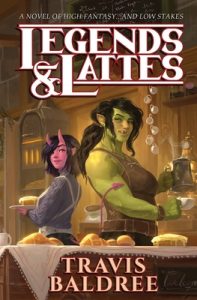
A peculiar detective takes on a monastic murder mystery in a darkly funny fantasy short story by the #1 New York Times bestselling author of the Legends & Lattes series.
Nobody really liked Brother Gorm, but his untimely and abrupt descent from the abbey’s bell tower has the Order of Venerous the Petulant on edge. Desperate to settle the case before the bishop returns, the abbot enlists the highly unorthodox investigator Miss Gentle. As she clanks through the abbey in a full suit of armor, the cantankerous detective has no problem asking awkward questions—but will she get any answers?
Travis Baldree’s Miss Gentle and the Case of the Very Flat Monk is part of the Magic & Mystery collection, puzzle-box mysteries from top fantasy authors. They can be read or listened to in one enchanting sitting.

My Review:

This is technically the first story in the Magic & Mystery  collection, but I couldn’t resist reading/listening to The Lion’s Tusk first because I had to find out what that title was about. AND I wanted a visit with Ana and Din.

Curiosity about parts that no lion should possess aside, this is otherwise an excellent story to open this fantasy mystery series because it has plenty of both. Along with a heaping helping of the cozy fantasy vibe that the author is famous for. (Not that this story is set in the world of Legends & Lattes – as far as we know – but it feels like it could have been.)

The beginning is a classic. Brother Gorm was dead, to begin with. He was also more than a bit gormless in the classic sense, having been stupid, slow-witted, and lacking common sense. In this particular case also friendless, hapless, hopeless and clumsy as an ox.

It’s not actually a surprise that Brother Gorm is dead. The surprise is that in spite of his terrible personality, it doesn’t seem as if anyone actually did him in. Even if he did fall from the top of a parapet that it should have been impossible to fall from without a bit of ‘help’. Help that there’s no evidence whatsoever that he had.

Which is where Miss Gentle comes into the picture. She sounds like an irascible little old lady. She looks like an armored knight festooned with holy relics. She’s purported to be the best detective in the world. All she wants in return for solving the abbey’s little mystery and giving the remaining brethren back their piece of mind is yet another relic to add to her collection.

Not money, not gems, not any ‘worldly’ goods, but one, particular relic, The abbey’s – or at least the abbot’s – pride and joy, the priceless Tongue of Saint Caddlemore. Well, it was priceless. Now it’s the price of a solution to the mystery, and the answer to the question of whether or not the late Brother Gorm(less) can be buried in consecrated ground. Or something like that.

Miss Gentle leads the Abbot – and the entire abbey – on a merry chase in pursuit of the solution. It’s only after she’s left with her prize that the reader learns the rest of the story. And it’s a doozy.

Escape Rating A-: I listened to this one, and it’s read by the author. In fact, it’s read EXCELLENTLY by the author. If you can get any of his work in audio, he’s just right to read his stories, as rare as that is. And believe me, it is.

This story is just plain fun. We know Miss Gentle has a secret hidden inside her armor. It’s hard not to guess THAT much. But the nature of her secret wasn’t quite what I thought it was. In the end, little of this story was what I thought it was, in ways that reminded me a bit of Lois McMaster Bujold’s Penric and Desdemona series. Because it turns out this is also a world where the gods are real and do real things in the world.

In the case of this particular god, Venerous the Petulant, it turns out that he loved cats. Unfortunately for Brother Gorm, he truly was gormless. Not only did he not love cats himself, but he served a god that did. Very much, in fact. And was too slow-witted not to visit his own dislike of the abbey’s resident mouser upon said mouser’s person at every opportunity.

The cat was bound to get back at him, sooner or later. And their god was bound to help the cat and not the monk.

And Miss Gentle was bound to figure it all out. Not because she’s a great detective, but because she has a great secret. A secret that will keep her tramping about the countryside searching for relics as long as her magic – and her will – hold out.

This was just plain fun. At first, it’s a bit slow to get started and that’s deliberate. Miss Gentle is building up her schtick and it’s working on both the Abbot and the reader. He has to believe, we have to get caught up, and we both do. In the end, he decides he’s better off if he doesn’t know Miss Gentle’s truth as long as his problem is solved. Which it is. For the reader, the final reveal is a real belly laugh of a conclusion.

I’m definitely looking forward to reading/listening to the rest of the Magic & Mystery  collection, because so far it’s a hoot!

Grade A #AudioBookReview: The Lion’s Tusk by Robert Jackson Bennett

Grade A #AudioBookReview: The Lion’s Tusk by Robert Jackson BennettThe Lion’s Tusk (Shadow of the Leviathan) by Robert Jackson Bennett
Narrator: hannah curtis
Format: audiobook, ebook
Source: borrowed from Amazon Kindle Unlimited
Formats available: ebook, audiobook
Genres: epic fantasy, fantasy, fantasy mystery
Series: Shadow of the Leviathan, Magic & Mystery #3
Pages: 38
Length: 1 hour and 14 minutes
Published by Amazon Original Stories on July 28, 2026
Purchasing Info: Author's Website, Publisher's Website, Amazon
Goodreads

An eccentric detective turns to the fantastical to solve a cold case in a short story by the Hugo Award–winning author of The Tainted Cup.

On a long carriage journey with her assistant Din, brilliant investigator Ana Dolabra ponders a solution to an impossible crime that has remained unsolved for centuries. A lavish wedding for two noble scions of the Empire descended into chaos when the newlyweds were found murdered in their marriage bed. But Ana—an expert in ancient myths, awakened beasts, and magic—knows that nothing is impossible, only unimaginable.

Robert Jackson Bennett’s The Lion’s Tusk is part of the Magic & Mystery collection, puzzle-box mysteries from top fantasy authors. They can be read or listened to in one enchanting sitting.

My Review:

Lions don’t HAVE tusks – not in our world. Not even in the world of the Shadow of the Leviathan series, where Ana Dolabra and her assistant Dinios Kol travel around the empire shoring up the foundations by solving mysteries and restoring a tiny bit of order, one case at a time.

Which should have been a clue to someone that something wasn’t quite what it purported to be. But “The Lion’s Tusk” was a legendary relic, making it the perfect wedding gift from a high-ranking church official to a rich reprobate that he hates and the despicable man’s unfortunate bride upon the occasion of their wedding.

Notice that no one in the above description is happy about the whole thing, to begin with. Which does explain why the brilliant and eccentric (extremely eccentric) investigator Ana Dolabra is intrigued with this particular case. (That’s it’s every bit as gut-wrenchingly gruesome as the first case she sends Din out on is all part of the “fun”. Or at least Ana’s fun, which is frequently gut-wrenching and gruesome all by itself.)

This particular case was never officially solved. It’s so historical that it’s not merely cold but ice cold, making it a perfect case for Ana to trot out for Din’s edification – and her own amusement – on a long, boring trip to one of the far-flung corners of the vast empire they serve.

The case, as Ana states at the beginning, is so old and so cold (in more ways than one) that there is no justice left to be had. Or the guilty have already been judged in a higher – or lower – court than would have been available to the Imperial Iudex of which Ana and Din are both officers.

Which doesn’t mean that Ana doesn’t think she’s solved it – because of course she believes she has. Whether her conclusions are the correct ones may be in the mind of the reader, but whether she’s right or not – although she most likely is because Ana Dolabra is ALWAYS right in the end – she’s sure she’s figured it out. And so is Din. While telling the tale – and frequently provoking Din with her usual outrageousness – keeps Ana from indulging in any of her usual, more destructive outlets for alleviating crushing boredom. For which Din seems rather grateful even if he has to hang his head out the window of the carriage a few times to keep from retching over her disgustingly detailed descriptions.

Din is fascinated in spite of himself. And the reader – or at least this reader – is utterly enthralled from beginning to end.

Escape Rating A: I loved this from the opening paragraph. Then again, I expected to. This is a bit of a side story in the author’s utterly marvelous, absolutely fantastic Shadow of the Leviathan series, following the investigations of Ana Dolabra and her assistant Din. The series begins with The Tainted Cup, winner of the 2025 Hugo Award for Best (SF or Fantasy) Novel. (It was also nominated for Best (Crime/Mystery) Novel in the 2025 Edgar Awards) The follow-up book, A Drop of Corruption, is one of the nominees for this year’s Hugo Award, and the third book, A Trade of Blood, is coming out next month. (I’ve already finished it and it’s just as awesome as the first two.)

In other words, I was in the mood for another trip with Ana and Din, and this was the right story at the right time, made even better by listening to the audiobook read by Hannah Curtis. The full length books in this series are all told from Din’s perspective, but this short story has just that bit extra because Ana Dolabra is the one telling the story, and Curtis does an excellent job portraying her character.

Part of what I love about Ana and Din as investigators is that they are very much a play on Holmes and Watson, although Ana has considerably more scope for her eccentricities, and Din is more inexperienced than he is unintelligent. (OTOH, neither is Watson in the original stories. Pardon me while I step down my soapbox.)

What I also love about this series is that it seems as if the author has single-handedly resurrected the entire fantasy mystery subgenre, and I’m definitely there for it. (I have very fond memories of the classic Lord Darcy series, which was a foundation of the last time fantasy mystery was popular. I digress.)

As this is a cold case, another part of the fun is that this is effectively an “armchair mystery” – even though that chair is moving through the countryside. For anyone who has ever read Josephine Tey’s classic armchair mystery, The Daughter of Time, the similarities add a bit of nostalgia to this story.

Even better, all around, as much fun as I had with this particular story, is that it’s not alone. I mean, it stands alone in the sense that it’s not attached to any of the earlier stories in its series, although it helps if one is at least a bit familiar with the first book.

The Lion’s Tusk is also a part of another series, Amazon Original Stories Magic & Mystery series. The short stories in the collection are fantasy mysteries, they promise to be fascinating treats, and I can’t wait to read/listen to them ALL!