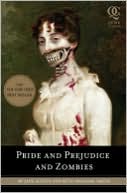
 There has been a trend in pop literature in the past two years to re-write great works of literature to include horror elements, usually for comic or satiric effect. Some of the results are hilarious, some are fairly dreadful. Patient Zero in this trend (to mix metaphors in the extreme) was the strange, bizarre and absolutely screamingly funny in-joke that was Pride and Prejudice and Zombies, written by the great Jane Austen and edited or amalgamized (or whatever) by Seth Grahame-Smith. This crazy thing, I personally think at least partially on the strength of a truly fantastic cover, was a surprise commercial success. Therefore, it begat sequels, spinoffs and sideways imitations.
Now they have slipped sideways into a variation of alternate history where real historic figures were supposedly vampire slayers or vampire hunters. I kid you not. On the surface, two historic figures less likely to imagine as even having the spare time to stalk vampires during the night than either Abraham Lincoln or Queen Elizabeth I could hardly be found. Why pick them? What could they have in common to make them likely, or even compelling, targets for such a treatment.
There are so many differences. Male and female, obviously. An elected leader vs a queen by right of inheritance. They are separated, not just by an ocean of salt water, but by an ocean of three centuries of time. And yet, they are both figures that fascinate in history. They both led their nations during eras when those nations were on the cusp on becoming, but had not yet become world powers. Times when their people were under grave threat. From our modern viewpoint, they are seen as leaders in times and places where personal leadership particularly mattered, and that they rose to the challenges they faced.
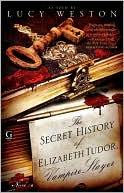 The Secret History of Elizabeth Tudor, Vampire Slayer, is written using a time-honored literary tradition. Elizabeth’s secret diaries were supposedly unearthed during the very real fire at Windsor castle in 1992 and the first volume is now being published, after the public events mentioned in the diary have been verified. The story is told in Elizabeth’s voice, her perspective on events in the very first weeks of her reign as she discovers that she is the heir, not just to the throne, but also to the powers of vampire slayer, the first in a millenium–the first since her ancestress, Morgaine, better known to history as Morgan le Fay. And the King of the Vampires that Elizabeth must face is none other than Mordred, the illegitimate son of King Arthur. Tying the vampires to the end of Camelot makes for masterful storytelling, and leaves the door open for a sequel. Because there is a question that runs throughout the story. Mordred may not be Elizabeth’s enemy. Historically, England in Elizabeth’s time had many enemies, particularly Spain, as the attempted invasion by the Spanish Armada showed. Those enemies are very much present, as are the foes she has within her court.
 However, as much as I enjoyed the story itself, and the melding of the real history with the supernatural elements, trying to sell the idea that the editor of the diaries was the Lucy Weston from Bram Stoker’s Dracula was just one stage too far. There’s a concept called the “willing suspension of disbelief” and that just tore it.
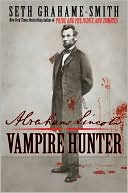 Abraham Lincoln, Vampire Hunter, also pretends to be a publication of secret diaries. But at least the “real” author (Seth Grahame-Smith again) isn’t claiming to be someone else fictional. The author tries to make the diary entries sound like Lincoln, and to therefore sound like someone writing in the mid-19th century. It’s a difficult trick to manage, and whether he completely succeeds, I’m not certain.
But the premise is compelling, if strange. Abraham Lincoln experienced several deaths in his early years of the people surrounding him. Deaths that contributed to the man he became. Both his mother and his first love (if you subscribe to that belief in the first place). In Grahame-Smith’s version, both of those deaths were caused by vampires. And Lincoln becomes a vampire hunter out of a desire for revenge. Unlike Elizabeth, he has no special talent for the work, he is simply big and strong and wants to kill as many as possible.
The Civil War, the defining event of the 19th century United States, is not left out. In this version of both the War and Lincoln’s life, vampires control the Southern States, and are slave owners. The vampires want to expand slavery, because slaves are not merely property, they are food. No one questions what happens to someone else’s slaves. Humans are always food to vampires, but this objectifies the practice even more. Human slave owners are colluding with the vampires, either out of a desire to be on the winning side, out of a hope to be spared, or merely out of the knowledge that as collaborators, they will be taken last. Discovering what vampires do to slaves makes Lincoln a firm abolitionist in addition to a vampire hunter.
But Lincoln has no particular talent for this work, he is just strong and vicious. At the age of 16, he is nearly killed on a hunt. He is saved by a vampire named Henry Sturgis, who, along with many of his fellow vampires, believes that slavery is wrong, that killing humans other than criminals for food is wrong, and that the slave holders and other “evil” vampires must be stopped at all costs. Henry also declares that he has had glimpses of Lincoln’s destiny, and that Lincoln is “just too interesting to die.”
 This book was not about changing history. Everything that needs to happen, does happen. The world we know, does come to pass. But history is viewed through a different lens. “What if?” asks the author, and then views that “if” through Lincoln’s point of view. The North still won the war. Lincoln was still shot and killed at Ford’s Theatre. The difference? The vampires found the new Union without slavery inhospitable and fled the country. John Wilkes Booth was a vampire. But the image that sticks with me from the book is the ending. Lincoln and Henry standing in the shadows of the Lincoln Memorial, watching Martin Luther King, Jr. deliver his “I Have a Dream” speech.