
#BookReview: Hole in the Sky by Daniel H. Wilson

#BookReview: Hole in the Sky by Daniel H. WilsonHole in the Sky by Daniel H. Wilson
Format: eARC
Source: supplied by publisher via Edelweiss
Formats available: hardcover, paperback, large print, ebook, audiobook
Genres: horror, retellings, science fiction, science fiction horror, thriller
Pages: 288
Published by Doubleday on October 7, 2025
Purchasing Info: Author's WebsitePublisher's WebsiteAmazonBarnes & NobleKoboBookshop.orgBetter World Books
Goodreads

A gripping sci-fi thriller—and Native American First Contact story—from the New York Times bestselling author of Robopocalypse, Daniel Wilson, who is a Cherokee Nation citizen and works as a threat forecaster for NASA.

Heliopause is a real place—the very outer edge of our solar system where the sun's solar winds are no longer strong enough to keep debris and intrusions from bombarding our system. It is the farthest edge of our protected boundary (it was recently crossed by Voyager), and the line beyond which space experts look for extraterrestrial presences. This is where Daniel Wilson's fascinating novel begins. Weaving together the story of Jim, a down-on-his-luck absentee father in the Osage territory of Oklahoma, and his daughter, Tawny, with those of a NASA engineer, a misfit anonymous genius who lives in military isolation analyzing a secret incoming "Pattern," and a CIA investigator tasked with tracking unexplained encounters, Heliopause explores a Native American first contact that pulls all five characters into something never before seen or imagined.

My Review:

Nearly 50 years ago, humanity – or at least NASA – sent not just one but two ‘hellos’ out into the universe in the form of unmanned spacecraft, specifically Voyager 1 and Voyager 2. They are both still out there, and still sending back data. So far, they are the only man-made objects to pass through the heliosphere, the boundary between our own Solar System and the rest of the Milky Way galaxy. They have, literally, truly and in real life, ‘gone where no man (-made object) has gone before.’

And if Voyager’s mission sounds familiar, that quote is even more apt, as the misunderstood enemy in the first Star Trek movie (sometimes referred to as Star Trek: The Motion(less) Picture, was a later, fictional, Voyager probe.

So the idea that kicks off Hole in the Sky isn’t all that far-fetched. Nor is the idea that objects from outside our Solar System might pass through, as that has already happened. The first confirmed interstellar object to pass through our solar system, Oumuamua, is cited in the story. There have been two others, Borisov and ATLAS. So again, it’s plausible to combine the two ideas, that something might come here from outside the heliopause, and that it might be a bit more intelligent than just a rock.

Or in the case of this story, a lot more intelligent – or at least programmable. (Then again, it might be like the probe in Star Trek IV: The Voyage Home – AKA the one with the whales) All of the above would normally be a digression, but it’s not. The scientific – and the science fictional – elements are the ones that got me into this story, BECAUSE it starts on the edge of the possible and the familiar.

Then it branches out. Or puts down roots. Or both. Definitely both. Even as it loops in what feels like bits of Close Encounters of the Third Kind, which I wasn’t expecting at all.

Like that classic movie, the story of Hole in the Sky is told from multiple viewpoints, in the book all in the first person. And it needs those viewpoints, because a LOT is happening all at once in some rather disparate places.

There’s a NASA scientist who feels called by whatever is heading our way. Or at least that’s what she believes. There’s a CIA analyst who has been communicating with it for years, without knowing who or what it is, only that it occasionally predicts the future. It doesn’t do it often, but when it does it’s ALWAYS right. Of course, there’s a military component to all this, because it’s headed our way, it might be an enemy, and there’s always someone willing to shoot first and ask questions later.

And then there’s Jim Hardgray and his daughter Tawny, living on the land that their people have called home since the Cherokee were forced from their lands in Florida, Georgia, Alabama and Mississippi to Oklahoma in what would be known as “The Trail of Tears” in the 1830s. What his people found in Oklahoma were the Spiro Mounds, built by the ancestors of the ancestors at a time so long ago that it has passed into myth.

Myths that seem to be coming back to life all around them, even though – or perhaps especially because – the mounds are ground zero for first contact with the interstellar whatever-it-is and every single person and/or agency who is rushing to Oklahoma to meet it, greet it, or bomb it out of existence.

Escape Rating B: Hole in the Sky turned out to be, well, a LOT. Both a lot of different elements and a lot of viewpoints. Each and every one of both were fascinating, but it didn’t quite gel into a whole. Maybe two or three wholes, with about the same number of (plot) holes. And because of all of those lots, it’s a hard book to pin down as well as put down.

Don’t get me wrong, this is definitely and absolutely science fiction, but there’s also plenty of crossover with fantasy in the retellings and re-interpretations of Native American mythology, AND there’s quite a bit of horror along for the SFnal ride.

Also, while I got caught up in the multiple points of view and recognized early on that the story needs almost all of them, some of the narrators of those viewpoints were not necessarily reliable or possibly even sane, and transitions were a bit abrupt which left me scrambling to see when the story had shifted – as it often did. The chapters are fast, short and the frequent turnovers felt a bit choppy at points – particularly as a couple of the narrators got a bit, well, chopped up in the head.

All of that being said, the story is one hell of a ride, and all the better for the sense that, even if this hasn’t happened yet, that this is just how the people in those sorts of positions will react – for good and ill. As humans do.

I felt like I didn’t know nearly enough about the Native American myths and legends that were at the heart of the story. The way that Jim Hardgray explained as much as possible to his daughter in the time that he had worked well, and gave me enough to enjoy the story, but also made me wish there were more.

There were also a lot of books that this reminded me of, particularly Three Miles Down by Harry Turtledove, When the Moon Hits Your Eye by John Scalzi, and Connie Willis’ The Road to Roswell, along with the previously mentioned Star Trek movies and Close Encounters of the Third Kind. But those books played their piece of the alien invasion/end of the world/buried alien artifact discovery aspects off (mostly) for laughs even if the movies mostly didn’t.

Hole in the Sky doesn’t play things for laughs at all, even though it’s dealing with a lot of the same scenarios. (Not that some of the observations of humans, bureaucracy, military reactions AND political shenanigans don’t have a bit of gallows humor attached, because they would and do.) But taking this ‘what if?’ scenario seriously does leave the reader pondering a whole lot more when they turn the last page – if not exactly comfortable with the directions of those ponderings.

Grade A #BookReview: Dead in the Frame by Stephen Spotswood

Grade A #BookReview: Dead in the Frame by Stephen SpotswoodDead in the Frame: A Pentecost and Parker Mystery by Stephen Spotswood
Format: eARC
Source: supplied by publisher via NetGalley
Formats available: hardcover, ebook, audiobook
Genres: historical fiction, historical mystery, mystery
Series: Pentecost and Parker #5
Pages: 384
Published by Doubleday on February 4, 2025
Purchasing Info: Author's WebsitePublisher's WebsiteAmazonBarnes & NobleKoboBookshop.orgBetter World Books
Goodreads

The most dramatic installment yet in the Nero Award-winning Pentecost and Parker series, as Will scrambles to solve a shocking murder before Lillian takes the fall for the crime.

NEW YORK CITY, 1947: Wealthy financier and ghoulish connoisseur of crime, Jessup Quincannon, is dead, and famed detective Lillian Pentecost is under arrest for his murder. Means, motive, and a mountain of evidence leave everyone believing she's guilty. Everyone, that is, except Willowjean “Will” Parker, who knows for a fact her boss is innocent. She just doesn’t know if she can prove it.

With Lillian locked away in the House of D–New York City’s infamous women’s prison–Will is left to root out the real killer. Was it a member of Quincannon’s murder-obsessed Black Museum Club? Maybe it was his jilted lover? Or his beautiful, certainly-sociopathic bodyguard? And what about the mob hit-man who just happened to disappear after the shots were fired?

With the city barreling toward the trial of the century, each day brings fresh headlines and hints of long-buried scandals from Lillian’s past. Will is desperate to get her boss out from behind bars before her reputation is destroyed. Because the House of D is no kind place, especially for a woman with multiple sclerosis. Or one with so many enemies. Her health failing and targeted by someone who wants her dead, Lillian needs to survive long enough to take the stand.

With time running out on both sides of the prison walls, Will and Lillian must wager everything to uncover who put their thumb on the scales and a bullet in Quincannon’s head. Before Lady Justice brings her sword down, ending Pentecost and Parker's adventures once and for all.

My Review:

The Women’s House of Detention at 6th Avenue near West 9th Street in 1939.

This fifth entry in the Pentecost and Parker series begins with celebrated, hated, envied, feared, private investigator Lillian Pentecost on her way to the Women’s House of Detention at 6th Avenue near West 9th Street in New York City, under arrest for a murder that she surely did not commit.

Not that either the NYPD or the criminal justice system can see their way to that conclusion – at least not yet. The frame around Pentecost fits much too well, and there are too many people in the NYPD who have been itching to see this successful, intelligent woman fall. Of course the press is having a literal field day because everyone loves a scandal, and people especially love seeing the high and mighty cut down to size.

Pentecost’s right-hand woman, Willowjean Parker, comes back from her first-ever vacation to find her boss in handcuffs, their property being ransacked, and cops and reporters besieging the place. It seems as if the entire city wants a piece of Lillian Pentecost – only because they do.

This is the job that Will Parker has been training for, to become the lead investigator of Pentecost and Parker Investigations. That has been inevitable from the very first, marvelous book in this series, Fortune Favors the Dead, when Pentecost took Parker on as her assistant. Not because she wanted an assistant, but because Lillian Pentecost had been recently diagnosed with multiple sclerosis and she knew that her time as the lead investigator of her own agency was inevitably running out.

Now that it has, possibly temporarily but certainly abruptly, while Pentecost is behind bars and bail has been denied, it’s up to Will to ask herself what Lillian Pentecost would do – and do it. No matter how high the deck is stacked against them both. Pentecost is depending on her, and Willowjean Parker will not be found wanting. Whatever it takes.

Escape Rating A: The entire Pentecost and Parker series has been an edge-of-the-seat thrill ride from the very beginning in Fortune Favors the Dead, through Murder Under Her Skin, Secrets Typed in Blood, Murder Crossed her Mind and now this latest page-turner, Dead in the Frame.

What initially drew me into this series was its homage to a classic mystery series that isn’t talked about much anymore, and that’s the Nero Wolfe series by Rex Stout. A series which I fully admit probably doesn’t wear well in the 21st century for all sorts of reasons.

But the concept of the Wolfe series was a partnership between an older detective who mostly refuses to leave his New York City brownstone and his younger assistant who does all the legwork and brings the case back to his boss. In the case of Pentecost and Parker, as the series began Pentecost was aware that she SHOULD be sticking to her brownstone, but can’t make herself do it as much as her doctor would prefer.

On the one hand, Pentecost and Parker are very much in the style of the noir fiction of the 1930s and 1940s, and Parker’s first-person chronicles of the cases resembles Wolfe’s junior partner Archie Goodwin in style and often substance. Howsomever, the lens through which Parker sees the world is VERY different from Goodwin’s. Parker is both female and queer, and grew up in as far over the wrong side of the tracks as possible as she literally ran away and joined the circus.

(If you’ve enjoyed Pentecost and Parker and you’re curious about their antecedents, the first book in the Nero Wolfe series is Fer-de-Lance. If you’re looking for a readalike for Pentecost and Parker, take a look at Lavender House by Lev A.C. Rosen.)

This particular entry in the series does a fantastic job of straddling the line between Parker’s now and ours, speaking both to the case itself and the reasons for it while at the same time using that vehicle to highlight issues that are very much a part of our present. Including, but very much not limited to, the way that Pentecost is tried in the press LONG before her actual trial because there are just so many powers-that-be that can’t bear to see a woman be independent, successful and show them up when they deserve it.

After taking a couple of days to think about this one, I think that what’s at the heart of this entry in the story is the issue of inevitability and the human response to knowing that an ending is coming. In a way, it’s all about, to paraphrase the poet Dylan Thomas, not going gently into that good night, and the form that the rage against the dying of the light takes. It’s about the conflict between revenge being a dish best served as cold as, and from, the grave versus “I expect to pass through this world but once; any good thing therefore that I can do, or any kindness that I can show to any fellow-creature, let me do it now; let me not defer or neglect it, for I shall not pass this way again.”

All of that may seem a bit on the philosophical side, but it’s in there. And so is an absolutely cracking good mystery that sends both of our detectives through walks in the valley of the shadow of death and brings the inevitable changes that Pentecost has been staving off for years much closer much faster than her early hopes would have had it.

I have to say that the parts of this story where Pentecost is in the Women’s House of Detention are harrowing and also feel much too real – as the House of D most certainly was. Her treatment while incarcerated was entirely too typical of the treatment of prisoners in that nightmare of a place, and we go through that nightmare with her and feel her get both scared and scarred by it.

I was utterly caught up in the mystery, as I have been with every single one of their cases so far. I knew Pentecost was innocent but couldn’t see how she was going to get out from under – and for the longest time neither did she or Parker and it ratcheted the tension up to 11 the entire way.

The one thing that kept niggling at me is probably a result of my 21st century perspective having a disconnect with her post WW2 circumstances. I certainly understand why she hated the victim, and vice versa. But the information he was holding over Pentecost wasn’t about her, it was about her parents. I understand why no one would want that history dug up, but not why it was such a potentially huge scandal for Pentecost herself. Whatever the truth of that old matter, she herself can’t possibly be guilty of any of it as she was a child at the time. I expect to see that mess resolved, or at least as resolved as the dead past can be, in the next book in this series. Because that’s the story that Lillian Pentecost herself promised to work on next!

Review: A Stroke of the Pen by Terry Pratchett

Review: A Stroke of the Pen by Terry PratchettA Stroke of the Pen: The Lost Stories by Terry Pratchett, Neil Gaiman
Format: eARC
Source: supplied by publisher via Edelweiss
Formats available: hardcover, paperback, ebook, audiobook
Genres: fantasy, short stories
Pages: 240
Published by Doubleday on October 10, 2023
Purchasing Info: Author's WebsitePublisher's WebsiteAmazonBarnes & NobleKoboBookshop.orgBetter World Books
Goodreads

Far away and long ago, when dragons still existed and the only arcade game was ping-pong in black and white, a wizard cautiously entered a smoky tavern in the evil, ancient, foggy city of Morpork...
A truly unmissable, beautifully illustrated collection of unearthed stories from the pen of Sir Terry Pratchett: award-winning and bestselling author, and creator of the phenomenally successful Discworld series.

Twenty early short stories by one of the world's best loved authors, each accompanied by exquisite original woodcut illustrations.
These are rediscovered tales that Pratchett wrote under a pseudonym for newspapers during the 1970s and 1980s. Whilst none are set in the Discworld, they hint towards the world he would go on to create, containing all of his trademark wit, satirical wisdom and fantastic imagination.
Meet Og the inventor, the first caveman to cultivate fire, as he discovers the highs and lows of progress; haunt the Ministry of Nuisances with the defiant evicted ghosts of Pilgarlic Towers; visit Blackbury, a small market town with weird weather and an otherworldly visitor; and go on a dangerous quest through time and space with hero Kron, which begins in the ancient city of Morpork...

My Review:

I first became acquainted with the Discworld and its creator – or perhaps perpetrator would be the better word – in the early to mid 1990s when I had a long commute, audiobooks were still on actual tape, and the collection of same at the library where I worked wasn’t all that big because there wasn’t all that much available.
Two of those available titles were The Colour of Magic and The Light Fantastic, the first two books in the Discworld . It wasn’t exactly love at first listen because those first two books were a bit weirder than I expected, and looking back from the perspective of even Mort, only two books later, it was pretty clear that the author figured out he had a series going on somewhen approximately between The Light Fantastic and book 3, Equal Rites.

I don’t think he was all the way there until book 8, Guards! Guards!, which is a much better entry point for the series. (I digress – but hopefully not too far or I’ll fall off the edge.)

The point I’m working my way around is that masterpieces like the Discworld do not spring fully formed from the head of Zeus – or even two Zeuses in the case of Good Omens, co-authored with Neil Gaiman.

The stories in this collection, these ‘strokes of the pen’ by Sir Terry Pratchett, are a bit of a portrait of the beloved author as a young scrivener who was still in the process of figuring out what in the hell he was doing and quite possibly where was he going in that handcart.

The story of these stories is a bit of a story all by itself. They were published – these are not early efforts that were never intended to see the light of day. It’s just that they were published in a tabloid newspaper, the Western Daily Press, published in Bristol in the U.K. from 1967 to 1984, mostly under the pseudonym Patrick Kearns.

But the Western Daily Press was – and still is – a very small newspaper. The stories were published, read and mostly forgotten, with the exception of “The Quest for the Keys” which had been cut out and preserved by one enterprising fan – howsomever without any of the borders of the pages which would have revealed where and when it was published. A painstaking search through the British Library’s Newspaper Archive resulted in the discoveries that have been published in this collection.

The stories themselves are a LOT of fun. Every single one gives the reader a chuckle or at least a smile, and there are hints of what evolved into Pratchett’s style of both telling the story and making snide asides about the circumstances even in the earliest instances.

But they are very, very short, and with the exception of “The Quest for the Keys”, which was published in four parts, it’s obvious that the newspaper had limited space for fiction – and probably everything else. So these are touches, tastes, teasers and don’t get into a lot of detail.

Still, by grouping them in little series, the reader does get a pretty clear picture of places like Blackbury [sic] which seems like it could be just around the corner from Unseen University – no matter how much the stories refer to far-distant London. Which could, with a bit of a squint, be Ankh-Morpork.

Although, speaking of Ankh-Morpork, the final story in the collection, “The Quest for the Keys”, is set in the city of Morpork. Perhaps the annexation of Ankh is just around its corner. And again, a bit of a squint turns the lazy and underhanded wizard Grubble into the more inept but much nicer about it Rincewind of The Colour of Magic, while the hired sword Grubble has hired and duped, Kron, seems more than a bit like a younger and savvier Cohen the Barbarian, perhaps with just a touch of the inestimable Sam Vimes.

Escape Rating B: A Stroke of the Pen isn’t exactly the Discworld , but it is Discworld -adjacent. Which is as close as it’s possible to get now that its author, creator and perpetrator is no longer among us. It’s at that intersection of not being sure whether to cry because it’s over, or smile because it happened. The stories themselves are generally fun but not terribly deep, because there wasn’t time in the format to get that way.

So, think of this collection as a last twinkle of the author’s eye, and enjoy!
Review: American Heiress by Jeffrey Toobin

Review: American Heiress by Jeffrey ToobinAmerican Heiress: The Wild Saga of the Kidnapping, Crimes and Trial of Patty Hearst by Jeffrey Toobin
Formats available: hardcover, paperback, ebook, audiobook
Pages: 368
Published by Doubleday on August 2nd 2016
Purchasing Info: Author's WebsitePublisher's WebsiteAmazonBarnes & NobleKoboBookshop.org
Goodreads

From New Yorker staff writer and bestselling author Jeffrey Toobin, the definitive account of the kidnapping and trial that defined an insane era in American history
On February 4, 1974, Patty Hearst, a senior in college and heiress to the Hearst family fortune, was kidnapped by a ragtag group of self-styled revolutionaries calling itself the Symbionese Liberation Army. The already sensational story took the first of many incredible twists on April 3, when the group released a tape of Patty saying she had joined the SLA and had adopted the nom de guerre "Tania."The weird turns of the tale are truly astonishing -- the Hearst family trying to secure Patty's release by feeding all the people of Oakland and San Francisco for free; the photographs capturing "Tania" wielding a machine gun during a bank robbery; a cast of characters including everyone from Bill Walton to the Black Panthers to Ronald Reagan to F. Lee Bailey; the largest police shoot-out in American history; the first breaking news event to be broadcast live on television stations across the country; Patty's year on the lam, running from authorities; and her circuslike trial, filled with theatrical courtroom confrontations and a dramatic last-minute reversal, after which the phrase "Stockholm syndrome" entered the lexicon. The saga of Patty Hearst highlighted a decade in which America seemed to be suffering a collective nervous breakdown. Based on more than a hundred interviews and thousands of previously secret documents, American Heiress thrillingly recounts the craziness of the times (there were an average of 1500 terrorist bombings a year in the early 1970s). Toobin portrays the lunacy of the half-baked radicals of the SLA and the toxic mix of sex, politics, and violence that swept up Patty Hearst; and recreates her melodramatic trial. American Heiress examines the life of a young woman who suffered an unimaginable trauma and then made the stunning decision to join her captors' crusade. Or did she?

My Review:

The past, as they say, is another country. They do things differently there.

1974 is definitely the past. Which is something which also feels unaccountably “wrong” at the same time. I was a junior in high school when Patty Hearst was kidnapped. And it seems like a life-time ago – only because it was.

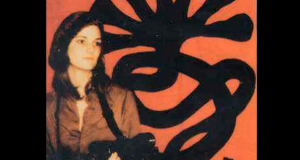
patty hearst SLAThe story of Patty Hearst’s kidnapping, conversion, capture and conviction is so wildly improbably that it could only be fact. If someone tried to sell this saga as fiction, it would be rejected as too improbable to be believable. But it really happened.

It’s a very wild ride.

One of the things that struck this reader is just how inept both sides of the equation were. The cops, notably the FBI, come off as much more Keystone Kops than clear-eyed Eliot Ness. It’s not just that they couldn’t catch a break, but that they often didn’t know what break to catch. In hindsight, there were all kinds of clues that weren’t followed up on. This didn’t have to go on nearly as long as it did.

Especially since the criminals were no more ept than the cops. As you read the story, it’s impossible not to be struck but just how often the SLA just got lucky. They may have planned their individual operations down to the details, but there was no overall plan and no major goal to be accomplished. They seem to have been living in a bubble of their own making. And it somehow kept working for them.

Until it didn’t.

The central figure in this story is Patty Hearst herself. So much hinges on figuring out what she really thought and felt. And that’s an unknown, and always has been.

It’s difficult not to put myself in her place. At 19, if someone kidnapped you at gunpoint and locked you in a closet, what would you think when weeks later they offered you the option of walking away or joining up? Would anyone actually believe that walking away was a real option? I keep coming back to that over and over. Expediency says to play along.

The questions, both at the time and now, come back to whether or not she truly believed in the revolutionary cause she ended up espousing. But even if she did, how can anyone say that she truly gave unforced consent to anything that happened? How free was she to choose? We’ll never know.

Which is probably how she managed to receive both clemency from President Jimmy Carter and a pardon from President Bill Clinton. In the end, with Patty controlling the narrative, everyone saw what they wanted to see.

Something that Patty Hearst seems to have been very, very good at playing.

Escape Rating A-: One of the things that this book does well is to set the stage. The 1970s are not that long ago, but they are also in some ways very far away. The optimism of the civil rights movement and the feminist movement had not yet faded into cynicism. At the same time, it was a completely crazy era, as the anti-war protests of the 1960s descended into revolutionary fervor and violence of all types. Including lots of bombings and home-grown terrorism.

The cops come off as almost completely inept. At the same time, the criminals were more lucky than smart. One of the things that the author makes clear, but is so hard to imagine today, is that there were no cell phones and no internet. Communication was slow and clumsy, coordination was incredibly difficult. Those are factors which made the criminals lives much easier, and the cops’ jobs much more difficult. Occasionally, that ineptitude feels like it drags the narrative down a bit. Because the bulk of the book is about Patty’s life on the run with the SLA, the length of time she remains free and the inability of the police and the FBI to find and apprehend her goes on and on, because in real life it did.  However, I would have liked a bit more on the trial and its aftermath than is present in the book.

At the end of the book, the questions are still unanswered. Both the question of just how willing a participant Patty Hearst was in the later SLA criminal activities, and also just how much will did she have at that point? It’s ironic that the phrase that most often comes to mind in reference to her case, Stockholm Syndrome, wasn’t in use at the time of her trial because the Stockholm event itself had just occurred in 1973. Was she formally brainwashed? Based on the book, it seems doubtful. Not that the SLA might not have tried, but that they never seemed to have it that much together. Did she have Stockholm Syndrome? That seems much more plausible.

That the questions from the book continue to haunt me says something about the writing. This is a good story. It always has been. There’s a lot of drama, a certain amount of melodrama, and a fascinating use of a kind of sin and redemption trope, as Patty is taken from her good girl life, becomes an outlaw, and then reforms. It’s also a story about where the rich really are different from you and me. No one else in history has ever received both clemency and a pardon. Money still talks.

American Heiress is a compulsively readable account of an utterly fascinating riches to rags to riches story of crime, punishment and redemption.