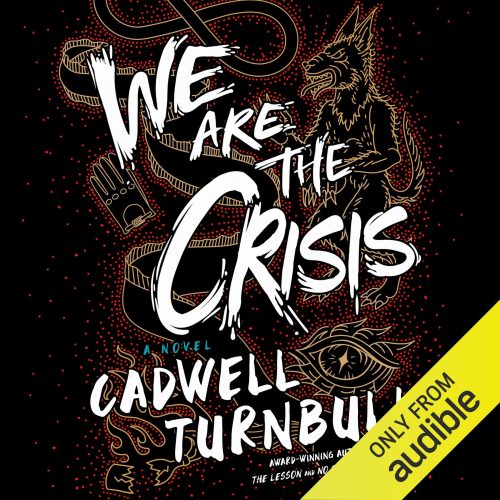
 We Are the Crisis (Convergence Saga #2) by Cadwell Turnbull
 Narrator: Dion Graham
Format: audiobook, eARC
Source: supplied by publisher via NetGalley
Formats available: hardcover, large print, ebook, audiobook
Genres: fantasy, horror, science fiction, urban fantasy
Series: Convergence Saga #2
Pages: 338
Length: 9 hours and 7 minutes
Published by Blackstone Publishing on November 7, 2023
Purchasing Info: Author's Website, Publisher's Website, Amazon, Barnes & Noble, Kobo, Bookshop.org, Better World Books
Goodreads
In We Are the Crisis—the second book in the Convergence Saga from award-winning author Cadwell Turnbull—humans and monsters come into conflict in a magical and dangerous world as civil rights collide with preternatural forces.
In this highly anticipated sequel, set a few years after No Gods, No Monsters, humanity continues to grapple with the revelation that supernatural beings exist. A werewolf pack investigates the strange disappearances of former members and ends up unraveling a greater conspiracy, while back on St. Thomas, a hurricane approaches and a political debate over monster’s rights ignites tensions in the local community.
Meanwhile, New Era—a pro-monster activist group—works to build a network between monsters and humans, but their mission is threatened by hate crimes perpetrated by a human-supremacist group known as the Black Hand. And beneath it all two ancient orders escalate their conflict, revealing dangerous secrets about the gods and the very origins of magic in the universe.
Told backward and forward in time as events escalate and unravel, We Are the Crisis is a brilliant contemporary fantasy that takes readers on an immersive and thrilling journey.
My Review:
This book is a monster. The kind with tentacles that slither into the sort of places where even fools’ hindbrains stop them from rushing in and angels rightfully fear to tread.
There are also monsters in this book, because that’s the premise behind the entire Convergence Saga, which began with No Gods, No Monsters. Which is both a play on the old anarchist slogan, “No Gods, No Masters.” as well as part and parcel of the whole mind screw of the series so far.
Because there are certainly people acting monstrously on both sides of the human/monster divide.
That divide was made apparent in that first book, as the ‘things that go bump in the night’ walked out of the shadows and confronted a line of cops who got scared and/or trigger happy and killed them all. Even though that particular set of monsters, werewolves one and all, did nothing overtly threatening. They merely threatened the human belief that garden-variety humans were at the top of the food chain.
Which they were suddenly and obviously not.
We Are the Crisis continues the exploration of a universe where at least some of the creatures who have always walked among us have come out of the monster closet and in a bid to live their lives openly among us. (Also, it is very much a continuation that expects the reader to have already been introduced to the multiple threads of this story in No Gods, No Monsters. In other words, start there, not here.)
Some humans are afraid, and some of those who are afraid are acting out of their fear in the most monstrous way possible. But isn’t that exactly what humans do?
But it’s not just about this world, and that’s where the story picks up its tentacles and shakes them at the reader along with shaking the reader’s view of what is going on and where it’s going on at and who is pulling the strings and the levers.
Because this is a story of the multiverse, one where the monsters are emerging on multiple worlds, generally with catastrophic results, at least for themselves. Those worlds are converging – and so are those catastrophic results.
And that crisis? It’s spreading, from one to another, like a multiverse-wide case of the plague. One that everyone is going to catch – unless someone, some monster, finds a better way. Even though they’ll more than likely die trying.
 Escape Rating B+: The story so far, with the separation of its many and various threads and its detachment from its characters, reads like a kind of fever dream. Or at least it feels that way when read by its marvelous narrator Dion Graham.
I’ve listened to both books in the Convergence Saga, and Graham’s voice always hypnotizes me. He gives a terrific performance the perfectly matches the laid-back nature of the storytelling, ashe voices the character who stands outside the story and observes all the crises as they occur – and relates those crises and how they got there to us.
His narration carried me through points and places where even when it was clear what was happening in the moment the way it all fit together was totally obscured, which is exactly the way the story was being told – amidst not one but multiple fogs of a war yet to come.
(Full confession, I would cheerfully listen to Dion Graham read the most boring book in existence and I’d still be utterly enthralled. However, at least so far, the Convergence Saga has been anything BUT boring. Confusing at points, but never, EVER dull.)
Part of what makes this story so compelling is its blend of commentary about the real present with the historic paranormal with the outright fantastic. The treatment of the monsters and the meteoric rise of a well-funded organization to put them down has entirely too many parallels to both history and the present for that to be coincidental, and it makes the treatment of the so-called monsters just that much more chilling because it is just that much more real.
At the same time, there’s a dawning revelation that is easy to overlook – particularly in audio because the references to it flash by so quickly – that although the same kind of thing is happening to all these people – it’s not happening in the same universe. That the woman who met – and disliked – the real Aleister Crowley isn’t part of the same history as the woman who was mentored by a vampire which isn’t the same universe as the man who detaches from his world to view all the others.
So that crisis, which at first feels like it’s happening very fast and all over, diffuses across multiple worlds and then draws itself back in again. Just in time for what looks to be a resounding cataclysm that will hopefully be resolved in the third book in this projected trilogy.
Readers, including this one, will certainly be on tenterhooks waiting for that final book, because this story – and this crisis – is far from over.
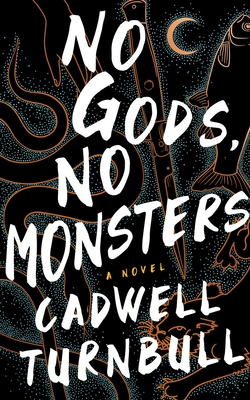 No Gods, No Monsters (The Convergence Saga, #1) by