
 The Best American Science Fiction and Fantasy 2026: The Premier Annual Collection of the Year's Best Short Fiction by Olivie Blake, John Joseph Adams
Format: eARC, podcast
Source: supplied by publisher via Edelweiss
Formats available: paperback, ebook, audiobook
Genres: Dark Fantasy, horror, science fiction, science fiction horror, short stories
Pages: 432
Published by Mariner Books on October 20, 2026
Purchasing Info: Author's Website, Publisher's Website, Amazon, Barnes & Noble, Kobo, Bookshop.org, Better World Books
Goodreads
Of science fiction and fantasy, guest editor Olivie Blake writes, “It’s hard to look upon these genres and not see tools of life preservation.” The characters in these pages embody this sentiment as they choose to forge ahead despite the most daunting obstacles. An inscrutable woman imprisons a monster in her bathtub, a sentient spaceship carries 10,000 frozen human embryos to a distant space colony, a memory tailor alters memories for customers seeking a different past, and a girl goes to great lengths to attend a prestigious magical university. From dystopian resistance to utopian deceit, these stories acknowledge the helplessness, anger, and despair so prevalent in the world. But, as Blake reassures us, they also convince us that ultimately “faith, persisting and unshakable, will be enough to win.”
THE BEST AMERICAN SCIENCE FICTION AND FANTASY 2026 INCLUDES: SARAH LANGAN • THOMAS HA • ALIX E. HARROW • ALEX IRVINE • NAOMI KANAKIA • ISABEL J. KIM • RICH LARSON • RAY NAYLER • P.C. VERRONE • AND OTHERS
My Review:
This annual collection is always the result of a long and detailed process, winnowing down the breadth of the previous year’s work in short works of Fantasy and SF into a single volume of 20 stories. Because this is a retrospective collection, by the time the stories are collected, they’ve all appeared elsewhere – which is how they were found in the first place.
Many of the stories have also been podcasted, and where available I listened to the podcasts. And some I already had, as two of the stories in this year’s collection were among the Hugo Nominees, including this year’s Best Short Story winner, Thomas Ha’s “In My Country” and H.H. Pak’s Best Novelette Winner, “Never Eaten Vegetables”. (Where I have previously posted a review of any of the stories, I’ve linked to it instead of repeating myself.)
Last year’s collection tipped darkly and creepily over the line into horror in both Fantasy and Science Fiction. It made for a read that required a cocoa and a lie-down after every other story and was not a collection to read in either the physical or emotional dark.
This year’s collection is a bit brighter, but also a bit blurrier. A lot of the stories this year straddled the line between Fantasy and Science Fiction, and were generally more thought-provoking than outright creeptastic – not that a few don’t straddle that line as well.
As is generally the case for collections like this, not every story will land for every reader, and that’s certainly true here. Resulting in a definitely fudge-factored Escape Rating of A- for the collection as a whole.
And without further ado, here are my brief reviews and ratings for the individual stories…
“In My Country” by Thomas Ha SCIENCE FICTION
2026 Hugo Award Winner in the Best Short Story Category. Previously reviewed https://www.readingreality.net/2026/06/audiobookreview-in-my-country-by-thomas-ha/. Escape Rating B
“Resurrection Rum” by Stephanie Malia Morris from Podcastle (podcast available) FANTASY
This story was so dark that it almost crossed over the line into horror. Then again, the situation WAS horrifying even before they started raising the dead. At first, it’s the story of a gang of black moonshiners in rural North Carolina, and the bigoted corruption of a local sheriff who murdered his own son in cold blood for driving for the black gang and then pinned the murder on the gang leader. Which is where the ‘resurrection rum’ comes in. Undiluted, it can raise the dead. So they raise their white friend in hopes he’ll testify against his powerful daddy. That the bigotry is so ingrained that nothing can stop the massacre, and the bloodshed explodes all around them, is where the darkness tips into horror about old hate and young zombies. Escape Rating B
“Shorted” by Alex Irvine from Reactor SCIENCE FICTION
This one left me with mixed feelings. It’s about the future economy of influencers, well, sorta/kinda. It’s really about the potentially terrible consequences of turning the monetization of streaming and followers, of turning being observed directly into social capital and money, and the seemingly inevitable results of what happens when people’s lives become commoditized. The concept is fascinating – and probably all too likely – but the tone is more than a bit wry and arch and endlessly in pursuit of attention – as such a character would be. I’m intrigued by the idea, frightened of the possibilities, but not certain about this particular iteration of it. Escape Rating B
“Drosera regina” by A.L. Goldfuss from Lightspeed (podcast available) FANTASY
I’m pretty sure this whole entire story was a metaphor for the way that women get treated in the world, mostly by men. And it’s about one woman reclaiming herself from that treatment. But in the literal sense, it’s about a woman who is the human equivalent of a venus flytrap, and it’s creepy as hell until she decides to stop. This was weird. Extremely compelling, very uncomfortable, dripping with body horror but weird. Escape Rating B
“Five Things You Can See” by Nadia Radovich from Strange Horizons SCIENCE FICTION
This story is uncomfortable as hell, but it works. It’s about time travel paradoxes – or rather it’s inside a time travel paradox. It combines the grounding exercise of “5 things you can see, 4 things you can feel, etc.,” with the whole time loop of the Terminator movies. A teenage girl comes home to find her mother dead of a brain aneurysm and her future self knocking at the door, telling her she’s come to prepare her younger self for the coming apocalypse. The story works on the level that we’re sucked into the girl’s fear and Stockholm Syndrome, but we’re also caught in the paradox of how this really could/would/might work. Escape Rating B+ because I was right there with her but didn’t really want to be.
“Human Voices” by Isabel J. Kim from Lightspeed (podcast available) FANTASY
This is a story that stuck with me, but at the same time it’s a story that’s been done before. At first, it seems like a story of transformation, then it’s a story about magical creatures doing what they’re made to do and being what they’re made to be, and then it’s a story about running away but finding your way back through blood and pain. Out of love. Out of finally coming to understand that the love was worth the pain – no matter how much it hurts. At first it reminded me a lot of P. Djeli Clark’s How to Raise A Kraken in Your Bathtub, but then it turned around at the end and I realized it wasn’t like that AT ALL, and was all the better for it. Escape Rating A
“Domestic Disputes” by Naomi Kanakia from Lightspeed (podcast available) SCIENCE FICTION
This one is about marriage and saving the universe, not necessarily in that order. OTOH, it’s absolutely correct that arguments in a marriage are never about the thing they’re ostensibly about. On an entirely other hand, it’s about two people isolated within a marriage – admittedly on a quest to save the universe – and how badly that’s not working for either of them. On my third, cybernetic hand there’s a lot about roles, responsibilities and stereotypes and on the fourth there’s a bit about how easy it is to give up on saving the universe when no one appreciates the work. The tone is wry and arch and that last hand got a bit lost by the end. Escape Rating C
“What We Don’t Know About Angels” by Kristina Ten from Lightspeed (podcast available) FANTASY
The narrator of the story likes to make up stories about gods and monsters, and tells those stories, as the old fairytales and myths do, to explain the inexplicable in the world. In her case, it’s a way of dealing with her partner’s terminal cancer, her own caregiving role, and her fears about what she’ll do after her partner’s inevitable death. At the same time, and this is the SFnal bit of the story, she’s growing fingers. All over her body. Dozens and dozens of them. It seems to be a metaphor for all the feelings she can’t truly express. But the last myth she tells them both is about the burning mercy of angels. And then she becomes one in the only way left. This is a heartbreaker, but it’s also disjointed in the telling and that blunts some of the impact. Escape Rating C
“Never Eaten Vegetables” by H.H. Pak from Clarkesworld (podcast available) SCIENCE FICTION
2026 Hugo Award Winner in the Best Novelette Category.
Previously reviewed: https://www.readingreality.net/2026/07/grade-a-audiobookreview-never-eaten-vegetables-by-h-h-pak/ Escape Rating A
“Made to Be Broken” by Kari Maaren from The Orange & Bee FANTASY
This was lovely – and very, very weird. It’s like someone took the weird insanity of Alice in Wonderland and dialed it up to, not merely 11 but more like 22. Or higher. It’s also a story about the power of stories and the way that stories are “supposed” to happen versus what actually happens when the person in the story makes their own decisions about the way things are going to go. If you like the fractured fairy tales of Alix E. Harrow’s A Spindle Splintered, you’ll love this story. I certainly did. Escape Rating A
“Kolumbo 1619: Choose Your Own Adventure” by Kanyin Olorunnisola from khōréō SCIENCE FICTION
This story is the science fictional version of “Resurrection Rum”. Not precisely but they both begin from the same root. That bigotry has nothing to do with anything people of color actually say or do, but with the way that too many white people are ingrained with the inheritance of all the prejudices that have been handed down. This story takes the form of a “Choose Your Own Adventure” game that might as well be “choose your own death” game. That in each iteration of the game, where the player’s avatar is a young black man, any action is the wrong one no matter how hard they try. And Escape Rating of B because it takes the reader a while to get how this is happening, but then it’s chillingly more like a ‘Reality Rating’
“Chickenfoot Soup” by Marika Bailey from Lightspeed (podcast available) FANTASY
This is a Baba Yaga story, which makes it a story about female power and female rage. While the tone of it recalled Veronica Roth’s Curse Bearer series, the way the story worked read a lot like all those internet “fix-it” stories – you know, the ones that are at least partially AI generated – about crazy family dynamics and learning to stand up for yourself against your own family’s craziness. Because it’s that kind of family, and the villain is her mother’s need to whittle her down at every opportunity. It was kind of fun while I was reading but didn’t necessarily stick. Escape Rating B
“Catch a Tiger in the Snow” by Ray Nayler from Asimov’s Science Fiction (podcast available) SCIENCE FICTION
I went into this one expecting to be fascinated, because this author’s work always fascinates me. This did not disappoint. It is science fiction, in the sense that it’s about a technology that does not exist to help people surgically forget pieces of their memories. And there’s irony in that. It’s also about a beautiful tragedy of a relationship that can’t possibly last – and doesn’t. Most of all, it’s about the ephemeral nature of memory and the paradoxical desire to be remembered, in full, in one perfect moment – and how we cling to such memories of others. The whole is considerably greater than the sum of this one’s parts and now that I’ve read it I’m astonished that it did not make the Hugo ballot. Escape Rating A
“Squid Teeth” by Sarah Langan from Reactor FANTASY
This one really got to me. On the surface, it’s a story about creativity and craft and the price that people will pay to live their dream. From another perspective, it’s about the tyranny of any group that can restrict access to fame and work and validation and fallacy of being forced to pay a certain kind of dues. And it’s about discovering that some gifts really do come at much too high a price, to the point where the gift is a curse but the recipient has to keep up the act to preserve a status quo they’re not a tortured part of. Also, ironically, this story is a bit of a mirror image to “Five Things You Can See”, where in that story the character’s future self comes back to warn her and she listens. In this story, she does not, to her endless regret. Escape Rating A
“An Even Greater Cold to Come” by Rich Larson from Clarkesworld (podcast available) SCIENCE FICTION
I listened to this one the same night I listened to Catch a Tiger in the Snow, and it reminded me a LOT of Nayler’s Palaces of the Crow. This is also a story about a terrible war that turns former neighbors into rapacious survivors, and one little family’s resistance. We’re not sure about which war or which country – and the monster that helps them survive at the end is not detailed, but it’s very like Palaces in tone and implication and frozen horror. IMHO it would have been better if we knew just a bit more. Escape Rating B
“A Nameless Thing” by P. C. Verrone from FIYAH FANTASY
This is fantasy, but it’s so dark it trips right over the line into horror. On the one hand, it’s the late 1960s and J. Edgar Hoover is still running the FBI and stalking all the protest groups, especially the Black Power groups such as the Black Panthers even as the Civil Rights Movement is heating up and pressing for change. That’s enough horror right there. But there’s also the horror of a black man with two secrets – he’s gay AND he’s host to a monster who is using his body to sate both of their desires, for bodies to fuck and bodies to eat. This could also be the origin story for either a superhero or a supervillain – depending on perspective. There’s a lot packed in her and it’s creepy on multiple levels. The real life historical consequences landed harder for me than the monster, but the poor guy figuring out what was happening made for some serious body horror shivers. Escape Rating B
“The Patron” by Thomas Ha from Sunday Morning Transport SCIENCE FICTION
This reminded me more than a bit of the author’s Hugo Award Winning Short Story, “In My Country”, as it’s a story about things that are not and cannot be said. But it’s also about the increasing isolation in which all of us live, and the way that the rich and the powerful “farm out” the work of relationships and intimacy, like childcare, to strangers and the “hired help”. In this story there are lonely wheels within lonely wheels, as one worker is contracted to pretend fatherhood by a boy who is trying to manipulate the system to acquire a “real” family for himself. It’s not a happy story, and it doesn’t end hopefully, but it feels much too plausible for comfort, which is precisely what SF is supposed to be. Escape Rating B+
“The Name Ziya” by Wen-yi Lee from Reactor FANTASY
This is a story about identity and assimilation that will remind readers a lot of Premee Mohamed’s Annual Migration of Clouds series. Ziya, the daughter of a poor, rural settlement, has been accepted into a prestigious university on a partial scholarship. The only way to afford this better future is to sell her past, in the form of the magical glyphs of her name. Glyphs that the wealthier students buy as adornment. With her brighter economic future, her parents buy a part of her name back – but it no longer fits, no matter how much she wants it to. This dark academia story asks some big questions about education, assimilation and identity along with culture appropriation. It’s also one of the stories that straddles genre lines, in this case between Fantasy and SFnal steampunk/gaslamp. Escape Rating A-
“We, the Fleet” by Alex T. Singer from Clarkesworld (podcast available) SCIENCE FICTION
At first, I wondered if ‘the Fleet’ was transforming Margo into either Edi from Mass Effect or a Borg from Star Trek. And so was Margo herself. The story was great because it didn’t go to either of those places, instead becoming a contrast of isolated civilizations with the same goal – to make a home for themselves among the stars. That the Fleet are a hive colony of queens and mindships, and the humans a matriarchal society of desperately limited resources, gave the two sides both an understandable fear of ‘the other’ and a desperate enough need to figure out how to achieve a whole that might possibly be greater – or at least more innovating and interesting – than the sum of either of their original parts. Escape Rating A
“The Knight and the Butcherbird” by Alix E. Harrow FANTASY
Previously reviewed: https://www.readingreality.net/2025/03/grade-a-audiobookreview-the-knight-and-the-butcherbird-by-alix-e-harrow/. Escape Rating A
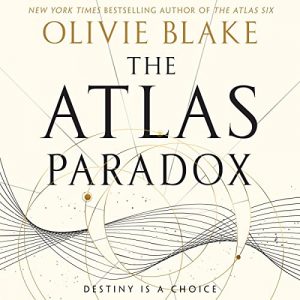
 The Atlas Paradox (The Atlas, #2) by
 This story of dark academia, utter corruption and potentially the end of the world follows directly after the events of
 The Atlas Six
 The Atlas Six (The Atlas, #1) by
 Which admittedly does ramp up the tension VERY dramatically for the second book in the series,