
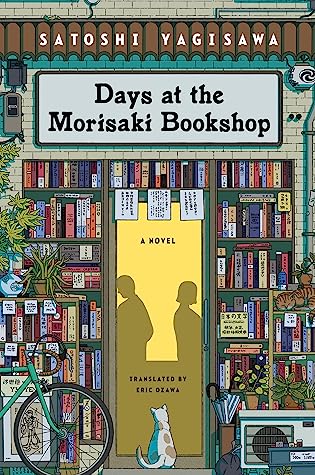
#AudioBookReview: Days at the Torunka Cafe by Satoshi Yagisawa, translated by Eric Ozawa

#AudioBookReview: Days at the Torunka Cafe by Satoshi Yagisawa, translated by Eric OzawaDays at the Torunka Café (Days at the Torunka Café, #1) by Satoshi Yagisawa
Translator: Eric Ozawa
Narrator: Sadao Udea
Format: audiobook, eARC
Source: supplied by publisher via NetGalley
Formats available: paperback, ebook, audiobook
Genres: literary fiction, magical realism, relationship fiction, sad fluff, world literature
Series: Torunka Café #1
Pages: 240
Length: 8 hours
Published by Harper Perennial, HarperAudio on November 4, 2025
Purchasing Info: Author's WebsitePublisher's WebsiteAmazonBarnes & NobleKoboBookshop.orgBetter World Books
Goodreads

From the internationally bestselling author of the Morisaki Bookshop novels comes a charming and poignant story set at a quiet Tokyo café where customers find unexpected connection and experience everyday miracles.
Tucked away on a narrow side street in Tokyo is the Torunka Café, a neighborhood nook where the passersby are as likely to be local cats as tourists. Its regulars include Chinatsu Yukimura, a mysterious young woman who always leaves behind a napkin folded into the shape of a ballerina; Hiroyuki Yumata, a middle-aged man who’s returned to the neighborhood searching for the happy life he once gave up; and Shizuku, the café owner’s teenage daughter, who is still coming to terms with her sister’s death as she falls in love for the first time.
While Café Torunka serves up a perfect cup of coffee, it provides these sundry souls with nourishment far more lasting. Satoshi Yagisawa brilliantly illuminates the periods in our lives where we feel lost—and how we find our way again.

My Review:

I picked this up, and started it in audio, because I adored the author’s two books featuring the Morisaki Bookshop (Days at the Morisaki Bookshop and More Days at the Morisaki Bookshop) and was looking forward to more of the same.

But the Morisaki Bookshop turned out to have some secret sauce that the Torunka Café, at least so far, doesn’t have. That’s in spite of the tantalizingly delicious descriptions of the coffee the café serves.

Then again, and in sympathy with the café owner’s daughter Shizuko, I don’t like the taste of coffee. Shizuko’s introduction to the bitterness of coffee was at age seven – and it was clearly a bit of a shock to her system. Mine, on the other hand, was sweetened a bit too much when my parents dropped a spoonful of black coffee into my entire glass of milk. Both of us were left with misplaced expectations about the experience that we never got over.

Shizuko, however, gets reminded of that early experience on the regular. Her dad, the café’s owner, literally named her ‘drop’ or ‘droplet’, because he wanted her life to be as rich and as satisfying as the concentrated flavor in every drop of a well-prepared cup of coffee.

Like many similar books, including Monday’s Menu of Happiness, Days at the Torunka Café isn’t one story so much as it is three stories linked by the titular location. And that’s where I got disappointed – or suffered from those misplaced expectations.

Part of what I love about the Kamogawa Food Detectives series is that the framing story about the Kamogawa Diner and the relationship between chef Nagare Kamogawa and his adult daughter Koishi is as strong and important a story as the individual stories of their clients.

In those Days at the Morisaki Bookshop, while there are stories about people in the neighborhood who frequent the shop, the story as a whole centers on Takako, her eccentric uncle Satoru, and the bookstore that gives her a place to land and recover after a terrible break up. The bookstore is a central location, and it’s certainly her shelter against life’s storms when she needs one, but it’s HER story more than anyone else’s and it just worked better for this reader.

That she’s sheltering in a bookstore and recovering her equilibrium by getting lost in the world of books probably helped me get into both the book and her story, but I think I mostly enjoyed that the story had a central figure. Which is the same thing that put The Ex-Boyfriend’s Favorite Recipe Funeral Committee over the top for me as well, that the gang at that café carries the story.

Escape Rating C: So this one didn’t quite work for this reader – or listener. One of the other reasons that it didn’t is that, unlike the Morisaki Bookshop stories where there is one central character and therefore the audio works with one single narrator, those Days at the Torunka Café are made up of three very distinct stories linked by a location, and it needed distinct narrators for each story the way that What You Are Looking For Is In the Library did. The narrator of Torunka Café, Sadao Udea (or Ueda, I’m seeing both spellings), was a good choice for either the first story (a young man in his early 20s) OR the second (a middle-aged man in his early 50s) but not both (mostly because the listener’s ear expects Shūichi but gets Hiro, an entirely different person, in the second story) and not the third, which is from the first person perspective of Shizuku, the café owner’s high school aged daughter.

(It’s not that men can’t voice women and vice versa, but these stories are told in the first-person which, from the perspective of this listener, begs for a closer match between the narrator and the character than a third-person viewpoint. Your listening mileage may vary.)

So I came into this book with high hopes, BUT it didn’t quite work for me on multiple levels. I expected more ‘through story’ than this book is intended to have. Personally, I had a difficult time getting into the first story, “Sunday Ballerinas” because I didn’t care for the characters. The protagonist Shūichi is too much of a doormat and in that first story Shizuku comes off as a bit of a bully. That Shizuku is the protagonist of the third story, “A Drop of Love”, while she’s more sympathetic from inside her own head, well, I had already formed an opinion that was hard to shake. The second story, “The Place Where We Meet Again”, had just the type of ‘sad fluff’ vibes I was expecting, but it wasn’t enough to carry the whole book.

There is a second book in this series, and I’m sure I’ll pick it up when the translation is published, just to see how things are going at the Torunka Café.

A- #AudioBookReview: More Days at the Morisaki Bookshop by Satoshi Yagisawa, translated by Eric Ozawa

A- #AudioBookReview: More Days at the Morisaki Bookshop by Satoshi Yagisawa, translated by Eric OzawaMore Days at the Morisaki Bookshop (Days at the Morisaki Bookshop, #2) by Satoshi Yagisawa, Eric Ozawa
Narrator: Catherine Ho
Format: audiobook, eARC
Source: purchased from Amazon, supplied by publisher via Edelweiss
Formats available: paperback, large print, ebook, audiobook
Genres: books and reading, literary fiction, relationship fiction, world literature
Series: Days at the Morisaki Bookshop #2
Pages: 176
Length: 5 hours and 21 minutes
Published by Harper Perennial, HarperAudio on July 2, 2024
Purchasing Info: Author's WebsitePublisher's WebsiteAmazonBarnes & NobleKoboBookshop.orgBetter World Books
Goodreads

In this charming and emotionally resonant follow up to the internationally bestselling Days at the Morisaki Bookshop, Satoshi Yagisawa paints a poignant and thoughtful portrait of life, love, and how much books and bookstores mean to the people who love them.
Set again in the beloved Japanese bookshop and nearby coffee shop in the Jimbocho neighborhood of Toyko, More Days at the Morisaki Bookshop deepens the relationship between Takako, her uncle Satoru , and the people in their lives. A new cast of heartwarming regulars have appeared in the shop, including an old man who wears the same ragged mouse-colored sweater and another who collects books solely for the official stamps with the author’s personal seal.
Satoshi Yagisawa illuminates the everyday relationships between people that are forged and grown through a shared love of books. Characters leave and return, fall in and out of love, and some eventually die. As time passes, Satoru, with Takako’s help, must choose whether to keep the bookshop open or shutter its doors forever. Making the decision will take uncle and niece on an emotional journey back to their family’s roots and remind them again what a bookstore can mean to an individual, a neighborhood, and a whole culture.

My Review:

At the end of the first book, Days at the Morisaki Bookshop, it seems as if life is on the upswing for first-person narrator Takako, her eccentric uncle Satoru, and his used bookshop in the Jimbocho neighborhood of Tokyo, a place that is positively chock full of used book stores.

As this second book opens, life seems to be going well for Takoko. She’s moving forward with her life, has a job that she enjoys, a solid and happy and solidly happy romantic relationship, her uncle is happily complaining – which is his way – her aunt seems to have made peace with her uncle and their relationship seems stable and happy.

Even the bookshop seems to be doing well.

Howsomever, just as the first book started out as sad fluff, with Takoko in the depths of depression and eventually working her way out through working at the bookshop, rekindling her childhood closeness with her uncle, rediscovering the joys of reading and slowly becoming involved with the life of the neighborhood, these “more days” at the bookshop transit the path in the other direction.

At the beginning, all seems to be well. But as Takoko observes each time she returns to the bookshop to spend time and help out – the reality is that happiness is slipping out from under them.

Some parts of the various situations can be fixed – but not all of them. And not the saddest of all.

Escape Rating A-: I picked up More Days at the Morisaki Bookshop because, having fallen in love with the first book, Days at the Morisaki Bookshop, I wanted more, well, days at the Morisaki Bookshop.

And that’s exactly what I got – and it was beautiful. I’m very glad that I read it – or rather that I gave in to temptation and listened to Catherine Ho as the voice of Takako again because she does an excellent job of embodying the character.

Like the previous book, this is not a story of great doings and big happenings. It’s a quiet story, a book of slices of life, specifically the lives of Takako, her family, her friends, and the Morisaki Bookshop which so much of those lives revolve around.

But, and this is a bit of a trigger warning, the progression of this story is the opposite of the first. It starts high and ends low – even though the epilogue does a good job of letting the reader know that life moves on – even from the depths of grief.

Howsomever, the depths of that grief are very deep indeed. Especially in the excellent audio recording, where it feels as if it’s Takako’s voice telling you just how heartbroken so many of the characters are. It’s very effective, and very affecting. Readers who are already grieving someone close to their hearts will find that part of the story gut-wrenching, cathartic, or both – as this reader certainly did.

So maybe don’t listen to that part while you’re driving because the urge to cry right along with Takako is pretty much irresistible.

That being said, the whole thing is lovely and charming and filled to the brim with the joy of books and reading and the people who love both – just as the first book was. I’m as happy I read this second book as I was the first – even if it did leave me a bit weepy.

This series, along with Before the Coffee Gets Cold, The Kamogawa Food Detectives, What You are Looking For Is In the Library, The Dallergut Dream Department Store and the upcoming We’ll Prescribe You a Cat are part of a marvelously charming and extremely cozy trend of magical – sometimes with real magic – comfort reads and I’m enjoying it tremendously.

If you’re looking for some cozy, comforting reads, you might want to snuggle up with some of these books too!

Review: Days at the Morisaki Bookshop by Satoshi Yagisawa

Review: Days at the Morisaki Bookshop by Satoshi YagisawaDays at the Morisaki Bookshop by Satoshi Yagisawa, Eric Ozawa
Narrator: Catherine Ho
Format: audiobook, eARC
Source: supplied by publisher via Edelweiss, supplied by publisher via Libro.fm
Formats available: paperback, ebook, audiobook
Genres: books and reading, literary fiction, world literature
Series: Days at the Morisaki Bookshop #1
Pages: 160
Length: 5 hours
Published by Harper Perennial, HarperAudio on July 4, 2023
Purchasing Info: Author's WebsitePublisher's WebsiteAmazonBarnes & NobleKoboBookshop.org
Goodreads

Hidden in Jimbocho, Tokyo, is a booklover's paradise. On a quiet corner in an old wooden building lies a shop filled with hundreds of second-hand books.

Twenty-five-year-old Takako has never liked reading, although the Morisaki bookshop has been in her family for three generations. It is the pride and joy of her uncle Satoru, who has devoted his life to the bookshop since his wife Momoko left him five years earlier.

When Takako's boyfriend reveals he's marrying someone else, she reluctantly accepts her eccentric uncle's offer to live rent-free in the tiny room above the shop. Hoping to nurse her broken heart in peace, Takako is surprised to encounter new worlds within the stacks of books lining the Morisaki bookshop.

As summer fades to autumn, Satoru and Takako discover they have more in common than they first thought. The Morisaki bookshop has something to teach them both about life, love, and the healing power of books.

My Review:

Takako has sunk into a slough of despond, depressed beyond imagining after learning that her boyfriend had been engaged to someone else during the entire year of their relationship. As they worked together – along with his fiancee! – Takako has quit her job to get away from the pain, and seems to be intent on leaving the waking world behind.

It’s a bit like the opening of Cassandra in Reverse – without the time travel. Or at least, without Cassandra’s peculiar method of traveling through time.

Takako, with more than a bit of a push from her mother, finds herself being herded in a direction she had no intention of going. But helping her uncle Satoru with his used bookstore – while living rent free above the shop – is at least half a step up from returning home and letting her mother remind her she’s a failure at every turn.

Which is where the story stops resembling Cassandra in Reverse, as the only time travel that Takako is capable of is the kind that happens when you step into the pages of a book and are whisked away, whether to the past, the present, or the future.

As the days slip past, at first slowly – and mostly in sleep – Takako emerges from her blanket-wrapped cocoon and becomes involved with what’s inside her uncle’s store. At first it’s the customers, and then it’s the books and then it’s the whole neighborhood.

The store and the books within it are the saving of Takako. And as her year of taking a vacation from her life saves her, so is she able to save her uncle as well.
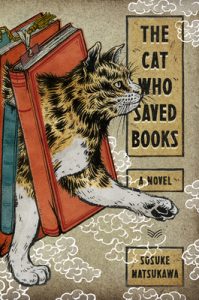
Escape Rating A-: This is simply a lovely story. It’s a bit of a combination of Cassandra in Reverse, The Girl Who Reads on the Métro and The Cat Who Saved Books, but it’s considerably more down to earth than any of those antecedents.

This is not a highly dramatic story. After the opening, where Takako learns that her boyfriend is a narcissistic asshat, there are no big scenes until very nearly the end. Rather, the story quietly unspools as we climb into that cocoon with Takako and then watch her gently pull herself out.

The story of those Days at the Morisaki Bookshop is really a story about the way that books cushion us, comfort us and save us. It’s about the joy of discovery and the even greater joy of sharing that discovery. It’s a story that starts out quietly sad and quietly and charmingly goes on its way to becoming quietly happy.

Which made this little book an unexpected comfort read and an equally unexpected comfort listen. I fell into Takako’s life just as she fell into sleep, but the waking up was considerably less traumatic for the reader than it was for the character – who was perfectly embodied by the narrator. I didn’t feel like I was reading a book, I felt like Takako was telling me the story of her year at her uncle’s bookshop and what happened after.

And it was an utterly charming story, extremely well told, every step of her way. It was exactly what I was looking for, and I hope that when you’re looking for a lovely read or listen to let you slip into a world of books, it will be that for you, too.