
A- #BookReview: A Fashionably French Murder by Colleen Cambridge

A- #BookReview: A Fashionably French Murder by Colleen CambridgeA Fashionably French Murder (An American In Paris Mystery, #3) by Colleen Cambridge
Format: eARC
Source: supplied by publisher via NetGalley
Formats available: hardcover, ebook, audiobook
Genres: culinary mystery, foodie fiction, historical mystery, mystery
Series: American in Paris Mystery #3
Pages: 297
Published by Kensington Books on April 29, 2025
Purchasing Info: Author's WebsitePublisher's WebsiteAmazonBarnes & NobleKoboBookshop.orgBetter World Books
Goodreads

American expat Tabitha Knight has found a new life in postwar Paris, along with a delightful friend in aspiring chef Julia Child. Yet there are perils in peacetime too, as a killer infiltrates one of the city’s most famous fashion houses.

If there’s one art the French have mastered as well as fine cuisine, it’s haute couture. Tabitha and Julia are already accustomed to sampling the delights of the former. Now fashion is returning to the forefront in Paris, as the somber hues of wartime are replaced by vibrant colors and ultra-feminine silhouettes, influenced by Christian Dior’s “New Look.”

Tabitha and Julia join a friend for a private showing at an exclusive fashion atelier, Maison Lannet. The event goes well, but when Tabitha returns later that evening to search for a lost glove, she finds the lights still on—and the couturier dead, strangled by a length of lace. The shop manager suspects that a jealous rival—perhaps Dior himself—committed the crime. Tabitha dismisses that idea, but when another body is found, it’s apparent that someone is targeting employees of Maison Lannet.

Meanwhile, Tabitha’s Grand-père and Oncle Rafe are in the midst of their own design-related fracas, as they squabble over how to decorate their new restaurant. And there are strange break-ins at a nearby shoe store—but are the crimes related? It’s up to Tabitha to don her investigative hat and find answers before someone commits another fatal fashion faux pas.

My Review:

As Julia Child once said, “Find something you’re passionate about and keep tremendously interested in it.” Her best (fictional) friend, Tabitha Knight, seems to have followed Child’s advice. Unfortunately for the denizens of post-World War II Paris – but fortunate for the reader – she’s discovered that she’s passionate about investigating murders – and the city seems to be encouraging her in that passion by dropping corpses at her feet.

The story begins when Julia and Tabitha, attend a private showing at an up-and-coming new haute couture fashion house. The luxury of Maison Lannet’s location and creations are a complete antithesis to the austerity and rationing of the late war, and Tabitha is a bit entranced by it all – as is the client who brought her to the atelier to serve as translator for all the meticulous and precise terminology of the highly regulated business of providing ultra-exclusive fashion to the fashionably wealthy.

It’s only after the showing that Tabitha does what she seems to do – well, not so much best as often. She finds a dead body. She returns to the atelier after the show to find her missing glove – it’s a miserable winter – and finds the corpse of Maison Lannet’s premiere designer instead. And gets shoved into the side of a desk as the murderer makes his escape.

And that’s only the FIRST body that Tabitha literally trips over, much to the consternation of police Inspecteur Étienne Merveille. He’s dealt with Tab’s penchant for getting involved in murder investigations twice already (Mastering the Art of French Murder and A Murder Most French), and would really rather not deal with her blend of exasperating but effective nosiness ever again.

Or at least that’s what his generally impassive expression has led Tabitha to believe. Even though she’d rather not. Believe she’s not helpful and that he’s not interested in her help, that is. After all, he’s engaged.

But the case won’t leave her alone – and neither will her budding reputation as someone who is more reliable and less corrupt than ‘les flics’ – the police – are reputed. Most of officialdom is still tarred with the brush of collaboration with the hated Nazi occupation even six years after liberation – especially the police. The abuses were legion, the Parisian memory is long, and the past isn’t nearly far enough passed for those who suffered under it to have gotten over it.

Tabitha’s every turn seems to wind this case tighter around her, as it leads from the fashionable ateliers of the post-war fashion industry into the lingering darkness of that past and the still open questions around collaboration versus survival that simmer behind every door – including the door of the maison where Tabitha lives with her elderly ‘messieurs’ – her grand-père and her Oncle Rafe, whose wartime activities and life-long relationship uneasily straddle that very same strand of barbed wire.

As, seemingly, frighteningly and sometimes desperately, does the whole of the City of Light that she has come to love.

Escape Rating A-: This third entry in the series isn’t as light and frothy as the first – and it’s all the more compelling for it. Part of that lesser application of froth is that Julia Child’s presence is reduced in this one – not in the negative sense, but very much and appropriately in the cooking sense, where the flavor of her presence is more intense and concentrated but in fewer scenes. She simmers a lot in this one, but doesn’t bubble over quite as much or as often as she has in the previous books.

Which is totally appropriate, because just as Tabitha’s cooking skills – originally quite execrable – have improved under Julia’s tutelage, her investigative skills have come along nicely as well, and we’ve gotten to know her and her ‘messieurs’ better. She’s grown as a character, and is now more than capable of carrying the story even if her messieurs are still more than willing to enjoy Julia’s cooking whenever it’s on offer. And who can blame them?

While Tabitha’s investigations still rely on her literally tripping over corpses, it’s a pleasant change from some other amateur detective series that she is not intimately involved with any of the victims or those in their immediate circles before they drop. Also, Paris has a big enough population that it’s not quite so outre that there are as many murder victims as Tabs seems to find. (In other words, this is not Cabot Cove or Midsomer County – and it’s quite possible to believe that people will ALWAYS come to Paris in spite of the murder rate!)

As much as I enjoy this series, this entry is considerably darker than the first two – and not precisely as a result of Tabitha’s predilection for tripping over corpses. Not that that helps. But in this case it’s all about motivation for the murders rather than the actual gore.

While the setting for this entry in the series is draped in the lush fabrics and ultra-feminine silhouettes of Christian Dior’s signature ‘New Look’ for the post war era, the elitist, snobby, wasteful underpinnings of haute couture make a stark contrast to the austerity of the occupation – as Dior intended – and to the still roiling grief that embraces the city even in recovery. It’s not exactly the sense of Nero fiddling while Rome burned, but more that Nero is fiddling while the ashes still smolder. Or something like that. It feels really wrong even though it’s also really true.

But the darkness at the heart of this story is tied up and chained by the lingering pain of the occupation, caught up in the hard questions about who merely paid as much lip service and even actual service to the Nazis and their puppet French government as they had to in order to survive – versus who was a true collaborateur who willingly climbed into bed with the Nazis, literally or figuratively – for profit or power or both.

That her beloved grand-père was one who cooperated enough to stay alive AND to earn money to funnel to the Resistance, while Oncle Rafe was an active member of that Resistance, brings the tension uncomfortably close to home.

It’s not a question about whether the right people were punished, because it’s clear that that wasn’t always the case. But rather, that there is still a taste for more punishment because it is certain that there are plenty of people who have so far managed to avoid reaping what they gleefully sowed.

Which leads back to what made this story darker than the previous books in the series, because the occupation was dark. That darkness still lingers, there are still rats hiding in it and in this entry in the series it turns out to be Tabitha Knight’s calling to pin at least one of those rats in the light.

The story does end on an upbeat note. Good does triumph in this case, evil does get its just desserts, and it looks like Tabitha’s messieurs are well on the way to re-opening their restaurant so that they no longer have to rely on Tabitha’s still somewhat questionable cooking or Julia Child’s expansive culinary charity. Tabitha’s love life seems to be on the uptick as well – much to the delight of her friends and family so they have something to gossip about.

How much those developments will be part of future books in the series, I can’t wait to find out!

#BookReview: Bayou Book Thief by Ellen Byron

#BookReview: Bayou Book Thief by Ellen ByronBayou Book Thief (Vintage Cookbook Mystery, #1) by Ellen Byron
Format: ebook
Source: purchased from Amazon
Formats available: paperback, ebook, audiobook
Genres: cozy mystery, culinary mystery, mystery
Series: Vintage Cookbook Mystery #1
Pages: 304
Published by Berkley on June 7, 2022
Purchasing Info: Author's WebsitePublisher's WebsiteAmazonBarnes & NobleKoboBookshop.orgBetter World Books
Goodreads

A fantastic new cozy mystery series with a vintage flair from USA Today bestselling and Agatha Award-winning author Ellen Byron.
Twenty-eight-year-old widow Ricki James leaves Los Angeles to start a new life in New Orleans after her showboating actor husband perishes doing a stupid internet stunt. The Big Easy is where she was born and adopted by the NICU nurse who cared for her after Ricki's teen mother disappeared from the hospital.
Ricki's dream comes true when she joins the quirky staff of Bon Vee Culinary House Museum, the spectacular former Garden District home of late bon vivant Genevieve "Vee" Charbonnet, the city's legendary restauranteur. Ricki is excited about turning her avocation - collecting vintage cookbooks - into a vocation by launching the museum's gift shop, Miss Vee's Vintage Cookbooks and Kitchenware. Then she discovers that a box of donated vintage cookbooks contains the body of a cantankerous Bon Vee employee who was fired after being exposed as a book thief.
The skills Ricky has developed ferreting out hidden vintage treasures come in handy for investigations. But both her business and Bon Vee could wind up as deadstock when Ricki's past as curator of a billionaire's first edition collection comes back to haunt her.
Will Miss Vee's Vintage Cookbooks and Kitchenware be a success ... or a recipe for disaster?

My Review:

There is just something about New Orleans, and there probably always has been. There certainly always has been for me, as I’ve been drawn to reading books set in that city ever since my very first visit decades ago. So, when a friend picked up this book and said it looked like fun, I was more than willing to come along for the virtual trip.

Ricki James isn’t so much visiting as returning home to New Orleans after a long absence when this story begins. Her move may be a return to her roots after years in Los Angeles, but it also represents a fresh start – or at least Ricki certainly hopes so. She has come home in an attempt to dodge not one but two scandals she hopes she left behind in LA.

Just as no good deed goes unpunished, no really big scandal ever truly gets left behind – particularly not when there’s still some juice left in it. A situation with which Ricki becomes all too aware when a new and equally juicy scandal arrives at her door.

Not, initially, her personal door, but definitely, more importantly and absolutely worse, the door of her new and just barely established antique cookery, bookstore and museum gift shop at the equally newly established Bon Vee Culinary House Museum in the Garden District home of the late and much lamented Genevieve “Vee” Charbonnet, one of the city’s legendary restaurateurs.

One of the museum’s docents, a man nearly everyone on the staff can barely stand – at best – is caught red-handed with a selection of her shop’s vintage cookbooks concealed under his coat. It’s theft, pure and simple – no matter how much he tries to pin the blame that is so obviously his on practically every other person on the scene. His attempt to shift the blame merely spreads the ill-will he has always engendered – and avails him absolutely not.

But it might be the cause of his murder that night. A murder that casts a shadow over the Museum AND Ricki’s shop, as the theft, the spurious accusations the man threw around, AND the general enmity that nearly everyone seems to have felt for him, points out a possible motive. A motive that, as thin as it might seem, seems to be the only one the police can find.

The question, a question that seems to generally hover around the NOPD according to these local residents, is whether the police are willing and/or able to look all that hard when there’s an easy solution clearly to hand.

And that’s what leads antique cookbook expert Ricki James onto the path that many a worried amateur sleuth has trod before her. She decides to investigate the murder herself. Just to see if she can find a clue – or ten – that the police might have missed. In the hopes of preserving a wonderful place full of terrific people who are doing good work and might just offer her a chance to make a new place for herself into the bargain.

Escape Rating B: Bayou Book Thief was simply a delicious starter for a cozy mystery series. There was plenty of atmosphere – well of course because New Orleans – along with tempting red herrings, a fascinating ‘home base’ filled with interesting and quirky characters AND a whole series of villains that were easy to hate.

Beginning with that first murder victim, as it seems like no one misses the man. He was a nuisance when he was alive – and an even bigger one now that he’s dead. Leaving behind oodles of potential suspects and plenty of motives.

What made the story extra, added fun and filled with even more surprises was that the motive was wrapped around a decades old secret in a way that added to all the charm – and warmed the cockles of this booklover’s heart.

Writing randy romances – actually soft core porn – in the 1950s (around the time that the infamous Peyton Place was first published) was just not the done thing for young blue-blooded women possessing New Orleans’ finest pedigrees. Over half a century later, the now 80something Madame Lucretia Noisette is delighted that her old pseudonym has been rediscovered and she’s more than willing to own it.

The world has changed in the intervening decades, and at her age she’s past caring about any possible remaining potential scandal – even if her son and her grandchildren are not.

Little do they know that it’s not grand-mère’s once upon a time scandal that will cause the most problems. It’s not even Ricki’s much more recent scandals – the ones that she hoped she had left behind in LA. (That she had one serious scandal in her past is not atypical for the amateur detective in a cozy series. Two, however, struck this reader as a bit over-the-top, as both scandals were extremely juicy to the point where having one person be involved in both felt a bit like ‘overegging the pudding’. I’m curious to see the effects they’ll have on Ricki in future books in the series.)

Where back in the day the investigative axiom “cherchez la femme” might have led to the real villain, in this later day “follow the money” is a much better bet. Even if Ricki doesn’t figure out the whole thing at the very last moment.

She’s still ahead of the NOPD, something that is likely to spur her to future investigations. As it already has, considering that there are at least two more books in this charming cozy mystery series, Wined and Died in New Orleans and French Quarter Fright Night. I’m certainly planning on a return visit the next time I feel like ‘laissez les bon temps rouler’ the way to murder.

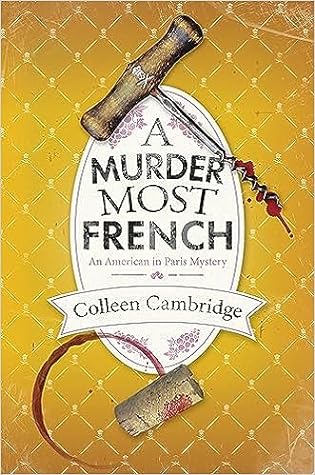
A+ #BookReview: A Murder Most French by Colleen Cambridge

A+ #BookReview: A Murder Most French by Colleen CambridgeA Murder Most French (American In Paris Mystery, #2) by Colleen Cambridge
Format: eARC
Source: supplied by publisher via Edelweiss
Formats available: hardcover, ebook, audiobook
Genres: culinary mystery, foodie fiction, historical mystery, mystery
Series: American in Paris Mystery #2
Pages: 272
Published by Kensington on April 23, 2024
Purchasing Info: Author's WebsitePublisher's WebsiteAmazonBarnes & NobleKoboBookshop.orgBetter World Books
Goodreads

Postwar Paris is surging back to life, and its citizens are seizing every opportunity to raise a glass or share a delicious meal. But as American ex-pat Tabitha Knight and chef-in-training Julia Child discover, celebrations can quickly go awry when someone has murder in mind . . .
The graceful domes of Sacré Coeur, the imposing cathedral of Notre Dame, the breathtaking TourEiffel . . . Paris is overflowing with stunning architecture. Yet for Tabitha Knight, the humble building that houses the Cordon Bleu cooking school, where her friend Julia studies, is just as notable. Tabitha is always happy to sample Julia’s latest creation and try to recreate dishes for her Grand-père and Oncle Rafe.
The legendary school also holds open demonstrations, where the public can see its master chefs at work. It’s a treat for any aspiring cook—until one of the chefs pours himself a glass of wine from a rare vintage bottle—and promptly drops dead in front of Julia, Tabitha, and other assembled guests. It’s the first in a frightening string of poisonings that turns grimly personal when cyanide-laced wine is sent to someone very close to Tabitha.
What kind of killer chooses such a means of murder, and why? Tabitha and Julia hope to find answers in order to save innocent lives—not to mention a few exquisite vintages—even as their investigation takes them through some of the darkest corners of France’s wartime past . . .

My Review:

According to Julia Child, “The only real stumbling block is fear of failure. In cooking you’ve got to have a what-the-hell attitude.”

While Child absolutely did say that, she certainly hadn’t said it yet at in 1950, the time this second book in the American in Paris Mystery series takes place, directly after the events of the first book in this delicious historical mystery series, Mastering the Art of French Murder.
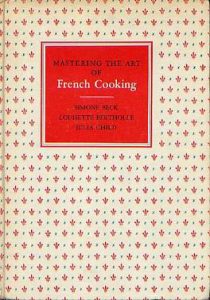
Julia Child is too busy learning French cooking, living her larger-than-life life in Paris AND at the beginning of writing her masterpiece, Mastering the Art of French Cooking, when this series takes place.

Meaning that Julia – as much as she steals every scene in which she appears – is not the amateur detective protagonist of this series, even if she is every bit as much an American in post-war Paris as her best (fictional) friend Tabitha Knight.

Tabi probably would not entirely agree with that opening quote from Julia. It’s not fear of failure that dooms so many of Tabi’s cooking forays, it’s the fear of disappointing – yet again – her two messieurs, her elderly grandfather and his partner, her adopted Oncle Rafe.

Tabi does, however, most definitely have a what-the-hell attitude, but it seems to be increasingly focused, not on cooking but on murder. Not committing them, of course, but solving them. It’s an attitude that is immeasurably helped by just how many corpses she seemingly trips over.

The way that corpses seem to follow in her wake, and her inability to ignore the clues that bubble up before her, unfortunately looks like it’s helping police judiciaire Inspecteur Étienne Merveille into entirely too many headaches, if not an early ulcer.

Because somehow, no matter how many times Merveille warns her away, when Tabi rushes in where even angels would fear to tread, Merveille is always on hand to rescue her.

Maybe Tabi is following Julia’s three-part plan for managing men after all – no matter how many times the lady protests too much otherwise.
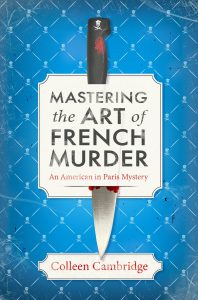
Escape Rating A+: If you loved the first book in this series – and who didn’t? – you will run, not walk to get this second book because it’s every bit as charming as the first. If you still need a bit of convincing, I’m going to get right to that.

But before I do, if you haven’t read Mastering the Art of French Murder and aren’t sure whether you can start the series here – you can. Everything you need to catch up does get enough of an explanation to make it work. Howsomever, that first book is delightful and delicious so even if you do start here you’ll want to go there immediately afterwards!

Yes, this review is full of squee. It’s that kind of book and that kind of series.

This time around, Tabitha gets involved in the case not because she’s a suspect, but because the murder happens literally right before her eyes – as does the second murder. Also before Julia’s eyes as well, and she absolutely can’t resist egging Tabitha on whenever she falters in her determination the least little bit.

Which is pretty much true for Julia all the way around.

The case is a twisted puzzlement – but in it’s ever increasing list of victims and in its choice of methods. Increasing both Tabitha’s and the reader’s fascination is the way that the string of murders links back to the late war, the simmering resentments of the surviving Resistance fighters and the blot on the French psyche that the collaborators represent.

Then the whole thing dives into the catacombs. Literally as well as figuratively, and the secrets that are hidden among the bones – not all of which are ancient.

When her messieurs receive a beautifully wrapped bottle of pilfered, poisoned wine – just as the first two victims did, Tabitha throws aside her remaining qualms and cautions to throw herself into an investigation that gets her thrown into the pitch black darkness of the catacombs.

Tabitha rescues herself – which is definitely part of her charm for this reader – but she’s afraid she won’t be able to run across Paris fast enough to save her messieurs. Fortunately for Tabi, her apple didn’t fall far from the family tree – and Inspecteur Merveille has been following her a LOT more closely than she imagined.

Their relationship – whatever it might turn out to be – is one of the teasingly dangling threads left at the end of this book. The mystery gets tidily wrapped up, but nearly everyone in Tabi’s life seems to think that Merveille has a tendre for her that would be worth exploring.

If it’s not obvious from all the squeeing, I would love for there to be a third book in this series and possibly more. For one thing, I have to see if Tabitha continues to follow that three-part plan of Julia’s for managing men. Tabi has the first part completed, as she actually managed to feed the man a surprisingly edible – for her at least – Croque Monsieur albeit without the bechamel sauce. Step two in Julia’s plan is to flatter the man which should be easy enough to do as he just saved her life and is quite competent at everything she’s seen of him so far.

Tabitha should have plenty of opportunities as the series continues – which I am oh so hopeful that it will. Because it looks as if investigating murders is looking more and more like it’s Tabitha’s answer to one of Julia’s instructions, to “find something you’re passionate about and keep tremendously interested in it.”

“Bon appetit!”
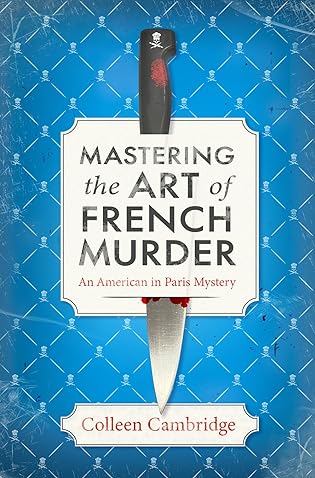
Grade A #BookReview: Mastering the Art of French Murder by Colleen Cambridge

Grade A #BookReview: Mastering the Art of French Murder by Colleen CambridgeMastering the Art of French Murder (An American In Paris, #1) by Colleen Cambridge
Format: eARC
Source: supplied by publisher via NetGalley
Formats available: hardcover, paperback, ebook, audiobook
Genres: culinary mystery, foodie fiction, historical mystery, mystery
Series: American in Paris Mystery #1
Pages: 304
Published by Kensington on April 25, 2023
Purchasing Info: Author's WebsitePublisher's WebsiteAmazonBarnes & NobleKoboBookshop.orgBetter World Books
Goodreads

Fans of Jacqueline Winspear, Marie Benedict, Nita Prose, and of course, Julia Child, will adore this magnifique new mystery set in Paris and starring Julia Child’s (fictional) best friend, confidante, and fellow American. From the acclaimed author of Murder at Mallowan Hall , this delightful new book provides a fresh perspective on the iconic chef’s years in post-WWII Paris.
“Enchanting…Cambridge captures Child’s distinct voice and energy so perfectly. Expect to leave this vacation hoping for a return trip.” – Publishers Weekly
As Paris rediscovers its joie de vivre, Tabitha Knight, recently arrived from Detroit for an extended stay with her French grandfather, is on her own journey of discovery. Paris isn’t just the City of Light; it’s the city of history, romance, stunning architecture . . . and food. Thanks to her neighbor and friend Julia Child, another ex-pat who’s fallen head over heels for Paris, Tabitha is learning how to cook for her Grandpère and Oncle Rafe.
Between tutoring Americans in French, visiting the market, and eagerly sampling the results of Julia’s studies at Le Cordon Bleu cooking school, Tabitha’s sojourn is proving thoroughly delightful. That is, until the cold December day they return to Julia’s building and learn that a body has been found in the cellar. Tabitha recognizes the victim as a woman she’d met only the night before, at a party given by Julia’s sister, Dort. The murder weapon found nearby is recognizable too—a knife from Julia’s kitchen.
Tabitha is eager to help the investigation, but is shocked when Inspector Merveille reveals that a note, in Tabitha’s handwriting, was found in the dead woman’s pocket. Is this murder a case of international intrigue, or something far more personal? From the shadows of the Tour Eiffel at midnight, to the tiny third-floor Child kitchen, to the grungy streets of Montmartre, Tabitha navigates through the city hoping to find the real killer before she or one of her friends ends up in prison . . . or worse.
“Part historical fiction, part mystery, Mastering the Art of French Murder is totally delectable entertainment.” – The Washington Post
“Certain to appeal to a broad readership, especially fans of Jacqueline Winspear, Rhys Bowen, and Cambridge’s own Phyllida Bright series.” –First Clue, STARRED REVIEW

My Review:

“Drama is very important in life: You have to come on with a bang. You never want to go out with a whimper. Everything can have drama if it’s done right. Even a pancake.” So said the real Julia Child, whose larger-than-life fictional persona has barged into the life of her neighbor in Paris, fellow expat Tabitha Knight, just a few months before a murder in Julia’s building bangs into both of their lives.

It’s the murder of a very recent guest in the apartment shared by Julia, her husband Paul Child, her sister Dorothy (Dort) McWilliams on the “Roo de Loo” as Julia called it. A murder committed with one of Julia’s distinctive chef’s knives, making Julia, at least initially, the prime suspect in this tragedy.

But Julia is not the amateur sleuth – she was too busy with what became her lifelong obsession, “Mastering the Art of French Cooking,” as evidenced by the title of her first cookbook.

The amateur sleuthing is left to Tabitha Knight, a former “Rosie the Riveter” living across the street with her elderly French grandfather and her honorary “oncle”, his equally elderly best friend (and probably lover).

Tabitha and Julia have already bonded over their shared infatuation with French food and French cooking – the difference being that Julia is already extremely capable at that art while Tabitha is lucky not to burn or otherwise ruin the meals she attempts to make for her elderly ‘messieurs’ and their two spoiled pets, Oscar Wilde the tiny papillon dog and Madame X the slinky cat.

But the murder isn’t merely a curiosity for either of the women. The victim died just after leaving a party in Julia’s apartment, a guest of Julia’s sister Dort, killed by one of Julia’s knives. Tabitha rode down in the elevator with the woman, and was the last to speak with her other than her killer.

The police, in the steely-eyed persona of Inspecteur Merveille, seem convinced that either Julia or Tabitha committed the foul deed. Or so it seems to Tabitha, who grew up on a steady reading diet of Nancy Drew and other mystery stories as well as her police detective father brought home. Julia is just certain – and Julia was always certain if she was anything at all – that Tabitha will be able to solve the murder ahead of the police – and pushes her into trying.

Not that it takes much arm twisting to get Tabitha on the case. A case that leads from one murder, to a second, and a third – and even a first before the one that dragged Tabitha and Julia into the mess. A mess that, surprising to everyone but the two old men yearning for Julia’s cooking rather than Tabitha’s, leads back to the war late war in which they all, in their own way, served.

And the colder war that has just begun.

Escape Rating A: First, and most important, this was an absolutely charming, utterly lovely read as well as a captivating mystery. The way that evokes post-World War II Paris, just as the lights came back on in the City of Light draws the reader and keeps them mesmerized every step of Tabitha’s way.

And I could hear Julia Child’s voice in my head in every single bit of her dialog. She was such an iconic figure in the 60s and 70s, and so ubiquitous in seemingly EVERY promo that PBS broadcast during those decades, that even though I never watched any of her programs I STILL heard her distinctive voice every single time she barged into a scene. The character as fictionalized sounded and behaved very much as at least her public persona did and swept the reader along in her wake.

But Julia was not the star of this show, no matter how often she seemed to hold center stage in any individual scene. That honor – even if she didn’t always see it as an honor – was reserved for Julia’s fictional friend and neighbor, Tabitha Knight.

And Tabitha turned out to be a terrific point-of-view character for this story. She’s impish, impulsive and intelligent, and can’t resist being the fool who rushes into a crime scene where police have barred the way and angels rightfully fear to tread.

As much as the blurbs for this book invoke Jacqueline Winspear and her Maisie Dobbs, the character that Tabitha reminds this reader of is Mabel Canning in her first outing, A Body on the Doorstep. Both Tabitha and Mabel’s stories are set just after the ending of a World War, although not the same war, at a point where their worlds are changing and new possibilities are opening up even as others close down. Both young women choose to uproot themselves from the familiar and chart a new course for their lives, and are still in the exploratory stage of that new life and new opportunities.

And both have a fortunate knack – one that often seems unfortunate as it occurs – of tripping over murder victims and being unable to resist poking their own noses into investigations that should be left to the police.

At the same time, Tabitha’s post-war Paris is a place that, if given the opportunity at the right time, It’s almost impossible not to imagine taking that opportunity and running with it to a new life in a storied city just as it is coming back into its own after the darkness of war.

The secondary characters introduced in this first book do an excellent job of drawing the reader into and filling out the corners or Tabitha’s Paris, from her charming, elderly messieurs, their equally idiosyncratic pets, the even more idiosyncratic members of the Child household, to the implacable, unreadable Inspecteur Étienne Merveille, who looks like he will become both a thorn in Tabitha’s side – and vice versa – in the books ahead.

If not, perhaps, something more.

And then there’s Julia Child herself, much too boisterous to ever be considered merely a secondary character and certainly not a sidekick, who draws readers in with her true-to-life mannerism, her real, documented history working for the OSS in the war, and her larger-than-life presence on so many wonderful pages of this story.

The alchemy of all of the above makes this reader so very glad that a second book in this An American in Paris series, A Murder Most French, will be coming out in April. I’m anticipating its arrival with nearly as much pleasure as Tabitha’s messieurs look forward to their next delicious repast from the kitchen of Madame Child.

It’s impossible to leave this story behind without one final word from that famous chef. Fortunately for the fictional Julia Child, this quote postdates her post-War years by a considerable margin. If this had been attributed to her at the time, Tabitha might have had considerably more difficulty convincing the Inspecteur that Julia was not guilty of the murder.

According to Julia Child, “The best way to execute French cooking is to get good and loaded, and whack the hell out of a chicken. Bon appétit.”

TLC

TLC tour schedule:

Monday, February 19th: @books_old_and_new

Tuesday, February 20th: @diveintoagoodbook

Tuesday, February 20th: @suethebookie

Wednesday, February 21st: @mrsj_readsbooks

Wednesday, February 21st: @dianas_books_cars_coffee

Thursday, February 22nd: @abookwormwithwine

Thursday, February 22nd: @amys_book_addiction

Friday, February 23rd: @bookapotamus

Friday, February 23rd: @bookgirlbrown_reviews

Saturday, February 24th: @nissa_the.bookworm

Sunday, February 25th: @pineshorelittlefreelibrary

Monday, February 26th: @donasbooks

Tuesday, February 27th: Reading Reality and @reading_reality

Wednesday, February 28th: @the.caffeinated.reader

Thursday, February 29th: @aneedleinmybookstack

Friday, March 1st: @oilycaffeinatedmama

Friday, March 1st: @whatkarinareads

Saturday, March 2nd: @cmtloveswineandbooks

Saturday, March 2nd: @ablueboxfullofbooks

Sunday, March 3rd: @lyon.brit.andthebookshelf