 “Better Living Through Algorithms” by Naomi Kritzer in Clarkesworld Magazine Issue 200, May 2023) by Naomi Kritzer
 Narrator: Kate Baker
Format: ebook, podcast
Source: podcast, supplied by publisher via Hugo Packet
Formats available: ebook, magazine, podcast
Genres: hopepunk, science fiction, short stories
Series: Clarkesworld Magazine Issue 200
Pages: 13
Length: 36 minutes
Published by Clarkesworld Magazine on May, 2023
Purchasing Info: Author's Website, Publisher's Website, Amazon, Barnes & Noble, Kobo
Goodreads
Clarkesworld Magazine, May 2023 issue (#200) contains:
- Original fiction by Naomi Kritzer ("Better Living Through Algorithms"), Harry Turtledove ("Through the Roof of the World"), Suzanne Palmer ("To Sail Beyond the Botnet"), Rich Larson ("LOL, Said the Scorpion"), Parker Ragland ("Sensation and Sensibility"), Megan Chee ("The Giants Among Us"), An Hao ("Action at a Distance"), and Jordan Chase-Young ("The Fall").
- Non-fiction includes an article by Carrie Sessarego, interviews with Premee Mohamed and Megan O'Keefe, and an editorial by Neil Clarke.
My Review:
This story was simply adorable – if both realistic and a bit sad. And sad because it was realistic and realistic because sad. With just the right tinge of hope to lift it up at the end.
It’s also surprisingly SFnal for a situation that sits in the uncanny valley where what used to be SF has become the real. It feels like it’s part of the lab-based SF tradition but there’s no actual lab. Or we’re all the lab. Or a bit of both.
Let me explain – or at least try.
Better Living Through Algorithms is set either in the RIGHT NOW or at a point in time so close that it might as well be now. It doesn’t need any aliens or space ships and there’s no computer virus running amuck.
What there is is an app. Just like now. But the app isn’t exactly like any of the usual suspects – although it’s perfectly capable of seeming like any or all of them.
Abelique combines elements of a productivity app, and a time management app, and a health monitoring app, wraps the whole thing up in a self-reflective little bow and ties it off with a bit of mystery.
When Linnea first hears about Abelique from her early-adopter friends, it sounds like a cult and she’s NOT INTERESTED. When her boss pushes her to try it – at work – he makes it sound like a productivity app. He also makes it sound like she’d better just do it.
So she does – to the point of doing the long and somewhat intrusive setup on work time – because if her boss is making references to her last and next evaluations as he’s “encouraging” her, it is. But Linnea gets hooked on Abelique the minute that it tells her it will help her lie to her boss. Because that’s clearly not the hallmark of a productivity app. At all.
And she’s in.
Through Linnea’s adoption of Abelique we see the whole life cycle of a viral app, as well as more than a bit of the nitty-gritty about how that sausage gets made. Abelique structures her day and her time – but in really good ways. It encourages her to connect with both new people and old dreams. It keeps her from becoming a drone of a worker bee.
All of which happen because she lets it invade her privacy – all for her own good. Which it actually is. At least until the inevitable end of the life-cycle comes and she stops using Abelique, gives up all of those good habits and goes back to her old routine.
But something remains, not of Abelique but of the person she leaned into while she used it. And that gives the story a much-needed little uplift at the otherwise sad but expected ending.
Escape Rating B+: I really did love this – not because the AI behind Abelique knows better than we do – but because it knows exactly what we know and just don’t pay attention to. None of the things that Abelique asks – and it’s always an ask and not a demand – are news.
People are happier when they have fewer small decisions to make. People are happier when they get outside more. People are more productive when they get enough sleep. People do feel better when they have space for a bit of creativity in their lives. Etc., etc., etc.
Abelique just puts all of those things that are already known into a package that seems cool and goes viral – for a little while. Because viral apps are only viral for a little while. It can’t last because of other predictable bits of human behavior – but it is lovely while it does.
In the end, this is a bit of hopepunk, in that some of what Linnea learns while she’s participating in Abelique remains – and not just for her – even after the app’s inevitable ending.
This was a story that I enjoyed while I was listening to it, but it wasn’t terribly deep and left me more than a bit sad at the end. As much as I liked it while I was listening, it doesn’t overtake How to Raise a Kraken in Your Bathtub on my Hugo ballot.
But reading it did leave me with a habit that I don’t plan on letting go of. I listened to this story from the Clarkesworld podcast reading. They read all the stories they publish in the magazine – as does Uncanny Magazine. I’ll definitely be looking for more of those podcasts, not just for the Hugo nominations, but for whenever I’m searching for excellent stories to listen to, even though there isn’t an app to tell me to.
 Ivy, Angelica, Bay by
 “The Year Without Sunshine” by Naomi Kritzer in Uncanny Magazine Issue 55, November-December 2023 by
  "The Mausoleum's Children" by Aliette de Bodard in Uncanny Magazine Issue 52, May-June 2023 by
  I put this particular story towards the front of the list because of the author. I’ve very much enjoyed her
  The obvious bit is wrapped around Thuận Lộc’s need to belong, her guilt about not bringing her peeps out with her, and her attempt to assuage just a piece of that trauma. But there’s also more than a bit about abuse and its victims, Stockholm Syndrome writ very, very large, and the rapaciousness of greed for power in all forms and the way that some people try to escape evil by getting on top of it or allowing themselves to be co-opted by it.
 On the Fox Roads by
 "One Man's Treasure" by Sarah Pinsker in Uncanny Magazine Issue 50, January-February 2023 by
  "How to Raise a Kraken in Your Bathtub" by P. Djèlí Clark in Uncanny Magazine Issue 50, January-February 2023 by
 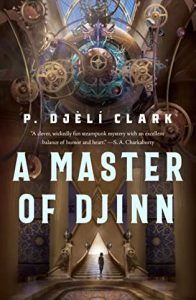 As a person with at least a Supporting Membership in this year’s World Science Fiction Convention, I have voting rights for the Hugo Awards. In order to be informed about exercising those rights, the Awards committee compiles a packet of ebook versions of as much of the nominated material as the publishers will give them. That packet became available this week and I immediately downloaded the lot.