 The Most Human: Reconciling with My Father, Leonard Nimoy by Adam Nimoy
 Narrator: Adam Nimoy
Format: audiobook, ebook
Source: purchased from Amazon, supplied by publisher via NetGalley
Formats available: hardcover, ebook, audiobook
Genres: autobiography, biography, memoir, Star Trek
Pages: 272
Length: 9 hours and 18 minutes
Published by Chicago Review Press on June 4, 2024
Purchasing Info: Author's Website, Publisher's Website, Amazon, Barnes & Noble, Kobo, Bookshop.org, Better World Books
Goodreads
Living with Dad was like living with a stranger—as a kid I often had trouble connecting and relating to him. But I was always proud of him.
Even before Star Trek I'd see him popping up in bit roles on some of my favorite TV shows like Get Smart, Sea Hunt, and The Man From U.N.C.L.E. And then one night he brought home Polaroids of himself in makeup and wardrobe for a pilot he was working on. It was December 1964 and nobody had heard of Star Trek. Still, the eight-year-old me had watched enough Outer Limits and My Favorite Martian to understand exactly what I was looking at.
Spock's popularity happened quickly, and soon the fan magazines were writing about dad's personal life, characterizing us as a "close family." But the awkwardness that defined our early relationship blossomed into conflict, sometimes smoldering, sometimes open and intense. There were occasional flashes of warmth between the arguments and hurt feelings—even something akin to love—especially when we were celebrating my father's many successes. The rest of the time, things between us were often strained.
My resentment towards my father kept building through the years. I wasn't blameless, I know that now, but my bitterness blinded me to any thought of my own contribution to the problem.
I wanted things to be different for my children. I wanted to be the father I never had, so I coached Maddy's soccer, drove Jonah to music lessons, helped them with their homework—all the things dads are supposed to do. All the things I wanted to do. So what if my Dad and I had been estranged for years? I was living one day at a time.
And then I got his letter.
That marked a turning point in our lives, a moment that cleared the way for a new relationship between us.
My Review:
It’s an iconic line, isn’t it? “Of all the souls I’ve encountered in my travels, his was the most human.” In my head, I still hear it with all of the Shatnerian pauses, and it still brings a tear to my eye, even though Star Trek: The Wrath of Khan came out more than 40 years ago – and we all know that wasn’t the end for either Spock or the man who made that ‘pointy-eared Vulcan’ a cultural icon.
But Spock was a fictional character, played by a very human man, filled with all of the virtues and flaws that are part and parcel of that human condition. This is a bit of the story of that humanity, as seen through the eyes of someone who was up close and personal with the virtues, and caught – or at least held onto – the brunt of entirely too many of the flaws.
And in this introduction, I’m doing exactly what the author has done – used the memory of his famous father to get at the story of his son. A role reversal of something that Leonard Nimoy once alluded to, that someone – actually someone looking for money in particular – would use his son to get at him.
So this isn’t a Star Trek story. And it explicitly isn’t a biography of Leonard Nimoy. Rather, it tells the story of the family that lived in, as the author referred to it, ‘the house that Star Trek bought’ in LA’s Westwood Village in 1968, how they got there, where they came from, and especially what happened after to the boy pictured on the book’s cover, Leonard Nimoy’s son Adam.
This is Adam’s journey, not Leonard’s. But, as with all families, the lives of the parents – who they were, where they came from, their reactions to the ways that their own parents raised them, and how they internalized that upbringing – reflect on their children, for better and for worse.
This is THAT story.
Reality Rating B: If you come to this book expecting a ‘Making of Star Trek’ story, you’re going to be disappointed. If you’re expecting a ‘warts and all’ biography, you’re not actually going to get that either. Not that both the father and the son didn’t have plenty of those.
This is, admittedly, a story about a man who was a hero and/or a touchstone for more than one generation of fans that shows that he had feet of clay up to the knees – but then so do most humans, which is kind of the point.
Circling back around again – because it is irresistible to talk about the father when this is a book by and about the son – it’s about a dad’s impact, both good and bad, on the life of one man who just so happens to be the son of someone famous.
Once one throws out the preconceived notions about what one expected in this autobiography, it’s something entirely different. At first, I had a bit of a difficult time connecting to the story and the author, but then it started to feel a whole lot more familiar than I expected.
His story resonated with me because our fathers were both products of the same Eastern European, Jewish immigrant, Depression-era generation. Both were workaholics who financially supported their families but weren’t physically around, were often in their own heads when they were, and as a result had strained relationships with their children. Adam Nimoy is my age, so we were viewing the world of the 1970s and 1980s from similar ages and from familiar backgrounds and expectations.
There are times when I wonder if ‘daddy issues’ are what makes the world go around, but I digress, just a bit.
I’m saying that once I found a way into his perspective a little, it made the whole thing work better for me. I listened to the audio, and even his speech cadences felt familiar – not because he sounds like his famous father – he doesn’t – but because those cadences arise from a similar time and place and culture. It was kind of like listening to a cousin.
His story is very much, at points, a walk through dark places, of taking heavy blows from sometimes self-inflicted wounds, and then walking a hard and frequently lonely path through recovery. It becomes a story about what happens after a person stops medicating their emotional pain away and starts feeling their feelings.
Which was something that resonated a hell of a lot more than I expected – as did the parts about how easy it is to hold onto old hurts and older grudges and how difficult it is to let them go.
Rating an autobiography feels different from rating a work of fiction, because even though I’m rating the story as it’s told, that can’t help but feel a bit like rating the life of the person telling it – no matter how much I try not to. And rating someone else’s life is just wrong. It was what it was and it is what it is and what needs to matter here is how good a job the author AS AN AUTHOR does of telling the story they decided to tell – even though it’s theirs.
Which is where that B rating comes in. It did take me awhile to get into this book, and there were times when it felt like he was kind of whiney in a way that came out in the audio as well. The story is way more about the author’s recovery from addiction than it is about anything else in a way that’s good and important and feels real in its length and its details but also felt a bit long and repetitive as he had to repeat some of the steps – as one so frequently does. It also reads as a kind of ‘slice of life’ story that mostly hits the highlights – and lowlights – but doesn’t dwell on the everyday too much, but a little went a long way when it came to dealing with the family dysfunction – of which there was plenty.
Coming into this expecting one thing and getting another may throw off more than a few readers – although if they stick with it they’ll find a whole lot more than they originally expected. Anyone looking for a story that personalizes the ‘Twelve Steps of Recovery’ will likely find this fascinating, inspiring and helpful as he pulls it down to earth and makes it very real even as he’s invoking a ‘Higher Power’. And in the end, the audio works better than the text because the audio helps to make the story feel authentic. It’s him, and he’s telling his story – warts and all.
 Unraveling: What I Learned About Life While Shearing Sheep, Dyeing Wool, and Making the World's Ugliest Sweater by
  Her Lost Words: A Novel of Mary Wollstonecraft and Mary Shelley by
 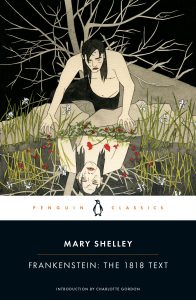 But the tides of history turn, and for more than a century after Mary Shelley’s death it was HER great work that captured the limelight – and much of the popular imagination – while her mother’s achievements were covered in the shadows cast by her daughter’s monster, the doctor who made him and the literary genre they started.
 Escape Rating B: Someone needs to do a literary survey of just how many fictional and even non-fictional biographies of famous women in history begin with a dramatic scene of parental or spousal abuse. Not that I do not believe it’s true in the case of the older Mary, more that it should be telling in a profound way that it happened so damn frequently but somehow that message never seems to penetrate the male psyche. Which is a part of what made
  I wanted to be all in on this one and I just wasn’t. I’m still interested in Wollstonecraft and Shelley, and will probably refer myself to
  An Indiscreet Princess: A Novel of Queen Victoria's Defiant Daughter by
 Escape Rating B: Both
 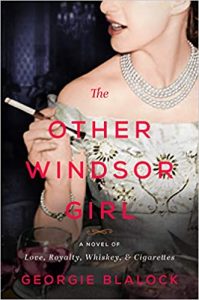 All of which is a very different reaction than I had to the author’s previous book about one of the royal family’s other notorious scapegraces,
  A Dress of Violet Taffeta by
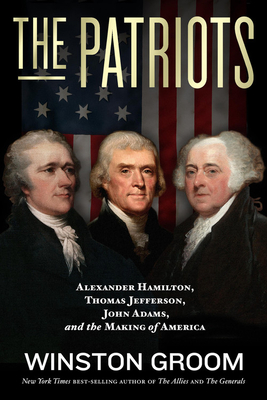 The Patriots: Alexander Hamilton, Thomas Jefferson, John Adams, and the Making of America by
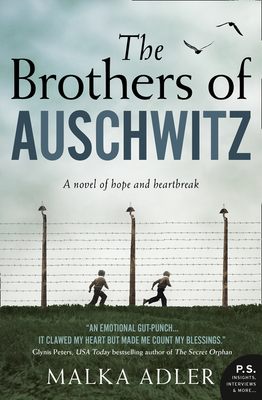 The Brothers of Auschwitz by
 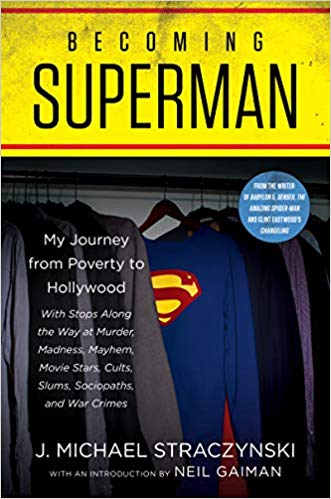 Becoming Superman: My Journey from Poverty to Hollywood by
 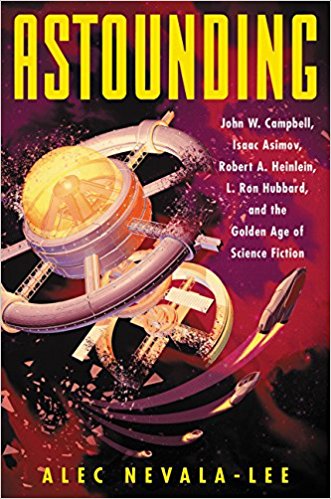 Astounding: John W. Campbell, Isaac Asimov, Robert A. Heinlein, L. Ron Hubbard, and the Golden Age of Science Fiction by
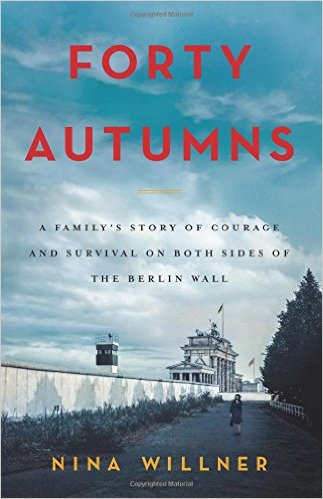 Forty Autumns: A Family's Story of Courage and Survival on Both Sides of the Berlin Wall by