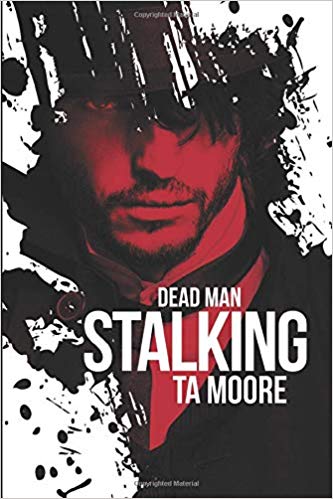
 Dead Man Stalking (Blood and Bone #1)
 by
T.A. Moore Format: ebook Source: author Formats available: paperback, ebook
Genres: M/M romance,
paranormal,
urban fantasy,
vampires Series: Blood and Bone #1 Pages: 266
Published by Dreamspinner Press LLC on September 10, 2019
Purchasing Info: Author's Website,
Publisher's Website,
Amazon,
Barnes & Noble,
Kobo,
Bookshop.org Goodreads
A Blood and Bone Novel
Agent Luke Bennett proved that humans could rise just as high in the ranks as their vampire colleagues—until a kidnapper held him captive for a year and turned him without his consent.
Now he’s Took: a reluctant monster afraid to bite anyone, broke, and about to be discharged from his elite BITERs unit.
When an old colleague suggests he consult on a BITERs case, Took has little to lose. The case is open and shut… but nothing is ever that easy. As he digs deeper, he discovers a lot more than one cold case is at stake, and if he wants to solve this one, he’ll need the help of the BITERs team. Even if that brings his old commander, Madoc, back into his life.
My Review:
Dead Man Stalking was a terrific reminder of what makes urban fantasy one of my go-to genres, especially when I’m in a reading slump and need to be knocked out of it! Because this one really knocked me out of my slump – and knocked one out of the park into the bargain.
As with the best of the genre, this is a story that turns some of the usually accepted paradigms around, as it makes heroes out of groups that are normally villains – and vice versa. It’s also, as so much of urban fantasy is, a detective story, where our “cops” have to investigate a series of crimes and figure out who, or what “dunnit.”
Of course, things are not as they seem, and not just because the cops in this case are vampires – not that they call themselves that.
Instead, we have a case that the investigators are positive is all sewn up, and a profiler who no longer trusts his own judgment poking his nose into that case and discovering that either the investigators missed something or that he’s further off the rails than he thought.
Took, formerly Luke, Bennett used to be the best profiler in the agency, until he was betrayed by someone he trusted, held captive for over a year, and changed from one of the few successful humans in the agency into shaky vampire who believes he’s lost his nerve.
Which doesn’t stop him from investigating that supposedly open-and-shut case, and doesn’t stop his former boss – and would-be lover – from racing across the country to get his ass out of the fire yet again.
And again.
Leading both of them deep into a case that gets darker and nastier the deeper they get into it. And exposes more of the fault lines in the trust between them as they dig under the surface of what they feel for each other.
Escape Rating A-: This was an absolute blast – a terrific way to spend a lazy afternoon, lost in a fascinating world, following a deadly investigation and a romance that shifts from cold to hot in the blink of an eye. And the whole world catches fire.
I didn’t even mind the cat on my chest holding me in place. He was doing me a favor, after all, providing an excuse for my reading binge.
One of the things I loved about this one was the way that history had worked in this alternative to our own. The way that the vampires (and werewolves) had always existed, and how that changed history, felt reminiscent of some of my favorites in the genre, like Sookie, and Pentonville, the Black Dagger Brotherhood and surprisingly, The Others.
Several of those series wrap around the idea that vamps have always not just walked among us, but run things either covertly or overtly. Also that vampire politics and vampire grudges are both epic and eternal.
And from The Others, that concept that “original recipe” humans are really hard-headed about their own superiority, in spite of repeated evidence to the contrary.
There’s a sense in Dead Man Stalking that we’ve been dropped into the middle of a case – only because we have – and into the midst of a fully realized world. I kept wanting a bit more background on who the players in the shadows are, and how things got to be the way they are. Although the introduction of the historical figure Elizabeth Bathory certainly added weight and depth and horror to that shadowy history. It’s something I’d love to see more of in future entries in the series.
I keep referring to Dead Man Stalking as urban fantasy, even though sometimes it gets referred to as paranormal romance. Yes, there is a romance, but it doesn’t feel like the center of the story. The case felt like the backbone of this one, at least to me. Your mileage may vary.
Whatever you think is the heart of this one, whether it’s an actual romantic heart or the kind that gets cut out by one’s enemies, Dead Man Stalking is compelling and absorbing and I can’t wait for the next book in the Blood and Bone series. This is a world I want to explore more deeply, and in the company of these characters.
A Few Words from our author, T.A. Moore!
First of all, thank you so much for having me! I’m thrilled to be here with my new urban fantasy Dead Man Stalking. This is the first book in the Blood and Bone series and I am thrilled to put it out there into the world. I was meant to be writing an entirely different book, but then Took and Madoc took up residence in my head and I had to give in and let them have their say.
I had a blast creating this world and these characters, and I hope you enjoy them too. I’ve included a chapter of a prequel short story that you can follow through the blog tour.
Chapter Eight
“Henry stayed out of the field,” Kit said harshly to Madoc. “And he, at least, had magic to fall back on.”
The door to Nina’s house opened and the coroner’s assistants carried her out, wrapped in black plastic and padlocked down with silver to the stretcher. Just in case. Silver would kill a vampire, but something would occasionally move into what was left. It might mimic who they’d been before–whatever it could piece together from the brain tissue left–but it was generally agreed the revenants were other.
Luke rinsed his mouth and spat green and pink froth into a bowl. The wintergreen didn’t mask the taste of blood so much as mix with it, sharp and potent like salt on minted lamb. He rubbed his jaw and pressed on the tender points around his jaw. It was jarred, but not dislocated.
“If he had a year to prepare, he could bring a dragon to tinkle on them,” Luke said. “Maybe.”
It was unfair. Slightly. By repute Henry had been a dangerous man, but sorcery was high investment for small returns. It was why the scholomance existed despite sorcerers being as community minded as a spoiled house cat. Five sorcerers could bundle their spells and flood a city to execute a man they’d arranged to be stranded there with a woman he couldn’t resist. It would still take a year.
“You could have been killed,” Kit said. He grabbed the back of Luke’s head and shoved him around to look at his reflection in the mirror. The shadows of fresh bruises bloomed grey and red over Luke’s jaw and cheek. “Are you really so arrogant you can’t see that.”
“Enough,” Madoc said icily. “Go and make sure Nina’s consort doesn’t do anything foolish.”
“I need to speak to him,” Luke said as he scrambled up off the tailgate of the ambulance. “Before he goes to the hospital.”
Madoc put a hand on his shoulder and pinned him in place. “He doesn’t want to see you right now.”
Probably not, Luke supposed, but… “It’s important.”
“Give him time to grieve,” Madoc said. “Kit? Go.”
He waited until Kit grumbled and stalked off. Then he put his thumb under Madoc’s jaw and turned his head around to study the bruise. “You’ll ache tomorrow.”
“I ache now,” Luke said. He swallowed and moved away from the too-careful touch. “I know how the killer is.”
“Dead, surely,” Madoc said as he glanced after Nina. “She choose her own punishment.”
“It wasn’t her,” Luke said. Habit made him check his holster and he hissed in annoyance as his fingers found empty leather and nylon. The local cops had taken his gun when they got there. It wasn’t how they did it, but it generally wasn’t a good idea to argue with anxious, trigger happy police officers alarmed that you’d blown off someone’s entire head. Madoc reached around and pulled a gun out of the back of his jeans. He offered it up on the palm of his hand. “She was just…”
Scared. Angry. Threatened.
Luke took the gun. He checked it over briskly, made sure it was loaded and the safety was on, before it holstered it.
“I made a mistake,” he said stiffly. The words felt like gravel in his throat. “I pushed when I should have pulled, and she caught me off guard. It shouldn’t have been necessary to kill her.”
“But you did,” Madoc said.
Luke gave him a puzzled look. “At that point it was necessary.”
“Why not here?” Madoc asked. “Jamie got over-possessive, thought a midnight snack meant a commitment and pressured her. She’d lived here for a long time. Anakim that entrenched can react extremely to any threat to their nest.”
“I got that,” Luke said. He rubbed his jaw. “But what about the others?”
“Senescence,” Madoc said. Vampire senility. “Maybe she didn’t have a reason.”
Luke shook his head. “No one kills without a reason,” he said. “We might not think it is a good reason, but it’s still a reason to them.”
Madoc looked exasperated. “So you came out, executed the daughter of the Tsar’s favourite, and it was all for nothing?”
“No,” Luke said. “Nina was involved, she just didn’t know how. When can I talk to Darren?”
“Tomorrow.”
Luke made a sound of protest in his throat.
“Fine, when he’s ready,” Madoc conceded. “Let him grieve first.”
Luke shrugged an apology. “That might be too late,” he said. “I need to talk to him now.”
Not that he’d be able to if Madoc decided to stop him. He waited and, after a second, Madoc shook his head and stepped aside. Luke jogged over to where Darren, coffee all over his trousers, sat under Kit’s awkward sympathy. When Darren saw Luke he snarled and tried to lurch to his feet. Kit pushed him back down and gave Luke an exasperated look.
“Jamie,” Luke said. “Tomas, Bray, Loretta”
“What about them?” Darren asked bitterly. “Are you going to shoot them too?”
Luke bit the ‘someone beat us to it’ off the tip of his tongue. “They were all mules, right?”
Colour pinched Darren’s cheeks. “UnKissable,” he said bitterly. “Resistant. Mules are animals.”
“You all met at a support group right?” Luke said. He barely waited for Darren’s resentful noise before he pressed on. “And someone there introduced you to Nina right,, you and Jamie both?”
It took a moment for Darren to answer. When he did, he sounded wary. “We don’t talk about who we meet there.”
Of course not. Being a mule was somewhere between being a saint and being a leper. The Pentecostals saw them as souls too pure to be condemned in life, the rogues saw them as nothing but cattle, and the Anakim pitied them. Any of the above was an awkward place to live. So first names only, and if you had the means you’d attend a support group away from where you lived.
“So yes.”
Darren glared at him but, after a quick wary glance at Kit, reluctantly nodded.
“Who introduced you?”
“Why do you care?”
Luke changed direction. “You were her favourite, the consort. She gave you somewhere to live, she let you drink her blood, she let you love her.”
Most mules found out what they were when they tried to court the Kiss, and it didn’t take. It usually ended badly. The Anakim didn’t care to love anything that would die centuries before they did. Darren took a shaky breath as the grief pinched him again.
“But she liked variety, so then Jamie came along. Nina gave him money to keep himself nice, to come and see her. More money. More visits. Until you and Jamie fought over her. He wanted to take your place?”
“I didn’t kill him,” Darren protested. He stiffened under Kit’s hand as his voice pitched up an octave from nerves. “Jamie was…After he left Nina told me she loved me, that she’d not replace me!”
Except she would have. Eventually. She’d been willing to kill for Darren today, but one day he’d have been too old to be beautiful, then too old to be fun. She might keep him, a fond friend and ex-loved, but someone new would be in her bed. Even if she’d stayed with him when he was old, he’d die and she’d need to find a new mule to love.
“What if she had?” Luke pressed. “What if Nina had gotten tired of you, replaced you with someone younger and prettier. Would you still have loved her?”
“Of course!”
“Would you be willing to do anything to get her back?”
They both knew the answer. Darren stared at Luke for a second as the idea dawned on him. Then he shut down as he clenched his jaw and looked away.
“Fuck you.”
“Who introduced you?” Luke pushed.
“You killed her!” Darren spat furiously. He lurched up out and tried to grab Luke’s shirt, but Kit dragged him back. “I hope you’re next to get strung up.”
“More likely to be you,” Luke said. “The old wether. Like Jamie was the rutting stag and Loretta was the fish.”
Grief crumpled Darren’s face like a tissue. “I don’t care,” he said. “I can’t do this again.”
Shit. Luke grimaced as he tried to think how to drag the truth out of Darren. Before he could change tactics, Madoc put a hand on his shoulder.
“Wait,” he said. He moved Luke out of the way and crouched down in front of Darren. He smiled at him, a disarmingly pleasant expression. “Darren, right. Darren Voight-Kares.”
Darren fired a bleak look of triumph at Luke, as if that changed anything.
“Yes.”
Madoc put a hand on Darren’s voice and dropped his voice slightly, a hint of his old accent furred over the words.
“You’ll be the executor of her estate, there’ll be a lot of things to sort out. We’ll help you with that, if you want,” Madoc said. He nodded and Darren nodded with him. Then Madoc grimaced. “If we can. Until we find this killer, there’s not a lot of time we can give up.”
Luke shifted his weight uncomfortably. He wasn’t sure he didn’t agree with Madoc’s plan, or was just uncomfortable at seeing that charm turned elsewhere. Kit gestured him to silence.
“I..need help,” Darren admitted. “Her family. The Russians.”
His hands knotted anxiously in his lap, twisted painfully together.
“What was his name?” Madoc asked, his voice suddenly hard and thick with something that caught in the back of Luke’s throat. “The man that introduced you. Tell us.”
“Mark,” Darren said obediently. Then he stalled. “I don’t know anymore than that. Just Mark.”
Luke shifted again and glanced askance at Madoc. After a glance at Darren’s face, Madoc gave Luke a nod of approval to rejoin the conversation.
“He’d been a soldier, right?” Luke said. That fit his profile. Someone who was willing to kill, but who balked at the hot gore of butchery. “That’s where he found out what he was?”
There was a pause and then Darren nodded. “He was wounded, lost half his stomach. One of the medic Anakim tried to turn him, save his life, but it didn’t work. They thought he’d die, but he survived. Discharged. Came home. Nina helped him put his life back together, set him up in a job.”
“What job?”
Darren shrugged. “I don’t know. A security company or something? It doesn’t matter because he messed it up anyhow, lost everything. Nina had to step in again, get him a job as a security guard somewhere.”
The pieces slotted together. “Mark,” Luke said. He remembered the ginger security guard, wiry muscle under a fresh layer of indulgent flab. But still there. “Mark Clade?”
Darren made a helpless gesture. “I don’t know. I guess,” he said. “Nina called him last night about Jamie, told him that she didn’t need the support group anymore. She had me.”
And that meant Mark only had one thing left. So he wasn’t going to give that up.
__________

Last chapter of the story on my blog tomorrow! Www.tamoorewrites.com. All the blog tour posts will also be linked here: http://tamoorewrites.com/deadmanstalking/
Author Bio:TA Moore –
 TA Moore is a Northern Irish writer of romantic suspense, urban fantasy, and contemporary romance novels. A childhood in a rural, seaside town fostered in her a suspicious nature, a love of mystery, and a streak of black humour a mile wide. As her grandmother always said, ‘she’d laugh at a bad thing that one’, mind you, that was the pot calling the kettle black. TA Moore studied History, Irish mythology, English at University, mostly because she has always loved a good story. She has worked as a journalist, a finance manager, and in the arts sectors before she finally gave in to a lifelong desire to write.
Coffee, Doc Marten boots, and good friends are the essential things in life. Spiders, mayo, and heels are to be avoided.
| Website | Facebook | Twitter | Instagram | Goodreads |
a Rafflecopter giveaway

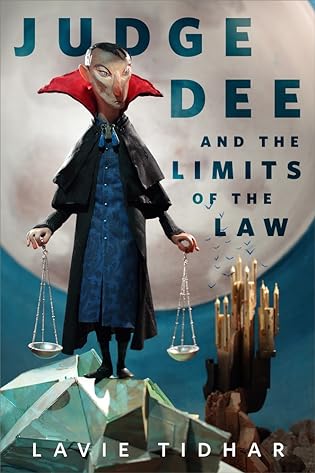 Judge Dee and the Limits of the Law (Judge Dee, #1) by Lavie Tidhar
 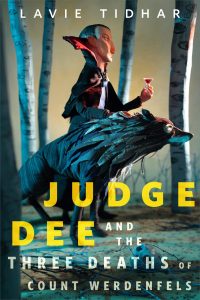 What makes the story fun – more than fun enough that I’ll be picking up the next story the next time I need something short to tide me over an overcommitted calendar – is the first person perspective of poor, put upon, Jonathan. He’s snarky, he’s both world-weary and vampire-weary, but he’s always aware of the side on which his bread is buttered – when he can get any, that is. So his commentary covers the Judge, the law he administers, his opinions and predilections, but also the companionship they provide each other.
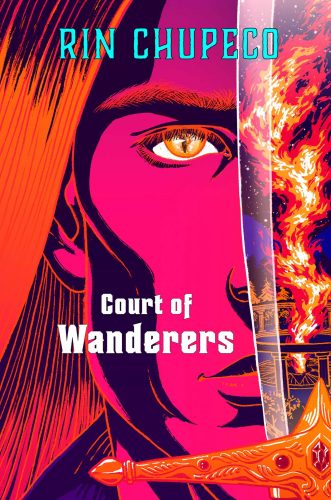 Court of Wanderers (Silver Under Nightfall, #2) by
  Escape Rating A++: The SQUEE is strong with this review. Let’s get into at least a bit of the why of that fact.
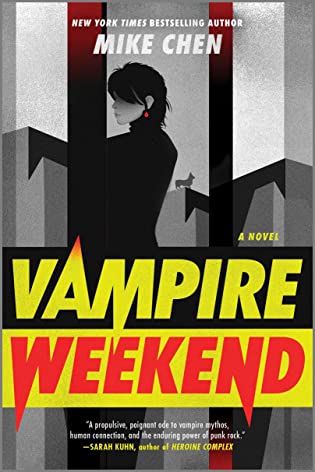 Vampire Weekend by
 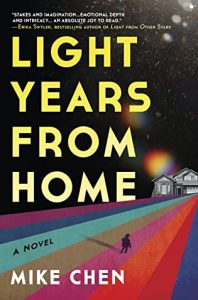 Escape Rating B+: Louise’s journey in Vampire Weekend is a combination of “no matter where you go, there you are” and “who do you want to be when you grow up?” Because Louise hasn’t. Grown up, that is. And that not-grown-up self has been dragging behind her and holding her back for decades. When Ian drops into her life – and all the landmines in her past that he unwittingly brings with him – she’s forced to reckon with who she once was and the baggage she’s still carrying from that person.
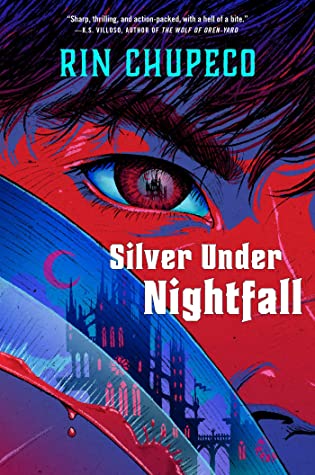 Silver Under Nightfall by
 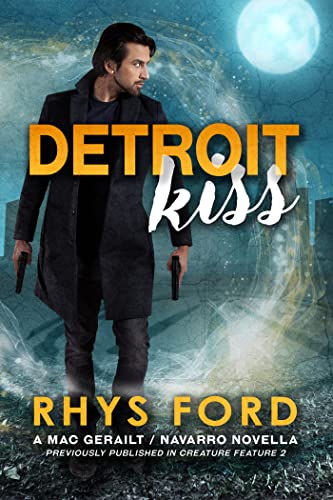 Detroit Kiss by
  Escape Rating A-: I have one and only one complaint about Detroit Kiss. It’s too damn short.
 Insurrection by
  At the end of Insurrection, it feels a bit like the circle just got squared. Or it feels like the series has either come to a conclusion or is headed for one. It kind of depends on whether you boarded the ship on the way to the Trakis system at the beginning of the
  In the series that seems to conclude with Insurrection (I could be wrong about this being the conclusion but it feels close) we watched the maneuvering and the finagling, the bribery and the theft, as the places that should have been assigned by lottery were instead filled with the rich and the powerful. While Rico Sanchez bought, bribed or murdered his way into filling half of one ship with his own people. Not just vampires, but also shapeshifters and other things that go bump in the night, including one warlock (his story is in
  In Break Out, Rico may be a bit bored, but the people who have gone through the Trakis immortality treatment are getting really, really bored. And jaded. Just as the immortal demon, Malpheas has gotten bored and jaded with his already extremely long life.
 The Route of Ice and Salt by
  (If you haven’t read the original, it’s available in
 Escape Rating A-: Dracula may be the entry point for this story for many readers, but the Count isn’t exactly THE point of the story. The Route of Ice and Salt is cult classic of Mexican fantasy, first published in 1998 by a small comic book publisher that didn’t survive its attempt to jump from comic books to prose. This is the first translation of the work into English, and it’s a creeping fever dream of a story that picks up on themes that were subtext in Dracula – and other early vampire stories – and moves them from subtext to explicit text.
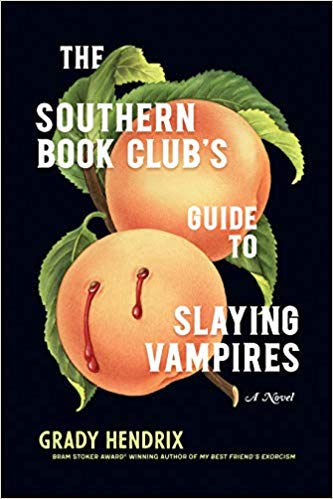 The Southern Book Club's Guide to Slaying Vampires by
 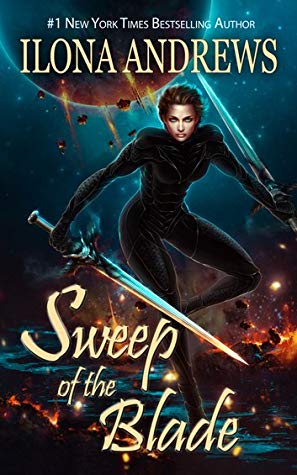 Sweep of the Blade (Innkeeper Chronicles, #4) by
  This is also a book that manages to be both considerably different from the previous books in the
  Escape Rating A+: This was a book that I gobbled up over dinner, and didn’t let go of until it was done. It starts with a bang, ends with a mic drop, and in the middle there’s the biggest and most delicious story of political skullduggery, underhanded betrayals, complex negotiations and epic romance.