A- #BookReview: Foundling Fathers by Meg Elison

A- #BookReview: Foundling Fathers by Meg ElisonFoundling Fathers by Meg Elison
Format: eARC
Source: supplied by publisher via Edelweiss
Formats available: paperback, ebook
Genres: politics, satire, science fiction, speculative fiction
Pages: 192
Published by Tachyon Publications on June 23, 2026
Purchasing Info: Author's WebsitePublisher's WebsiteAmazonBarnes & NobleKoboBookshop.orgBetter World Books
Goodreads

When a radical think tank clones America’s founding fathers, The Boys from Brazil meets the bicentennial in this ingeniously satirical mashup of U.S. history, cloning, and technocracy gone terribly wrong.
The trouble starts when a curious teenager, Benjamin, finds an iPhone in his privy. The problem is, it’s supposed to be 1750.
Ben takes his discovery to his brothers—Thomas, John, and George. The boys have been raised in isolation on an island plantation by a firm but kind woman, Mary Libertas. All four of them chafe at Mary’s restrictions upon them—especially Thomas, who has impregnated yet another servant.
Meanwhile, their de facto father figure, Jeff Hancock, complains to the shadowy Antediluvian Society that it is past the time to explain to the boys where they come from and what they must do: Run America the way it used to be run.
In this more-than-slightly-absurdist novella, Philip K. Dick Award–winning author Meg Elison (Find Layla) skewers those looking to an idyllic past to solve the problems they continue to create.

My Review:

I picked this up on the Fourth of July, because it looked like it would be the perfect read for this mixed-feelings semiquincentennial birthday of the United States AND because that cover was so intriguing I couldn’t resist.

And it was perfect for this particular weekend. Not because of its SFnal premise – which has been done before – but for what it says about the U.S. at this particular point in time. And that it says it with dry wit and dark humor and more than a bit of satirical poking at our beliefs in American exceptionalism and the current state of affairs in these (not so) United States.

The premise is both utterly SF and completely bonkers. (And a whole lot closer to being plausible than Ira Levin’s The Boys from Brazil). Between the now everyday occurrence of IVF and artificial insemination, and the not too far distant possibilities of human cloning, the idea of recreating the “Fab Four” of the American Revolution – Benjamin Franklin, George Washington, Thomas Jefferson and John Adams – isn’t nearly as far-fetched as it was when Levin’s book was published in 1976. (Ironically, now, the year of the US bicentennial.)

However, human cloning isn’t nearly as simple as cloning a plant or even a mouse. Which is where this book gets interesting. Because it’s not about the tech. It’s about the people. And people are not just collections of cells, they’re collections of memory and experience. Things that are a LOT harder to replicate.

Because time marches on.

So the idea of a group of über wealthy men hiding their desire to clone themselves and live forever behind a project to clone the “Founding Fathers” of the country in order to recreate a political system they believe will favor “their kind of people” and that they are certain they will be able to control isn’t beyond the realms of possibility. In fact, it’s that possibility that makes the story work – particularly as the plan falls apart.

That plan hinges on four men who were leaders – and who are raised to BE leaders. Except in complete isolation from the 21st century world in the hopes of re-creating the men they used to be in a world that is not the one that created their originals.

They’re not supposed to eat from the “Tree of Knowledge” of where the world is now until they’re ready to be led by their noses to lead everyone else. But as Robert Burns famously penned in 1785, a quote with which Franklin, Washington, Jefferson and Adams would have been all too familiar, “The best-laid schemes of mice and men go oft awry.”

All because Benjamin Franklin discovered the wonders of the smartphone ahead of his time. Of course it was Franklin. Who else would it have been?

Escape Rating A-: I absolutely DID pick this book up for the cover. The story is a LOT deeper and more thought provoking that that cover implies, but that cover, and the opening scene, were more than intriguing enough to pull the reader in. Once I was in, I was hooked.

The idea behind the story is both very SFnal AND completely rooted in today at the same time. It’s doing what SF does best – taking a look at present conditions while providing just enough of a “fig leaf” to let the reader step outside the real world while looking at, well, the real world. There are messages if you look for them, but if a reader doesn’t want to look, the story is more than enough to carry them past those points. (Even if they shouldn’t let themselves be carried past – IMHO.)

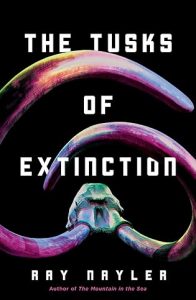
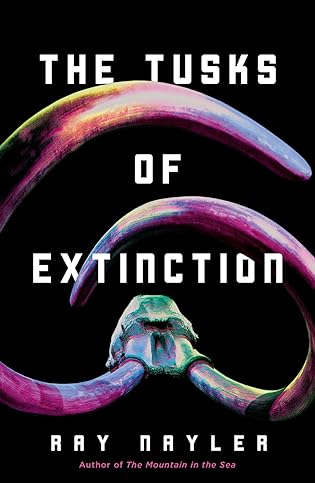
The cloning part of this story has been done before in one fashion or another. Levin’s The Boys from Brazil cloned Hitler. Multiple times. Problems ensued. Jurassic Park is about the de-extinction of dinosaurs through cloning. But the concept has also been treated more thoughtfully, and more on point for this story, in both The Tusks of Extinction by Ray Nayler, about an attempt at de-extinctioning the woolly mammoth, and more recently and much closer to the issues of Foundling Fathers, in Cameron Reed’s Hugo-nominated novelette, The Girl That My Mother is Leaving Me For.

Because this story isn’t about the process of cloning or even the process of raising and educating those “foundling fathers”. It’s about the way the scheme falls apart and what happens in the aftermath.

Just because the boys have the same genetics as their progenitors, that does not mean they’re going to turn out the same as their originals, because it’s impossible to fully recreate the experiences that made them who they were. Even the isolation that keeps them from learning the “truth” of the 21st century is a factor. They may not know the present but as they reach adulthood they know they do not possess the liberty they have been taught to cherish.

(This is the part of the story that most aligns with Cameron Reed’s story, in that it is possible to recreate some of the conditions that made the original person so singular, but the world and its changes mean that it can’t REALLY be done.)

When the scheme to “recreate” these giants of American history collapses and is exposed, they see the world as it really is – and that it is NOT the world they were prepared for. And the way that works out, both for the Antediluvian Society (yes, really) that funded the project and for the young men themselves is all about the way that the world currently operates, both for them and for us.

Looking back at the past will not move us forward, both because the past is another country and because the past is gone. It’s what we do in the present to make the future that matters. No matter how much some might wish to return to a past that they believe is more glorious – or more favorable – or more controllable – or more in keeping with their own antediluvian prejudices.

Foundling Fathers turned out to be a surprising and perfect read for this Independence Day. The characters of those “Founding Fathers” managed to portray these towering figures as young men who are less than larger than life yet still reflect the characteristics we remember them for – even as their personalities were extended into a world the originals never imagined. The story is both witty and biting – and it bites in exactly the places and people it should in this fascinating and fantastic story.

A- #BookReview: Enter the Nightmare by Jayne Castle

A- #BookReview: Enter the Nightmare by Jayne CastleEnter the Nightmare (Harmony, #18) by Jayne Castle
Format: eARC
Source: supplied by publisher via Edelweiss
Formats available: hardcover, large print, ebook, audiobook
Genres: action adventure romance, paranormal romance, romantic suspense, science fiction romance
Series: Harmony #18
Pages: 297
Published by Berkley on June 30, 2026
Purchasing Info: Author's WebsitePublisher's WebsiteAmazonBarnes & NobleKoboBookshop.orgBetter World Books
Goodreads

Nightmares become real when a woman trying to rebuild her life enters the Hotel of Dreams in this exhilarating Harmony novel by New York Times bestselling author Jayne Castle.

Alice Radstone should have known not to return. Her life before the Hotel of Dreams had been the perfectly cloistered world of a teacher at the Ballantine Academy. When the death of her mentor forced her out, she was left to reinvent herself in the big city. Since then, things have not gone well. Ten months ago, after her first trip to the hotel, she woke up in the locked ward of a hospital for the criminally insane, told that she had murdered her husband on their wedding night. She has no memory of the husband or the wedding but after escaping the asylum, one thing is certain—she is never going back.

Unfortunately, Alice’s second reinvented life is also deteriorating rapidly, which is why she finds herself once again at the Hotel of Dreams—this time hiding in the shadows of her room, a dead body in the shower, and two men wearing masks creeping toward the bed to kidnap her. Again.

When the enigmatic and decidedly dangerous Owen March shows up, claiming he’s there to rescue her, she has no choice but to accept his offer—and hope that he doesn’t intend to kidnap her, too.

With Alice and now Owen in the killer’s sights, time is running out. Alice and Owen must trust each other and the electric passion between them if they are to make it out of this hotel alive.

My Review:

We first meet Alice Radstone while she’s in the middle of escaping from the ultimate escape room. She’s hiding in the bathroom of her suite at the Hotel of Dreams with the dead body behind the shower curtain, watching two goons stab a line of pillows taking the place of what would otherwise have been her body.

Her dead body.

Alice was lured to the spooky, out-of-the-way hotel THIS time with the promise of proof about her previous visit. On what was supposed to have been her honeymoon to a man she barely remembers meeting. A honeymoon night that resulted in him throwing himself off the hotel’s roof before Alice was sedated – for her own good, of course – and shipped off to an asylum.

A place where she was supposed to be kept drugged and pliant for the rest of her life. Because she drove her new husband to his death with her psychic powers and she’s too dangerous to be allowed out. EVER.

There are a few, just a few, truths mixed in with that pack of lies. Because this is the planet Harmony, where a significant portion of the human population really does have psychic powers, the most outlandish part of the story is more plausible than it might otherwise be.

Alice does have the power to drive someone to suicide by opening their mind up to their worst nightmare. But she didn’t – at least not in this particular case. Instead, someone has dumped Alice into her very own nightmare for reasons that she had no clue about the first time she visited the Hotel of Dreams.

But she does now. And she’s determined to get to the bottom of the nightmarish mess that has stolen months of her life, her reputation, and her freedom.

All she has to do is trust Owen March, the mysterious man who says he has come to save her from the goons. Alice is sure her own instincts about people are shot after what she’s been through, but her dust bunny Sebastian thinks March is trustworthy. So she will too. After all, on Harmony, the dust bunnies are usually right.

Escape Rating A-: I’m here for the dust bunnies. No, seriously, I mean it. The Harmony series (sometimes referred to as the Ghost Hunters series) has been taken over by the dust bunnies, and I’m absolutely here for it. You will be too.

But it didn’t start out that way, and neither did the planet of Harmony. It’s a former colony planet that lost contact with its planet of origin. Earth. When their imported high-tech failed after they lost their way home, the colonists did what humans do. They made do with what they had. They hunkered down through some dark times.

They survived.

Now, two centuries later, they’ve built themselves back up to a level of technology and civilization roughly equivalent to our own 21st century. But with a difference.

Many of the colonists who came to Harmony possessed psychic powers – even if their Earth disclaimed any such possibility. (It’s through this vector that the author’s Harmony series connects with her Arcane Society series written under her Amanda Quick and Jayne Ann Krentz bylines).

The planet itself nurtures and enhances those psychic talents, so the colonists have become more powerful and their talents have developed more facets as the humans survived, intermarried, and eventually prospered.

There’s a lot of lovely, glorious and frequently nefarious politicking and general skullduggery threaded through the entire ‘Jayneverse’ – and parts of that come to play in this entry in the series. But it all really does stand alone if you want to start here. (I’m fascinated with this kind of interwoven history, but if you’re not or you’re looking for a way in, here is just fine.)

The dust bunnies are native to Harmony, and they’re just the best, cutest, and most adorable little predators. Sebastian steals every scene he’s in, and that’s true of every dust bunny in the series.

Like many stories in the series, Enter the Nightmare is the story of two people on the run from powerful figures who are determined to silence them for reasons that are unknown to them as the story begins.

They bond because they’re stuck in whatever-it-is together, whether by choice or chance or in this case, a bit of both. And the only way out is through. Through the case at least, although they eventually figure out that they’ll never be through with each other. And that dust bunny Sebastian will be bringing all of his many, many dust bunny friends over for pizza for the rest of ALL of their lives.

This was a case of the right book at the right time for this reader. I needed a distraction, and something I could read in pieces and remain invested in the story. I saw the romance coming – because there’s always a romance in this series – but I enjoyed watching them figure it out AND figure out what was happening to them, why it was happening, and how to get ahead of everyone else’s plots and plans for them and their demise.

So I’m already looking forward to the next book in the delightful and suspenseful interconnected ‘Jayneverse’. That next book will be The Book Hunter, coming in January. It’s the follow up to The Shop on Hidden Lane, where psychic dog Bruce stole THAT show every bit as thoroughly as Sebastian did this one.

A- #BookReview: Beyond Galaxy’s Edge by Anna Hackett

A- #BookReview: Beyond Galaxy’s Edge by Anna HackettBeyond Galaxy's Edge (Phoenix Adventures Book 5) by Anna Hackett
Format: eARC
Source: author
Formats available: paperback, ebook
Genres: science fiction romance
Series: Phoenix Adventures #5
Pages: 284
Published by Anna Hackett on June 24, 2026
Purchasing Info: Author's WebsiteAmazonBarnes & Noble
Goodreads

Ambitious Patrol Captain Nissa Sander has spent three years at the galaxy’s edge keeping the law and order, and chasing scoundrel smuggler, Justyn Phoenix. But the charming rogue has always outwitted her and she’s had a hard time ignoring his hard body and handsome face. But when one of the galaxy’s most important documents—the US Constitution—is stolen, Nissa finds herself working with the very man she’s been trying to throw in her brig.
Justyn Phoenix embraces life and offers everyone a wink and a smile. He’s also in love with a spit-and-polish Patrol captain. Yep, crazy in love, and he knows she’ll never love him back. But when the opportunity arises to work alongside Nissa on a wild and crazy mission to recover the US Constitution, he can’t resist.
But nothing on this treasure hunt is as it seems. The trail leads them to fake documents, rival treasure hunters, and a millennia old mystery. As the hunt takes them beyond the galaxy’s edge, Justyn and Nissa will face the firestorm of their desire, and soon learn if they can survive long enough to save the galaxy.

My Review:

Patrol Captain Nissa Sander has spent her years at the galaxy’s edge trying to catch Justyn Phoenix smuggling illicit goods across the border. He’s trying to catch her attention. His plans are working a whole lot better than hers – at least when this story begins.

He’s too good a smuggler to let her find anything illegal on his ship. And she’s too good an officer to stop trying. But he’s certain he’s not good for her or good enough for her – and she’d agree with that assessment a little too readily.

Still they can’t stop baiting each other every time they cross paths. Even though they both know they shouldn’t.

At least, not until a thief makes off with one of the original foundational documents of the galactic law that she serves and he mostly gets around. Someone has stolen the US Constitution. The one, the only, the original. Or so everyone believes.

When it is discovered that the constitution that was stolen is old, but not nearly old enough, the hunt is on. Nissa needs a treasure hunter. Justyn has his cousins at the other side of the galaxy eager to help restore a piece of history – just as they did with the Mona Lisa in At Star’s End.

If Nissa can manage to trust a smuggler not to steal the artifact out from under her nose, her ambitions, and her obligations. Because she’ll have to, as she absolutely cannot trust anyone else. Not the father for whom she’s never been enough. And especially not the competing agendas of her GSS superiors, who are using them both in a dangerous plan of their own.

A plan for which Nissa is intended to take the fall – unless she can smuggle her way out. With Justyn’s help. And the heart she never thought he had.

original cover

Escape Rating A-: I’ve enjoyed every single book in the updated Phoenix Adventures as I did the originals. Although I still like the original covers better. And hopefully your imagery mileage varies.

Even more than ten years later, the “cousins” half of the Phoenix story still feels like Firefly, in spite of the years and the parsecs. Or however you want to measure things. The Phoenix Brothers on the one side of the galaxy, the ones in At Star’s End, are treasure hunters. The ones at galaxy’s edge are mostly convoy operators. They take colonists out into the black to establish new colonies in risky situations. Or at least unknown situations.

But Justyn is a bit too wild to captain convoys. Or too adventurous. Or both. He might be a better fit with his cousins the treasure hunters, as this story proves. Because he loves a good chase, which is exactly what he’s been doing with Patrol Captain Nissa Sander. Chasing her until she catches him. Over and over and over. He’s just never stayed caught. Not until now.

Both Justyn and Nissa have a lot to overcome to save the Constitution AND reach a happy ever after that neither of them quite believes they deserve. He knows his well-earned reputation will tank her career. She’s been trained to never let her own desires get in the way of her father’s ambitions for her – even if he’s trained her just as hard that she’ll never meet them.

Her superiors think they have her between a rock and a hard place. She knows she can’t trust them and she’s afraid to trust Justyn with the mission – let alone anything else.

The way that their treasure hunt beyond the borders of chartered space teaches them that they can trust each other with everything managed to be both a delightful bit of gaslamp/steampunk in an otherwise completely science fictional universe AND a thrill-a-minute chase on top of a combustible romance.

If you’ve ever had a yen to try science fiction romance, or if you’ve heard about this terrific series but haven’t been able to find a copy, this “remaster” of the classic is a fantastic chance to read a rocket-fueled adventure AND romance.

A- #BookReview: Kaiju Agonistes by Scott Lynch

A- #BookReview: Kaiju Agonistes by Scott Lynch"Kaiju Agonistes" by Scott Lynch in Uncanny Magazine, Issue 62, January/February 2025 by Scott Lynch
Format: ebook
Source: supplied by publisher via Hugo Packet
Formats available: magazine
Genres: alternate history, science fiction, short stories
Series: Uncanny Magazine Issue 62 January/February 2025
Pages: 46
Published by Uncanny Magazine on January 7, 2025
Purchasing Info: Author's WebsitePublisher's WebsiteAmazonBarnes & NobleKobo
Goodreads

The January/February 2025 issue of Hugo Award-winning Uncanny Magazine.

Featuring new fiction by Scott Lynch, J.R. Dawson, Tia Tashiro, Tade Thompson, Mary Robinette Kowal, Rati Mehrotra, and AnaMaria Curtis. Essays by Nicholas Whyte, Ai Jiang, A.T. Greenblatt, and Suzanne Walker, poetry by Kaliee Pedersen, Mari Ness, Shankar Narayan, and E. N. Díaz, interviews with Scott Lynch and Rati Mehotra by Caroline M. Yoachim, a cover by Maxine Vee, and an editorial by Lynne M. Thomas and Michael Damian Thomas.

Uncanny Magazine is a bimonthly science fiction and fantasy magazine first published in November 2014. Edited by 2016, 2017, 2018, 2019, 2020, 2022, 2023 Hugo award winners for best semiprozine, and 2018 Hugo award winners for Best Editor, Short Form, Lynne M. Thomas and Michael Damian Thomas, Betsy Aoki, and Monte Lin, each issue of Uncanny includes new stories, poetry, articles, and interviews.

My Review:

I finished this one first in my Hugo readings, then realized it hadn’t been discussed yet in the Hugo Readalong on reddit.  so I saved this until it gets there so I can see if there’s anything I missed. (Which it has here.)

I have to say that this one was fun. In fact, as this is now the fourth review in my series, this is the first one that HAS been fun. Which is to be expected based on the reputation of the author, Scott Lynch. I’ve never read his Gentlemen Bastard series (The Lies of Locke Lamora) but based on how much I enjoyed this story – mostly for its jaundiced view of humanity and its snarkitude – I clearly need to start.

The idea of this has been done before in SF. The idea that life on Earth and other planets was seeded by some alien race for whatever reason of their own. What’s interesting in this story is that the reason wasn’t just benevolent or observing until the planet was ripe for plucking or needed to be obliterated or anything else.

Instead of life in general being seeded, in this case it’s one life in particular. One little seed whose job is to bunker down somewhere deep and dark and above all (or below all as the case may be) – like the Marianas Trench – and wait and watch and GROW. Humanity is being observed, but only for one specific thing.

Nuclear power.

Because the aliens have discovered that nuclear power is the road to planetary extinction. The (formerly) little seed’s job is to watch and wait until and unless the humans start playing with dangerous and destructive things they REALLY don’t understand.

Which, of course, we did. The problem is that the alien only observed our science. It didn’t take into account our behavior.

And that’s where the story and the fun come in. Along with the snark. Because the alien tries to warn us into putting away our dangerous toys. Which doesn’t work AT ALL. In fact, because this story takes place during the Cold War and does a great job of sending up all the attitudes about that mess, the alien’s threats make things worse.

It’s a literal nuclear arms race set off by an alien who wanted to prevent a nuclear arms race. The irony is delicious. The way that history morphs and twists under the threat is fantastic. (Also reminds me a bit of Three Miles Down by Harry Turtledove – which I’ve suddenly realized is considerably more apropos in more ways than I originally thought!)

The alien is LOSING this race. Not because it’s not capable of decisively eliminating us, but because that’s the exact opposite of what it’s programmed to do.

The solution to the problem is both elegant and hilarious. This might be my winner. It’s certainly a winner and a good reading time.

Escape Rating A-: For an author who doesn’t write a lot of short work, he certainly managed to hit the bull’s eye with this one. The story is exactly right for this length. It builds piece by piece, it takes just enough world time to get to its solution, and it’s both thought provoking and a quick, fun read.

I also found the Cold War setting, particularly the portrayal of Richard Nixon, to be both hilarious and spot on. At this point in my reading, this is either my number one or number two pick. We’ll see how that goes as my reading continues.

I’ve been eagerly waiting to see if the reviewers in the readalong agreed – which turned out to be interesting because most of them didn’t enjoy this one nearly as much as I did. Clearly, as always, reading mileages definitely varied.

A- #BookReview: Heaven’s Graveyard by Grace Curtis

A- #BookReview: Heaven’s Graveyard by Grace CurtisHeaven's Graveyard by Grace Curtis
Format: eARC
Source: supplied by publisher via NetGalley
Formats available: paperback, ebook, audiobook
Genres: epic fantasy, fantasy, fantasy romance, gaslamp, historical fantasy, romantasy, fantasy mystery
Pages: 368
Published by DAW on June 16, 2026
Purchasing Info: Author's WebsitePublisher's WebsiteAmazonBarnes & NobleKoboBookshop.orgBetter World Books
Goodreads

From the Sunday Times-bestselling author of Floating Hotel and Idolfire comes a science fantasy tale of history and myth, magic and mystery, perfect for fans of Shelley Parker-Chan and A. K. Larkwood
Two thousand years after the events of Idolfire, the world is on the brink of war, and the discovery of the enchanted city of Nivela threatens to push it over the brink


"What do you want to know?"

It’s been 2,000 years since the events of Idolfire, and we’re in a whole new Kite-drawn cargo ships race across thoroughly chartered seas, hauling the latest innovations in convenience and slaughter. It is developed, learned, interconnected, and on the brink of catastrophic war.
Archeologist Cod couldn’t care less about the conflict brewing between neighboring powers. She spends her days in happy obscurity, cataloging relics in the Republic of Asha and searching for clues about her lifelong obsession, the mythical hero Aleya Ana-Ulai. 
Then a letter arrives summoning her home. Cod’s old teacher has made the discovery of a lifetime. But her home is Palgaro, and the discovery—the ruins of the enchanted city of Nivela—is set to change the world. And not for the better…
Heaven's Graveyard is a sinister lesbian history mystery bringing the magic of Idolfire into a dangerous new century.

My Review:

This is the world created by Idolfire AND the world created by its lack. It’s also the story of one scholar’s obsession with history and one rogue assassin’s obsession with her. And, it’s a story about the havoc that obsession can create, both with its absorption and with the damage that its single-mindedness scatters like rain.

Let’s unpack that a bit, shall we?

Heaven’s Graveyard takes place in the same setting as the author’s earlier book, Idolfire. But this is not a sequel. Instead, this is that same world, centuries later. So far distant that the broken scraps of a dead empire that was the world of Idolfire, a world where magic is still a force in the world and at a time when wishes still had power in all the worst, cursed ways – has now become a gaslamp world at about the level of technology as our late 19th century. Jules Verne and H.G. Wells would have felt right at home.

Their technology rules. Maybe not our kind of tech, but tech all the same. And, like many a tech-based world, magic is considered a myth. A story for children. But literal magic isn’t the only thing that’s disappeared. So have the larger-than-life heroes of legend.

And that’s where Coda Canalluny (who very much insists on being called just “Cod” for reasons that become clear in the story), Doctor of Archaeology, curator at the Asha Civic Museum, comes into the picture.

Or rather, it’s where she came in as a child, when she discovered Professor D. Marr-Ahava’s book, Ashan Myths for Children and fell in love with the legendary Aleya Ana-Ulai. The hero of a tale so old that it had passed into myth. A story about standing up and defying a queen, undertaking a dangerous world-spanning quest, falling in love and having to give up that love for the good of the kingdom she came to rule.

A story about bringing back the magic that was stolen from her people by breaking into the lost ruins of a formerly world-spanning empire, and bringing her people’s most powerful artifact back home where it belonged.

People in Cod’s world, in Cod’s own profession, are sure that Aleya’s entire story is a myth. Because there is no magic in their world. (OTOH, we know it’s all TRUE, because it’s the story in the book Idolfire. Cod’s world is the world that was made out of Aleya and Kirby’s sacrifices for both of their widely-separated peoples.)

Cod is obsessed with proving that Aleya really existed, and that all the stories about her quest to the fabled capital of Nivela are historic truth and not merely mythological hyperbole. She’s spent her career trying to prove her hypothesis – just as her mentor has done.

So when she receives a ‘wire’ from that mentor, claiming a momentous discovery, Cod rushes back home, the last place she ever planned to return to, only to find that her beloved teacher was murdered mere hours before her arrival.

She’s certain his death has to do with his discovery and their shared quest. She just doesn’t know who or how or why. And she is so desperate to discover the truth of everything that she can’t see the threat standing right by her side until its far too late.

Escape Rating A-: Heaven’s Graveyard is linked to the previous book, Idolfire, in multiple ways – but I think it stands alone all the same. The stories are told in the same way, that the current quest is a result of an incident in the mythological past that no one in the stories present believes to have been true. Idolfire looked back at Nivela in its prime and Heaven’s Graveyard casts its eyes back at the quest to find the ruins of Nivela that no one believed existed then – and believe even less now.

Idolfire was not a story of Nivela itself, we didn’t need to know whether the legends that Aleya and Kirby followed were true or not. We just got caught up in them following that thread. Likewise here, we need to know what is believed in Cod’s today about what happened in the past. We don’t need the details of that past to follow along on this quest.

To be fair, there are moments that have a lot more resonance if you do know Aleya’s and Kirby’s story from Idolfire. But you don’t HAVE to know to get into Heaven’s Graveyard. Cod’s quest to find her mentor’s murderer and the truth of his potential discovery is more than enough story for one book.

As much as Heaven’s Graveyard is about Cod’s search for the historical Aleya and for the contemporary murderer, underneath that it’s a story about obsession, and that story starts with Aleya’s mother, a scientific genius who was obsessed with making space travel feasible. Vivette Canalluny’s career was cut short by poverty and single-motherhood. The birth of Coda was the literal ending, or coda, to all her dreams. Cod grew up in the shadow of her mother’s intellectual obsessions, her neglect, and her eventual madness.

So Cod mostly raised herself, knowing that she was a constant disappointment to a mother who resented her every breath. In her turn, Cod retreated into her own intellectual obsession with Aleya, and neglected the people around her in favor of her own obsession. Never realizing that her lover was obsessed with her and was willing to do anything to have her. Or get her back and use Cod’s obsessions as a way of punishing her while feeding, in turn, her own obsessions for money and power.

Because while Cod is looking for vindication of her theories, her frenemy Sparrow is following right behind her, looking for the power that Aleya brought home to her kingdom. Because power is a weapon that Sparrow can use and sell without a care in the world about the price the world will pay for the war she’s intending to arm on both sides.

I think the above represent the largest threads in this story, but they’re not the only ones. It’s a murder mystery wrapped in an epic quest filled with questions about how history gets remembered and what qualities turn a life into a legend and who gets to decide the legacy of that legend.

I don’t think ‘fun’ is the right word for this story, because it gets kind of deep and goes to some sad places. But it is absolutely compelling in all of its searching and questing for all the truths that Cod has hidden from herself and the truths that have been hidden from her along the way. The sapphic romance in Idolfire was a tragic one because Aleya and Kirby knew from the beginning that they could only be together in death. And they were. The sapphic romance in Heaven’s Graveyard isn’t so much tragic as it is utterly misguided and completely one-sided – at least until Cod finally opens her eyes to the world that’s been around her – and her own obsession – all along.

A- #BookReview: Field Guide for the Formerly Villainous by Autumn K. England

A- #BookReview: Field Guide for the Formerly Villainous by Autumn K. EnglandField Guide for the Formerly Villainous (Everyday Magic, #1) by Autumn K. England
Format: eARC
Source: supplied by publisher via Edelweiss
Formats available: hardcover, paperback, ebook, audiobook
Genres: cozy fantasy, queer fantasy
Series: Everyday Magic #1
Pages: 368
Published by Poisoned Pen Press on June 2, 2026
Purchasing Info: Author's WebsitePublisher's WebsiteAmazonBarnes & NobleKoboBookshop.orgBetter World Books
Goodreads

STARDEW VALLEY meets STUDIO GHIBLI in a charming cozy fantasy about healing, redemption, and the subtle magic of simple living. Perfect for fans of Can't Spell Treason Without Tea and The Spellshop. Welcome home, weary traveler.
When Oaklin Nettlewood accidentally joined an evil world-ending cult, mind control magic forced them to do unspeakable things. Years later, the realm's heroes have finally saved the day, defeated the villain, and shattered the last remnants of the spell...leaving destruction in their wake. And so, with a spell-damaged memory and whole bushel of trauma, Oaklin escapes to a small farm on the edge of Mossley's Rest and swears an oath: After all the things they were forced to do with their magic, they will never use it again. Ever.
The no-nonsense ghost granny who lives in Oaklin's house has other ideas. As she coaxes Oaklin out of their shell and back into the world, they find companionship (a grumpy horse and a very good dog), friendship (a local bard and magical baker who should just kiss already), and tentative romance (a paladin-librarian who makes Oaklin's heart come alive for the first time in ages.) Magic even seems possible again―though strictly for foraging magical mushrooms and protecting the farm from bugs.
Healing comes in gentle waves, and Oaklin doesn't have to do it alone. So what does it mean when an inquisitor comes to town to hunt former cultists just as Oaklin begins to think that maybe, just maybe, they deserve a happy ending after all?

My Review:

Oaklin Nettlewood has found themselves on the thorns of a dilemma. I know that phrase is normally HORNS of a dilemma, but not in Oaklin’s case. Not just because of their name, but seriously because they are caught among WAY more than just two dilemmas. They’re working their way through a whole thorny nettlebush of the things, and they’ve just barely gotten started.

Oaklin has just taken possession of their new farm, on the outskirts of the friendly, flourishing village of Mossley’s Rest. They are in dire need of a fresh start, and they’re hoping that the new job and the new location will help them get that start, well, started.

Which is where the first of many, many of those thorny dilemmas crop up.

Oaklin needs a fresh start because their original start, in a farming village in a different part of the country, was wiped out as part of the villainous Enchantrix’s War of bloody destruction. Oaklin survived, while his former village did not, because Oaklin was on the other side. The Enchantrix’s side.

Not willingly, and not even knowingly, for multiple senses of both phrases. The Enchantrix’s troops, one and all, were mind controlled by the Enchantrix’s magic. (Sort of like a powerful, wide-spectrum, widespread Imperius curse only longer lasting and with more magical oomph.)

Oaklin lost six years of their lives to that mind control spell – which was so thorough it made even the years before the spell dim, hazy and covered in shades of darkness. They remember bits and pieces, but nothing coherent or cohesive.

The spell broke along when the Enchantrix was defeated and slain. Leaving Oaklin and the other survivors a guilty, tattered remnant of who and what they used to be. While Oaklin and the remaining mind-whammied former cultists were officially pardoned for the crimes their bodies committed while their minds were controlled, that doesn’t mean that there aren’t a whole lot of people who STILL want to punish them for what happened.

Oaklin has come to Mossley’s Rest to hide – and to hide themself from their own magic which made them vulnerable to the Enchantrix’s control in the first place. Which leads right smack dab to another one of Oaklin’s dilemmas. The farm they’ve just sunk their meager savings into was originally the property of the village’s land witch, and it was protected so that it could only be purchased by someone capable of taking the witch’s magical place.

Something that Oaklin has vowed not to do, ever again, because of just how much and how terrible the evil they committed with their magic was – even if it wasn’t under their control.

But the last one of Oaklin’s dilemmas is also the first part of their healing. The farmhouse is haunted. The ghost of the prior owner, the village’s beloved land witch, is determined to coax, cajole or outright pester Oaklin into becoming the farmer, land witch and protector that the village needs to survive.

Whether Oaklin or any random Inquisitors, want them to or not.

Escape Rating A-: There’s a LOT to love about this Field Guide, but the reason that this is a A- rating instead of higher is that Oaklin Nettlewood begins – and middles – the story not loving themselves AT ALL. While there are plenty of reasons they believe they shouldn’t love or even like themself, they’re wallowing in guilt and self-loathing. It’s not a question of whether they deserve the abuse they are heaping upon themself, because that’s not the point. They don’t deserve any of it but they’re not ready to hear that yet. AND they’re suffering from flashbacks and PTSD and PTSD about the flashbacks, all of which make sense but are hard to read and go on a bit too long or in too much detail from a reader’s perspective.

Oaklin is bogged down in guilt, and the story gets a bit bogged down along with them, even though they deserve none of it (and neither does the reader). It’s also very dark – again, with good reason – but it does make this reader wonder about the actual level of coziness in this supposedly cozy fantasy. The setting itself is plenty cozy, but Oaklin’s journey through it isn’t nearly so cozy along most of its way, although they do achieve a happy ending with a mere, but appropriate, touch of bittersweet.

The setting is a cozy fantasy like Adenashire, but the story is as much sad fluff as it is cozy. The story as a whole is very much Violet Thistlewaite Is Not a Villain Anymore, but set in Adenashire with Violet’s levels of angst, regret and reaching for a new start after a villainous first act. Also, like Violet Thistlewaite’s story, there is a romance in this one but the romance is not the center of the story.

So, while this is a story about getting away from yourself, it’s also a story about coming into yourself. Oaklin starts out in a very dark place for some terribly excellent reasons. Along their way, they reach outside themselves – or reach back into themselves for who they might have been if they hadn’t thoroughly disrupted their life.

But as much as this is Oaklin’s story, and it very much is their personal journey, it is also a story about the power of community to support, the way that connection fosters growth and happiness, the joy of being both wanted and needed and the contentment of finding a place of one’s own writ both large and small.

But the heart of the story, the thing that gives it just that perfect note of bittersweetness to make Oaklin’s happiness earned in the fullest measure, is the healing power of forgiveness. Because above all else, Oaklin needs to forgive themselves and they need to feel forgiven by those they have wronged. The story can’t end until they do.

An ending that gives Oaklin the strength and the closure that they need to move on with the life they finally feel they’ve earned. And if that ending also manages to leave the reader with just a bit of a tear in their eye, well, even thorns need a bit of watering every now and again.

A- #BookReview: The Ivory City by Emily Bain Murphy

A- #BookReview: The Ivory City by Emily Bain MurphyThe Ivory City by Emily Bain Murphy
Format: ebook
Source: borrowed from Amazon Kindle Unlimited
Formats available: paperback, ebook, audiobook
Genres: historical fiction, historical mystery, historical romance
Pages: 352
Published by Union Square & Co. on November 4, 2025
Purchasing Info: Author's WebsitePublisher's WebsiteAmazonBarnes & NobleKoboBookshop.orgBetter World Books
Goodreads

The St. Louis World’s Fair, 1904: A miniature city of palaces and pavilions that becomes a backdrop for romance, betrayal—and murder.      Cousins Grace and Lillie have been best friends since birth, despite Grace’s vastly inferior social status ever since her mother married for love instead of wealth. When Lillie invites Grace to the biggest event of the century—the legendary World’s Fair, also known as “The Ivory City”—Grace hopes her fortunes might be about to change.       But when a member of their party is brutally killed at the fair, and suspicion falls on Lillie’s brother Oliver, Grace must prove Oliver’s innocence before her beloved cousins’ family is ruined forever. Along the way, she'll discover that the city’s wealthy elite—including Oliver’s handsome but irritable friend Theodore—aren’t quite who they appear to be. And amidst the glitz, glamor, and magic of the Ivory City lurks a danger that just may claim her life.

My Review:

Grace Covington has grown up pinned to the fringes of the high society that should have been hers by birth – or would have been if her mother hadn’t chosen to marry for love instead of wealth and status.

The only thing that has kept her on that fringe has been the love of her cousins Lillie and Oliver. In spite of their mother’s constant attempts to push Grace, forcibly if necessary, out of their lives, Oliver and especially Lillie have been equally determined to keep Grace close.

But all their lives are on the cusp of change – even if not the change any of them believed it would be. In their early 20s, on the threshold of adulthood, it’s time for them to go their separate ways – even if Lillie and Oliver aren’t willing to see it. Grace is tired of being reminded at every turn that she does not belong in high society, is unwilling to continue to tolerate the sly cuts, denigrating comments, and scandalous innuendos that beset her at every turn. And recognizes that its time for her to forge her own path and it can’t be the same as Lillie’s no matter how much they have been sisters of the heart.

Grace intends that the opening weeks of the “Ivory City”, the 1904 St. Louis World’s Fair, will be her final hurrah among high society. It’s supposed to be last flutter of bright glitter before she literally kisses her beloved cousins goodbye – and brightens her dour Aunt Clove’s whole entire life into that sad bargain.

But fate intervenes, along with utter disaster, when Oliver falls in love with an actress, a woman his mother will never allow to sully their family – no matter what she has to do to prevent it. But when the woman drops dead of poison in the midst of a society gala, it’s Oliver who is arrested and sent to jail to await trial because he handed her the fatal glass.

Even as he’s tried – and found guilty – in the gossip rags and the yellow press, Grace and Lillie are determined not to let that verdict be pronounced in an actual courtroom. They are certain that Oliver couldn’t possibly have done it. But someone certainly did, and they’re willing to dig into whoever and whatever it takes to find out the terrible truth. Even if it “ruins” them both in the process.

Escape Rating A-: The story belongs to Grace Covington, not just because she turns out to be the person who makes things happen, but because she’s the character who grows and changes and makes decisions about her life and future. But what makes this story special, what gives it its shine and sparkle, is its setting at the 1904 World’s Fair. Because Grace isn’t just telling a story about her life and her choices and her decision to investigate crime, but she’s telling it and working on it in this fantastic setting that has briefly but brilliantly (in more ways than one) made the unreal magically real.

And doesn’t shy away from some of the really awful parts of that reality – even as it expresses Grace’s shock and awe and disgust and horror in ways that fit her time and place and circumstances and rather than ours.

So the story works on multiple levels that intertwine and support each other and cast both shine and shade on each other at the same time.

Grace’s own part of the story is one that has been told before, although it’s certainly done well in The Ivory City, as does Grace herself. But still, she’s the ‘poor’ relation of a rich family, barely tolerated by their society because her cousins refuse to abandon her, her snobby aunt is a horror and her cousins’ friends all look down on her and aren’t at all shy or even polite in letting her know they think she’s beneath them. Then she rises to the occasion by investigating the murder that her cousin has been accused of and exposes the truth.

It’s a good story, it’s well done here, but it’s not new in and of itself. The Saffron Everleigh series starting with A Botanist’s Guide to Parties and Poisons tells a similar kind of mystery, also historical, in a different time and place but with a setup very much like this one. Minus, of course, the World’s Fair which is kind of the point.

The way that this microcosm of the world that the powers that be are presenting it as being – even though it reflects all their prejudices and hides a lot of darkness under its bright lights, provides a world within a world where everyone is briefly cheek-by-jowl, where there is a lot of mingling of people and classes, where all the things that make a community function are crammed into a hothouse environment and where people can see beyond the boundaries of their usual settings and opportunities – if they’re willing to.

Which is what allows Grace to live somewhat independently, mix with people from other classes, meet and fall in love with a man who would otherwise be out of her reach, become a newspaper reporter and investigate and more importantly uncover a scandal among people who are willing to shore up their social position through murder.

And it all happens fast because she doesn’t have to travel around, the Fair has compacted the world into a small and tempestuous space. In the end, the story, like the fair itself, encompasses the whole world and not just a tiny piece of it.

It’s probably impossible to read the title or the blurb of The Ivory City without being reminded of The Devil in the White City by Erik Larson. And they certainly do share their World’s Fair settings. But just as it’s not the same World’s Fair, it’s also not the same kind of story. Not just because Devil is nonfiction – even though it reads as compulsively as fiction – while Ivory City is fiction through and through. But also because Devil is a story centered around its male characters, and their unplanned rivalry, while Ivory City is focused on its female characters, their newfound agency, their cooperation and their rivalries, and especially their triumphs.

A- #AudioBookReview: A Deadly Episode by Anthony Horowitz

A- #AudioBookReview: A Deadly Episode by Anthony HorowitzA Deadly Episode (Hawthorne & Horowitz, #6) by Anthony Horowitz
Narrator: Rory Kinnear
Format: audiobook, eARC
Source: purchased from Audible, supplied by publisher via Edelweiss
Formats available: hardcover, paperback, large print, ebook, audiobook
Genres: mystery, suspense, thriller
Series: Hawthorne and Horowitz #6
Pages: 384
Length: 8 hours and 4 minutes
Published by Harper, HarperAudio on April 28, 2026
Purchasing Info: Author's WebsitePublisher's WebsiteAmazonBarnes & NobleKoboBookshop.orgBetter World Books
Goodreads

From the global bestselling author of Moonflower Murders and Close to Death comes an unputdownable new mystery in the Hawthorne and Horowitz series.
‘Easily the greatest of our crime writersSunday Times'Nobody does this crime fiction better than Anthony HorowitzCrime Time FM'Anthony Horowitz is a national treasure' Ragnar Jónasson
---------
The Word is Murder, the first book in the Hawthorne series, is about to be made into a major feature film.
The actors have been cast, the script written, and filming has already started in Hastings.
But when Hawthorne and Anthony visit the set, they find a far from happy family.
The director’s pretentious, the screenwriter’s an eco-warrior, the two stars hate each other, and the producer has run out of money.
And things are about to get much, much worse.
In the middle of shooting, the actor playing Hawthorne is stabbed – which leaves the real Hawthorne with no choice. He has to step in and investigate his own murder.
Because the killer may not have got the right man. Was it Hawthorne himself who was meant to be the target?
A Deadly Episode is a wild ride through a world that the author knows only too well, and the most personal case Hawthorne has had to deal with so far.

My Review:

This series has been very meta from the very first book, The Word is Murder, but this sixth “episode” in the series is even more meta than the previous ones. And OMG that’s saying something.

They’ve always been meta (“A movie, book, or conversation is described as “meta” when it consciously references or comments upon its own medium or nature”) because the author, his more-or-less, somewhat sorta/kinda, real-life self is a character in the book who acknowledges all along that he’s writing the book – no matter his mixed feelings about the person/character he’s made famous, former Metropolitan Police Chief Inspector Daniel Hawthorne – AND about the way that Horowitz himself is treated by Hawthorne and pretty much everyone else when Hawthorne is around. Very much like a second banana – and an afterthought of one at that.

This time around the murder occurs on the site of a previous murder that was investigated by Hawthorne and Horowitz. In fact, on the site of their very first case, written up as The Word is Murder.

But not exactly the same site. Because this murder takes place on the set where The Word is Murder is being filmed. And this time around it’s Hawthorne himself who is the victim. Not the real Hawthorne, of course. Merely the actor playing Hawthorne in the production.

Not that there aren’t plenty of people around the set AND in Hastings where it’s being filmed who wouldn’t love to stick a knife in EITHER the real or the fictional Hawthorne. Neither of them has made a lot of friends in whichever business they’re in. Although not the same way. The real Hawthorne is a single-minded misanthrope who (mostly) pisses people off to get the job done. The actor playing Hawthorne, on the other hand, is a real piece of work with all the negative connotations of that phrase.

So Hawthorne has been murdered, and Hawthorne is investigating while Tony is, as usual, a day late and a pound short, following behind a character who will figure out whodunnit – no matter how twisted the path to getting there – without anyone giving poor Tony half the credit he’s due for getting yet another mess of a case into shape for eventual publication.

Then again, Watson didn’t get the credit he was due, either. And it hasn’t stopped a single one of us from getting caught up in THOSE cases. Or, for that matter, Hawthorne’s cases, with Tony tagging along behind and never quite catching up to the solution until Hawthorne lays it out for him – and the reader – on the proverbial silver salver – no matter how tarnished either that platter, or Hawthorne’s reputation or poor Tony’s ego, have gotten in the process of the investigation.

Escape Rating A-: This is the rating I usually end up at with this series, with the exception of The Twist of a Knife which I loved.

The reason I generally end up at A-, and why I did here, is that the initial parts of the story generally make me feel mean. Which needs a bit of an explanation.

Part of what makes the series as a whole equal parts interesting and meta is the life imitates art imitates life of the whole thing. Anthony Horowitz, the real-life author, is also Hawthorne’s very much put upon sidekick ‘Tony Horowitz’. He hates being called Tony, but he can’t get people – particularly Hawthorne – to stop doing it. He’s disregarded at every turn and it just weirds me out. Because if the real person were as much of a whiny, petulant, doormat as the character is, he wouldn’t have half the successful career that he actually has. And yet, so many of the details of the story that set up each book do mirror the author’s real life. There’s a disconnect for me in the early parts of each book in the series because it’s all Tony’s internal angst and reluctance to get involved with Hawthorne again and that part is getting a bit repetitive.

But as soon as the body drops, the story is off and running. I just find myself wanting to scream at ‘Tony’ to “get on with it already” frequently and often up to that point.

Speaking of screaming at the characters, I generally start these books in audio (in the car when I’m alone and can scream to my heart’s discontent), and the narrator, Rory Kinnear is always excellent and does a terrific job differentiating all the voices AND dragging me through the parts I’d skim in text. Once the story gets going – once that body hits the floor – NO narrator is fast enough and I switch to text because I HAVE to know whodunnit.

The series as a whole is very quirky, the sort of thing that if you like it, you like it, but if you don’t you don’t. I LOVE them once somebody dies – which sounds terrible – but I find the scene and stage-setting at the beginning to be a bit of a slog. However, I think that’s a ‘me’ thing. I want my protagonists to have more agency than Tony seems to have in his own (fictional) life, but from his perspective it’s clear that Hawthorne is the protagonist whether Tony likes it or not.

Again, meta.

The case in this one was particularly twisted because it’s wrapped up in the shared past of many of the participants in this film shoot AND it’s tied up in a surprising bit of Hawthorne’s past that he has refused to share details of with Tony – and therefore with the reader. (And he still doesn’t even when he does which is a fascinating trick in itself.)

This series is one where the detective keeps all the details VERY close to the vest and drives his sidekick crazy with it. So Tony doesn’t know and we don’t know (I didn’t) because we don’t see most of the truth behind the scattered clues because Hawthorne ALWAYS has information we don’t.

So if you’re looking for a ‘fair play’ mystery you won’t find it in the series. But if you’re looking for twisted suspense that will keep you well suspended, Hawthorne and Horowitz – but mostly Hawthorne – are going to pin you to the edge of your seat until the bitter end.

Initially, I thought that The Word is Murder was a one-trick pony. I’m thrilled that it hasn’t been, and that this series shows no sign of ending. I’ll be back for Hawthorne and Horowitz’s next case, whenever that next body drops.

A- #BookReview: L. Ron Hubbard Presents Writers of the Future, Volume 42 edited by Jody Lynn Nye

A- #BookReview: L. Ron Hubbard Presents Writers of the Future, Volume 42 edited by Jody Lynn NyeL. Ron Hubbard Presents Writers of the Future Volume 42: Illustrated Edition Featuring the Next Generation of Science Fiction & Fantasy by L. Ron Hubbard, Jody Lynn Nye, Ciruelo, Orson Scott Card, Nina Kirki Hoffman, Brian C Hailes, Larry Niven, Thomas R Eggenberger, Dorothy de Kok, Michael T Kuester, Elina Kumra, Mark McWaters, Brenda Posey, Zach Poulter, Kathleen Powell, Joseph Sidari, Thomas K. Slee, S.J. Stevenson, Mike Strickland, BAFU, Nathan Deiwert, Tracy Eire, Art Ikuta, Anna Malone, Josie Moore, Amuri Morris, Karah Richardson, Tray Streeter, Roddy Taylor, Zhang Haotian "Allen"
Format: eARC
Source: supplied by publisher via NetGalley
Formats available: paperback, ebook, audiobook
Genres: fantasy, science fiction, short stories
Series: Writers of the Future #42
Pages: 480
Published by Galaxy Press on April 28, 2026
Purchasing Info: Author's WebsitePublisher's WebsiteAmazonBarnes & NobleKoboBookshop.orgBetter World Books
Goodreads

The Future Is Here.
If 42 is the answer to life, the universe, and everything, Volume 42 asks the questions worth thinking about.
Discover the next generation of science fiction and fantasy with twelve emerging authors and three powerhouse storytellers. These unforgettable short stories deliver everything readers love—time travel, first contact, magical realism, monsters, fairy-tale twists, and pulse-pounding science fiction and fantasy—crafted to surprise, thrill, and keep you turning pages.
Dive into a time-rescue gone wrong, a beauty treatment with a terrifying side effect, a detective battling a body-hopping killer, and a homesteader uncovering a truth that rewrites Earth itself. Explore whimsical, high-stakes fantasy as a baker braves the fairy underworld; confront supernatural horror in “Ghost Dog”; and experience the emotional and ethical tension of love trapped in virtual reality in “As Long as You Both Shall Live.” Whether you’re seeking the genre-bending innovation of “Bloom Decay,” the emotional epic of “A Girl and Her Dragon,” the humor and chaos of “The Triceratops Effect,” or the visionary mystery of “Skinny-Shins,” this volume delivers standout stories readers will recommend, review, and remember.
Featuring original stories by Orson Scott Card and Nina Kiriki Hoffman.
Perfect for fans of:
Orson Scott Card, Nina Kiriki Hoffman, Blake Crouch, Brandon Sanderson, V. E. Schwab, Naomi Novik, Michael Crichton, Ted Chiang, Ken Liu, and Black Mirror.
Includes:
*12 illustrated stories from emerging stars of speculative fiction*3 bonus stories by bestselling authors*3 articles on the craft and business of writing and illustrating from top creators
Selected from thousands of entries worldwide, Writers of the Future Volume 42 brings together a new generation of emerging authors and illustrators—your launchpad into the future of science fiction and fantasy.
Get it now.

My Review:

This is now my fourth review of the annual Writers of the Future collection, and I think I’m starting to get the hang of things. By that I mean sussing out the themes of the year’s collection. It’s not that the collection starts out having a theme – because it doesn’t. These stories were the top three in each of the quarterly Writers of the Future contests last year. But this is a Fantasy and Science Fiction collection, all of whose stories were written or at least finalized during roughly the same time period.

The world, as always, is with us, and the stories tend to speak to something about their present moment. Something that is true in this collection as well.

Among this year’s winners, there are several stories that successfully combine science fiction with mystery, particularly mystery of the hard-boiled noir school. I’m not sure whether the number of these stories in the collection means anything more than just that SF/mystery is having a moment – which it is – but I’m delighted either way. Time travel and its consequences are more widely represented this year than they have been at least in the last few collections. While this year’s collection is more weighted towards SF, there are several standout fantasy stories so there’s plenty here for every reader of short-form SF and Fantasy to love.

As I said in previous years’ review, and I’ll repeat it because it’s still absolutely true, as with most collections, there were a couple of stories that just didn’t work for me, but for the most part the stories worked and worked well. I’d be thrilled to see more work from all of these award-winning authors.

While I will do some very fudgy math at the end to come up with an overall rating for the collection, that’s not fair to the individual stories, so I have brief thoughts of a review type and a rating for each of those new, individual stories so you can see which ones were the best of the best – at least in one reviewer’s humble opinion.

“Form 14B: Application for Certification of Consciousness Transfer (Post-Mortem)” by Thomas Slee, illustrated by Art Ikuta
This didn’t go quite where I thought it would go. I thought it was going the same place as Scalzi’s “3 Days, 9 Months, 27 Years” in being a story about the bureaucratic red tape that is likely to surround the most SFnal of future possibilities when they intersect with humans. Instead, OTOH it’s a story about potential fraud, and OTOH, and much more importantly, it’s a story about a real, true, honest-to-paperwork possibility of a fresh start provided by a tired but still vigilant bureaucrat. And it’s a redemption story, even if that redemption comes secondhand. Escape Rating A-

“Saffron and Marigolds” by Kathleen Powell, illustrated by Bafu
A human, a fairy, and a dragon. It sounds like the start of a really cute story – and it could have gone that way but is better because it doesn’t. It’s a story about love (not just romantic love), a story about wanting, and a story about wishes that really do have power, especially in the sense of the kind of power that corrupts until it becomes absolute and absolutely corrupting.

Arthur’s life was saved – and damned – when he baked a gingerbread cake that the fae king coveted so much that he sent his best agent to kidnap Arthur. Only she refused, leaving Arthur and her pet dragon while she did her damndest to work off her debt to a fae king who was NEVER going to free her. Arthur – and Wandley the dragon – decide to fix that all by themselves, and find a way to get the fairy Menura out from under her debt for all their sakes. This could have been a slight and simple story about the power of friendship, but the deeper it – and Wandley – got into the faery Underearth, the better and more powerful the story became. Escape Rating A

“Bloom Decay” by Elina Kumra, illustrated by Tray Streeter
In the end, this one reminded me of Thomas Ha’s Hugo nominated novelette, The Brotherhood of Montague St. Video, mixed with a whole lot about the way that “the algorithm” narrows our individual worlds by ‘optimizing’ what we see and hear, whether that’s in service of following our own preferences and predilections, in service of optimizing profit that can be raised from us in the marketplace, or in service of the prevailing winds of government or merely the status quo.

It begins by focusing on the homogenization of art through the packaging of artists and creators, then it expands outward into the world that serves, the company that promotes it and profits from it, and then turns its eye inside out to bring those who fight against it from the shadows. Not that they fight through weapons of war, but that they resist the dying of the light of creativity by protecting those who hold its spirit. The story was utterly human, totally thought provoking, and overwhelmingly beautiful. Escape Rating A+

“Shell Game” by Zach Poulter, illustrated by Tracy Eire
This has the gritty noir sensibilities of John Scalzi’s Dispatcher series. The central concept is that there are beings among us who are more than human, who are able to wear ordinary humans as meat-suits. It’s not that gruesome, except when it is. Because those with the ability dip into our minds see the world through our eyes for just a little bit at a time – except when they take over. But they are human in the worst ways, in that some of them get greedy for power and money and ‘clients’ and experiences so they muscle in on each other’s territories – meaning us – to take what they want.

In the end, like the Dispatcher series, this is also an SFnal noir mystery series, in that one ordinary human cop joins forces with one of these beings in order to stop a killer of both kinds of ‘people’ and they form an alliance. It might be the start of a beautiful friendship. But it makes for a fascinating story even if it isn’t. Escape Rating A-

“Canary” by Brenda Posey, illustrated by Roddy Taylor
This was interesting. I’m on the horns of the dilemma that it was a good story but it just didn’t grab me personally. The idea that someone would want to live ‘off grid’, especially in the midst of an ever-worsening climate apocalypse, has been done. That she’s so aggressive about being alone, also seems sensible. That an alien race would preserve humanity as an experiment is even plausible – and in some senses has been done and reminds me a bit of And Side by Side They Wander. I do love that she worked out a deal with the aliens that preserved both her choices AND still saved humanity. But it just didn’t gel for me and I think it’s a me thing. A good story but not a fave. Escape Rating B

“The Triceratops Effect” by S.J. Stevenson, illustrated by Art Ikuta
This was just fun. Also a bit sad in its way. It combines bits of Parker’s Making History, Boy with Accidental Dinosaur, Kaiju Preservation Society, Extremity by Nicholas Binge and pretty much every story about time travel, causality and human nature’s tendency to fuck up whatever it touches.

In the same way – but opposite – that I could see that Canary was a good story but it didn’t work for me, “The Triceratops Effect” just plain worked for me BECAUSE it carried so many elements of those other stories, all of which I enjoyed for either their very charismatic megafauna or the way they played around with time travel and its inevitable consequences. It’s hard to go wrong with a dinosaur story. Escape Rating A

“A Ready-Made Bubble of Light” by Thomas Rudolf Eggenberger, illustrated by Haotian Allen Zhang
This one was just plain weird. I mean really weird. Or it didn’t work for me. Or it’s so busy trying to be mysterious that it turns out to be impenetrable. Or all of the above.

The idea is very solidly SF, and in a peculiar way it’s similar to “The Triceratops Effect” – it just doesn’t work as well. It’s also very noir in the way that “Shell Game” is noir. The idea, and we’re back to “Triceratops” again, is that humans have figured out how to play with time travel and have broken causality. But differently, because in this case they’re breaking time and causality and putting time out of sync in the process – kind of like the way that long-haul space travel at near the speed of light takes the traveler out of sync with their time. Except that’s a universal constant while in this story the lack of sync is not. To the point where it’s going to break the universe. And, much like climate change, which it’s a stand in for, no one is going to believe it’s happening until it’s too late to fix – only with universe spanning consequences.

But that story is wrapped in a story about a mega-corporation playing with the time travel mechanisms in order to understand and then break them, as the story gets told to two time technicians who KNOW a crime has been committed but don’t believe in the justification, which might not be right in the first place. Escape Rating C because this one got to be a slog long before it ended.

“Thickly” by Dorothy de Kok, illustrated by Tracy Eire
I think this story works on two levels. From one perspective, it’s about the beauty industry, and the way it convinces women that they are not “beautiful” enough to be worthy of happiness or a successful future or marriage or all of the above. Local standards of beauty may vary, but the concept itself is unfortunately universal.

And on the other hand, and much more SFnal, is that this is a story about women taking up more space in the world, about being seen, and about refusing to suppress their own voices. But the way that happens is through questionable pharmaceuticals that, at least on the surface, seem to be ‘improving’ the women but in truth is turning them into more popularly acceptable versions while reducing their original selves to ghosts on the fringes of what used to be their own lives.

This is a story that you think about a LOT after it’s finished because the implications can be taken in multiple ways and they’re all chilling. Escape Rating B+

“Ghost Dog” by Mark McWaters, illustrated by Anna Malone c2026
I loved this one because it pulled at my heartstrings really hard, and if you’ve loved and lost companion animals over the years it will yours too. On the surface, it’s a story about a haunting, along with more than a bit of a good ‘old skool’ paranormal romance. But the ghost doing the haunting isn’t human, it’s a spectral hellhound who wants to horn in on the beautiful relationship between tiny, fierce Bentley, a cute little Westie, and Mark, a human who has loved each and every one of his best dogs over the years with a fierce and wonderful affection. When the hellhound breaks in, it’s not just the little Westie that protects his person, it’s the ghosts of all the dogs who have come before him, just waiting for the chance to save their mutual best friend, beat off the interloper, and help their person get his happy ever after. Escape Rating A+ and be prepared for the dust in your eyes at the end.

“In Living Color” by Michael Thomas Kuester, illustrated by Nathan Deiwert
This is definitely noir in the same vein as another entry in the collection, “Shell Game”. It’s a police procedural investigation into a serial killer, but set in a world where ‘Talents’ are on the rise. In this particular case, it’s centered around a ‘Talent’ who helps the police with his psychometry. He can see the past of what he touches through pictures. He’s touched pictures of multiple crime scenes drenched in blood like ink with a killer who is a complete emotional and psychological void at their center. The reluctant investigator and the gleeful killer circle around each other, manifesting opposing aspects of the same Talent, until a chance encounter puts them in each other’s path for one brief and decisive moment. Escape Rating A: if you like SF mysteries, and I do, this one is terrific.

“As Long as You Both Shall Live” by Michael Strickland, illustrated by Karah Richardson
Coming close to the end of the collection, this story made me realize that there are no robots or artificial intelligence stories in the collection at all. That’s neither a good or a bad thing, more a comment on how commonplace AI stories have become in real life that they might be too ‘real’ to be SF. This story is the closest, although it’s not an AI story. It’s a story about living in a completely AI constructed world, and what that means for the humans who are living within it. It’s also a romance, but the romantic aspects made the story surprisingly predictable and made the story a bit lighter, in multiple ways, than most of the collection. A fun read but not all that deep. Escape Rating B

“A Girl and Her Dragon: A Life in Four Parts” by Joseph Sidari, illustrated by Josie Moore
This one, on the other hand, went very deep, was very nearly heartbreaking, and yet still managed to pull a light and happy ending out of a whole lot of angst. It’s a bit of alternate history, in that it takes place in our world, even in our time period, but a world where dragons and other magical creatures not only exist but have long and storied true histories.

But it’s also VERY much our world in the way that humans are gonna human – and be litigious – especially towards large, predatory animals that might be dangerous. So the last dragon is chained in the Bronx Zoo for decades, his only champion one young girl who believes in his magic and campaigns her entire life to get poor Ash unchained. It’s told from her perspective in a series of letters and letters to the editor of various newspapers and newspaper reports and ‘tweets’ and other social media posts. But the message is one that no one wants to hear because the powers-that-be have decided that Ash is dangerous and that he might hurt someone and that he needs to be chained for everyone else’s own good even if it is literally killing him. Which is when his lone champion, looking at the waning years of her own life, decides to stage a jailbreak – and find the land of Honah Lee that she’s been searching for all of her life. Escape Rating A+ and a fitting end to the collection.

Escape Rating A- for the collection as a whole, which fits as well as it did in previous years because I really do escape into these collections. Mostly one or two stories at a time – or an evening – because the whole thing is a lot. Generally delicious, but still a lot. I keep having a grand time with these collections, even though there are always one or two that don’t quite work because that’s the nature of the beast.

What it does mean is that I’ll be back next year with the 43rd volume in the series, with expectations of another collection of great stories that I expect to be fulfilled!

A- #BookReview: The Vampyre Client by Jeri Westerson

A- #BookReview: The Vampyre Client by Jeri WestersonThe Vampyre Client: An Irregular Detective Mystery, Book 4 by Jeri Westerson
Format: eARC
Source: supplied by publisher via NetGalley
Formats available: paperback, ebook, audiobook
Genres: historical fiction, historical mystery, mystery
Series: Irregular Detective #4
Pages: 283
Published by Old London Press on May 1, 2026
Purchasing Info: Author's WebsitePublisher's WebsiteAmazonBarnes & NobleKoboBookshop.orgBetter World Books
Goodreads

London, October, 1895. Former Baker Street Irregular Tim Badger and his colleague in crime-solving, Ben Watson, are hired by a man whose neighbours are convinced he is a vampyre and have threatened him and his home. The strange Mister Jonathan Wicker – pale, dark-haired, wearing a pair of dark glasses and claims that he is allergic to the sun, (and who spends his time in the study of bats!) – needs the detectives to prove to the villagers that he is just an ordinary scientist. He invites the duo to travel to the village of Ashwell in Herefordshire to stay at his grim manor house to assess the situation whilst he is engaged in business in London and vows to join them in a few days time. Meanwhile, Miss Ellsie Moira Littleton, reporter for the Daily Chronicle who writes Badger and Watson's acclaimed adventures, gets wind of their mission and insinuates herself into their travel plans, where the duo becomes a trio in their investigations. But once in Ashwell, tragedy strikes, and Badger and Watson find they have a case they can truly sink their teeth into.

This is BOOK 4 in An Irregular Detective Mystery Series.

My Review:

Unlike his mentor, the Great Detective himself, former Baker Street Irregular and now grown-up detective Timothy Badger reads WAY too many ‘penny dreadfuls’ and believes a bit too much in everything he reads. Or is just a bit too gullible when it comes to ghosts and ghoulies and things that go “Boo!” in the night.

Which is a HUGE problem in his latest case, as someone is doing their damndest to make people believe that their new client is a vampire. An actual, bloodsucking, coffin-sleeping, vampire. Upon meeting the client, Badger is a bit too willing to believe.

Admittedly, Jonathan Wicker’s looks ARE against him. He’s tall, sallow, skinny and pale as a ghost. Or at least as a man who shuns sunlight at all costs – to the point where he wears dark glasses even indoors.

If there was ever a man to fit the popular image of vampires, Jonathan Wicker is definitely it. That he claims to be a scientist who studies BATS of all creepy creatures seems to be the bloody icing on a very dark, winged cake. Or cape, as the case might very well be.

Nevertheless, Wicker was recommended to Badger and Watson by their mentor and benefactor, Sherlock Holmes, and the still fledgling detectives need the work AND the money. And Wicker makes a cash deposit on their fee that neither can afford to resist.

In spite of Badger’s strong misgivings. Ben Watson is considerably more scientifically inclined. He KNOWS there’s no such thing as vampires. Or ghosts. Or any of the other bloodthirsty creatures that his partner can’t seem to help himself from reading about.

The case takes them to the tiny village in Gloucestershire where Wicker has been in uncomfortable residence for several months. Caurdal Hall is perfect for his studies, and he’s more than wealthy enough to afford it. But he can’t keep a staff and he can’t make repairs. He’s shunned in the village and NO ONE is willing to work for him or on the estate because of those vampire rumors – in spite of the high wages he is willing to pay.

Not that the locals like outsiders coming in and buying up property to begin with, but combined with the vampire malarky, Wicker has no friends, no support and no help maintaining the property. His only assistant is a man he hired in London and brought with him.

Badger, Watson, and their chronicler, reporter Ellsie Littleton arrive in the village to get the lay of the land before Wicker returns from London. The next morning, they find Wicker laying ON the land, by his estate’s front gate, dead as a doornail with a long wooden spear – or stake – through his heart.

They may not have a client, but they still have an obligation to determine who murdered the man who hired them to shut down the rumor mill around Caurdal Hall. Because whoever did Wicker’s reputation in hasn’t stopped with killing the man himself. After all, there’s still a reputation left to blacken to keep anyone from investigating his death.

And the game is afoot! Or possibly a-wing, as there are clearly too many bats in Caurdal Hall and/or someone’s belfry.

Escape Rating A-: This series has been oodles of Sherlock-adjacent fun from the very beginning in An Isolated Seance, and this fourth book absolutely continues that delightful streak. If you enjoy historical mystery or Sherlock Holmes stories or both this series is a winner.

What makes this series both fun AND new is that Badger and Watson as detectives push the stories into new ground. The series takes place in the mid-1890s, so after Holmes’ and HIS Watson’s heyday but they are still around and active. (Although Dr. Watson was almost permanently misplaced in the previous book, The Misplaced Physician.) In some ways, they are even more active, as Holmes has had the opportunity to mellow just a bit AND to get much too busy to take more mundane cases even if he wanted to. Which he manifestly does not.

Badger and Watson cover a different ‘beat’ with a different perspective as a)they are both still learning the ropes although getting more experienced all the time, and b) they operate at one hell of a disadvantage. Holmes and Watson were broke when they started out – but broke is temporary. Badger and Watson were poor, and poor is likely to be a lifelong condition without intervention.

Holmes and Watson saw the upper class world they operated in as a normal they were returning to. Badger and Watson see the middle class world they’ve only just reached with Holmes’ financial backing as a gift they never expected to earn. Holmes was always at home in any room he entered. Badger always has imposter syndrome because he knows he doesn’t belong. BEN Watson is a black man who knows that no one will EVER think he belongs no matter how much he has earned or deserves it.

This case is interesting because it’s all about the power of gossip and superstition to make a man miserable. It’s about a community shunning and its devastating effects. Wicker was doomed at Caurdal Hall long before he was murdered for reasons that he had no knowledge of and no honorable ways to fight.

The investigation is fun because it forces Badger to confront his fears and superstitions and yet doesn’t beat him over the head with the logic of it. He still loves penny dreadfuls at the end. It’s not certain whether he still believes that there might be vampires, only that their client was not one.

And that following Sherlock Holmes’ methods is the key to Badger and Watson’s success, but running off half-cocked in pursuit of wild rumors is the road to failure and a return to poverty.

As always, I had a marvelously fun time with Badger and Watson on their latest case. The whole ‘vampire rumor’ was especially fun as the portrait of vampires in the story JUST predates Bram Stoker’s iconic Dracula. Wicker was unfortunately creepy – also extremely nerdy – but no one would ever have mistaken him for the Count.

The next adventure in this series – according to the Author’s Afterward – will be The Magician’s Misadventure, featuring a magic trick gone wrong, whether by human means or something more nefarious or otherworldly. I can’t wait to find out, hopefully this time next year!