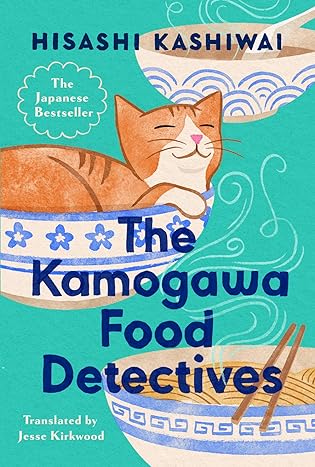
 The Kamogawa Food Detectives (The Kamogawa Food Detectives, #1) by Hisashi Kashiwai, Jesse Kirkwood
 Format: eARC
Source: supplied by publisher via Edelweiss
Formats available: hardcover, paperback, ebook, audiobook
Genres: cozy mystery, foodie fiction
Series: Kamogawa Food Detectives #1
Pages: 208
Published by G.P. Putnam's Sons on February 13, 2024
Purchasing Info: Author's Website, Publisher's Website, Amazon, Barnes & Noble, Kobo, Bookshop.org, Better World Books
Goodreads
The Kamogawa Food Detectives is the first book in the bestselling, mouth-watering Japanese series for fans of Before the Coffee Gets Cold.
What’s the one dish you’d do anything to taste just one more time?
Down a quiet backstreet in Kyoto exists a very special restaurant. Run by Koishi Kamogawa and her father Nagare, the Kamogawa Diner serves up deliciously extravagant meals. But that’s not the main reason customers stop by . . .
The father-daughter duo are ‘food detectives’. Through ingenious investigations, they are able to recreate dishes from a person’s treasured memories – dishes that may well hold the keys to their forgotten past and future happiness. The restaurant of lost recipes provides a link to vanished moments, creating a present full of possibility.
A bestseller in Japan, The Kamogawa Food Detectives is a celebration of good company and the power of a delicious meal.
My Review:
“We find your food” is all the advertisement that the Kamogawa Diner – and the office of the Kamogawa Food Detectives located in the back of the tiny restaurant – either needs or wants.
Because that combination of slogan, motto and raison d’être says all that this father-daughter duo needs to say, either about the food they serve or the unique service they provide.
Taste and smell are inextricably linked to memory in ways that we all know, but are hard to articulate. It’s why the right perfume is so evocative, and why dishes we loved when we were children evoke such powerful memories.
Nagare Kamogawa and his adult daughter Koishi own, operate and investigate the dishes served at their diner. When someone comes in needing their special services, Koishi asks the questions and her father, a police detective turned masterchef, provides the answers in the form of a dish that brings back the memory that their client has been chasing down so hard, to no avail. At least until now.
The stories in this delightful little collection are the stories of their clients, each with a particular sharp need for something like closure of a loss that happened yesterday or long ago. They are pursuing a chance to commune one more time with someone they lost, someone they left behind, or someone they need to let go of.
Each comes to the diner with a vague memory of a time, a place, a person, and a dish upon which it all hangs together in a faded memory. Through recreating the dish, the Kamogawa Food Detectives give their clients one more chance to reconcile, or mourn, the person in that memory, whether it’s someone they lost or merely a part of themselves they left behind.
Like the cuisine that is mouth-wateringly described in each and every story, the memories are, for the most part, not sweet unless that sweetness is tinged with the bitterness of loss. Rather, each story is one to be savored, as is this whole, entirely delicious, slice of life at the home of the Kamogawa Food Detectives.
Escape Rating A-: This was absolutely the right book at the right time. In spite of being a loosely linked collection of short stories, it hung together MUCH better than yesterday’s book, to the point where I finished this little volume in one – admittedly hungry – sitting. At the end, my only negative thought about the book was that it wasn’t nearly enough.
Don’t go into this one hungry, because the descriptions of the food are every bit as tantalizing as the stories are savory – even the ones that describe something that might not be to one’s own taste. If these dishes are half as good as the descriptions in the book make them, I’d be willing to try them all.
I also couldn’t help but think of similar dishes, not in cuisine but in my own memory. Dishes that my grandmother made that neither my mother nor I were ever able to replicate. Love and nostalgia are seasonings that are difficult to duplicate, no matter how many times one has tried. (If you’re wondering, I can replicate my favorite dishes that my mother made. But my grandmother’s, no.)
I want to say this was sweet but based on the utterly tantalizing descriptions of the food, it would be more accurate to say that this was wonderfully umami, in other words, marvelously savory and absolutely delicious.
This is, honestly, a book that kind of defies description. You have to be there, within its magic, to get the full flavor of just how lovely it is. All I can say is that it is absolutely, delightfully, worth the read.
 Speaking of magic, however, if the taste of The Kamogawa Food Detectives is as appealing to you as it was to me, if you would like to try something similar with a more overt hint of magic (I say more overt because it could easily be claimed that what these food detectives do IS magic) you might want to try The Nameless Detective by Tao Wong. The Kamogawa Food Detectives is also frequently cited as a readalike for Before the Coffee Gets Cold. Which I have not read YET, but certainly plan to in the months ahead.
The above recommendations will hopefully tide you over until your next delicious visit to The Kamogawa Food Detectives. This book is the first in a series of seven in the original Japanese, and the second book, The Restaurant of Lost Recipes, will be published in English in October.
I’m already salivating for another taste!
 Village in the Dark (Cara Kennedy, #2) by
 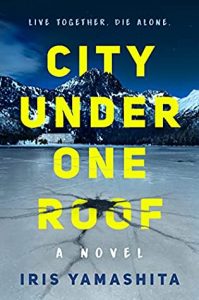 Escape Rating B: Part of what made
 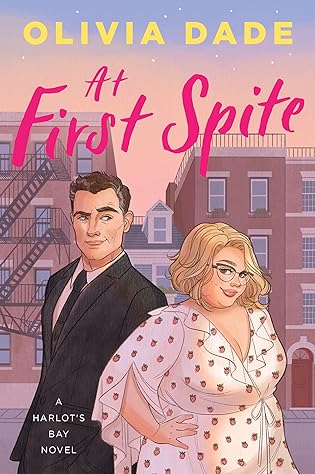 At First Spite (Harlot's Bay #1) by
  Escape Rating A-: It’s clear early in At First Spite that the narrow confines of Spite House aren’t nearly wide enough to handle ALL of the emotional baggage that Athena, Johnny, and Matthew have deposited there, in spite of Athena being the only person actually living within its walls.
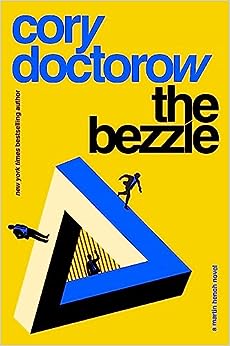 The Bezzle (Martin Hench #2) by
  Escape Rating A: The Bezzle is a LOT of things, all of which are fascinating and make for a compelling read, but absolutely none of which are remotely science fiction, whether it is marketed as such or not. And not that SF readers won’t enjoy The Bezzle, because they certainly will and I absolutely did.
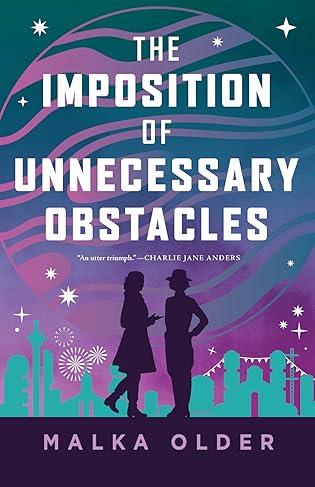 The Imposition of Unnecessary Obstacles (Mossa & Pleiti, #2) by
  Escape Rating A+: There’s something supremely comforting about this series – and I’m oh-so-happy it IS a series because
  The Tainted Cup (Shadow of the Leviathan, #1) by
  Escape Rating A+: There’s been a rise in science fiction mysteries in the last couple of years, with books like Mur Lafferty’s
  But the setting of The Tainted Cup, and the epically FUBAR political situation therein, is very much fantasy of both the grimdark and steampunk varieties. The world, with its mixture of science and magic and scientifically based magic is similar to the setting of L.E. Modesitt’s
 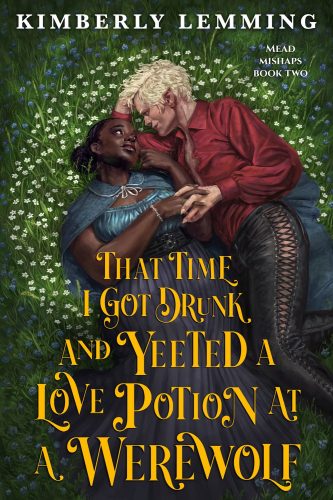 That Time I Got Drunk and Yeeted a Love Potion at a Werewolf (Mead Mishaps, 2) by
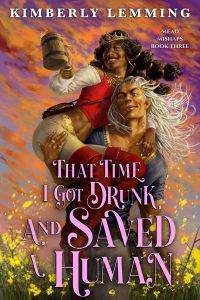
 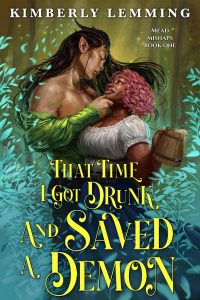 I just started in the middle, didn’t I? That’s actually kind of apropos, as That Time I Got Drunk and Yeeted a Love Potion at a Werewolf is the second or even more on point, the middle book in the
  And just like in the previous book, and just as much fun as that first time around, this second cozy fantasy with sexytimes combines (frequently and often but not nearly as frequently and often as either Felix or Brie REALLY want) two tastes that go really GREAT together. There’s a surprisingly sweet romance between a girl who wants to do the right thing even if kills her and a werewolf who is sure that what they are doing IS the right thing if only she’d stop worrying about the love potion – at least right up until the point he realizes that he really, Really, REALLY should have worried a bit more about the love potion. And on the other hand, the need to foil a terrible plot to fill the worldwide vacancy in the deity department with a new face slapped on the same old trickster.
 Remember Me (Ravenswood, #2) by
  A scandal that touched Lucas every bit as closely as it did Pippa. But eavesdroppers seldom hear anything to their credit, and that was the case here. He owes her an explanation AND an abject apology. But it is water very much under the bridge at this point. That she let his words blight the next four years of her life isn’t ALL on him. Although she still doesn’t owe him the time of day.
 Your reading mileage may definitely vary. In fact, I hope it does because I think a LOT of people are going to love this book. I’m just not one of them although I certainly expected to be.
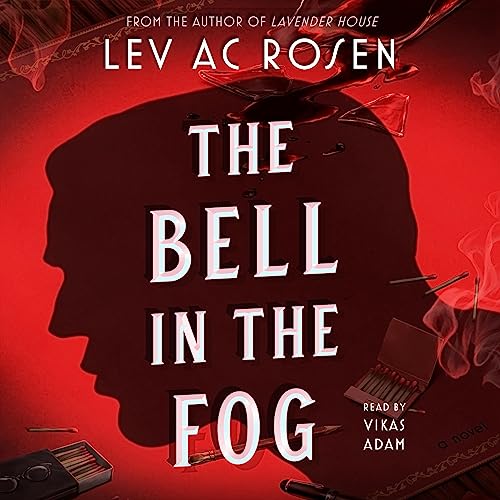 The Bell in the Fog (Evander Mills, #2) by
  Andy needs the case because he needs the money. Business for an ex-cop turned P.I. isn’t good when EVERYONE remembers that he used to be a cop – the people who hassle and roust and beat up guys just like them Just like him, which makes the betrayal that much worse.
 And what that means for anyone trying to just live their life the best they can where that life has already been declared a criminal act.
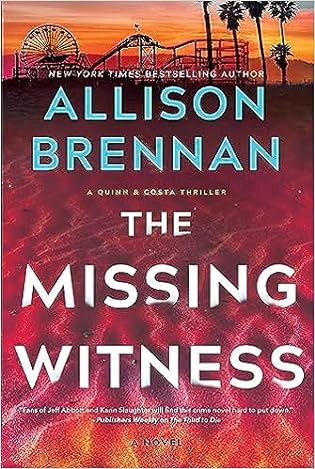 The Missing Witness (Quinn & Costa, #5) by